An extinct species
Najash †
Najash rionegrina
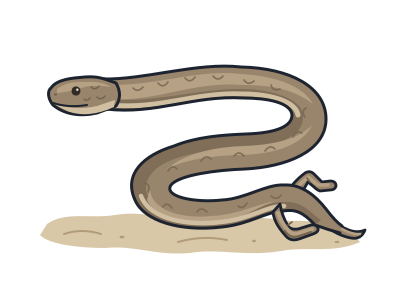
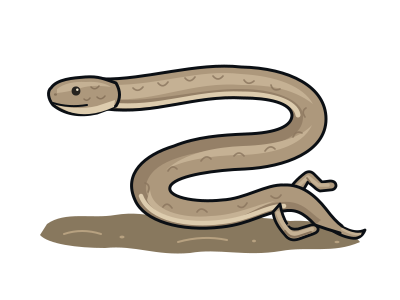
An early snake that still had back legs
Lived about 95–92 million years ago.
You and the najash meet in the Amniotes branch, shown at about 320 million years ago (on 4 December, in a calendar from life's shared ancestor to today).
An early snake with two small back legs, this animal combined a snake-shaped body with limbs left over from its ancestors. It lived about 95 to 92 million years ago. Its name referred to Nahash, the legged serpent of Genesis. That was a naming reference, not evidence for the biblical story.
Fossil bones showed that its back legs included sturdy thigh bones and lower-leg bones. Its hips still connected to its backbone. Researchers found no evidence of front legs or a shoulder skeleton. It belonged to an early branch of snake evolution, rather than being a modern snake with an unusual body. It was not established as a direct ancestor of living snakes.
Its fossils came from northern Patagonia, Argentina, in rocks formed among dunes and the spaces between them. This was a land-dwelling animal, not one of the ancient legged snakes found in sea deposits.
A long chain of bones
The original body skeleton preserved more than 120 connected backbone bones.
A name tied to a place
The second part of its scientific name referred to Río Negro Province in Argentina.
A student's discovery
In February 2013, undergraduate Fernando Garberoglio found an exceptionally preserved skull later assigned to the same genus, though not confirmed as this exact species.
Next to it on the tree
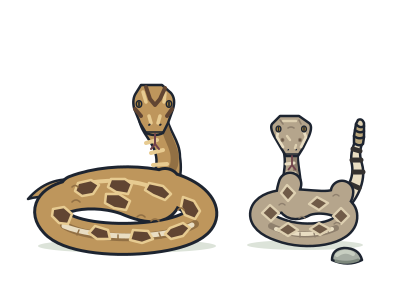
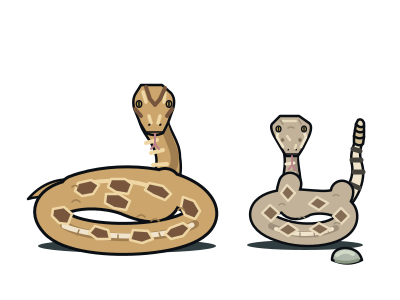
- SnakesLimbless hunters that can swallow prey wider than their own heads.
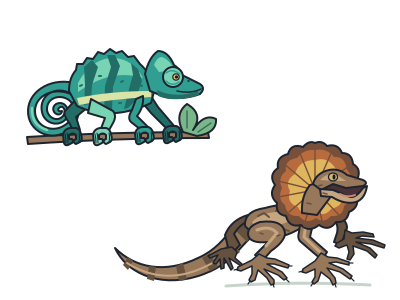
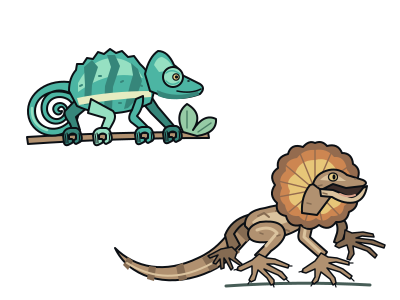
- Iguanas and chameleonsSit-and-wait lizards, from colour-changing chameleons to sea-swimming iguanas.
- Monitors and kinIncludes the biggest lizards ever, venomous lizards and lizards with no legs.
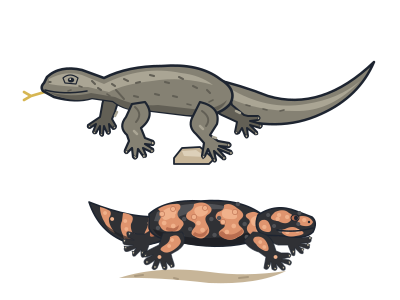
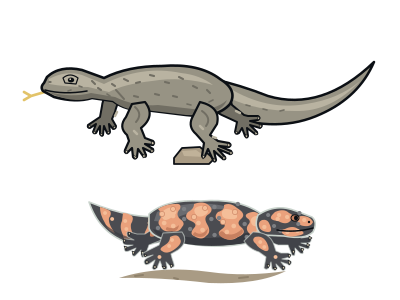
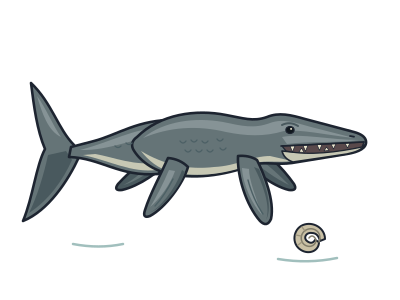
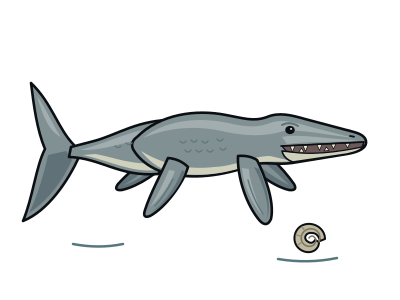
- MosasaursGiant sea lizards with flippers and a shark-like tail fin.