A group of living things
Iguanas and chameleons
Iguania
Patient hunters, colour changers and sea swimmers—all on one branch.
This branch is shown at about 140 million years ago; its age is a rough estimate.
You and iguanas and chameleons meet in the Amniotes branch, shown at about 320 million years ago (on 4 December, in a calendar from life's shared ancestor to today).
From colour-changing chameleons to sea-swimming iguanas, this family includes many sit-and-wait hunters. They stay still until prey comes close, then make a sudden move. But waiting for a meal is not a rule for the whole branch: some members eat plants rather than hunt animals.
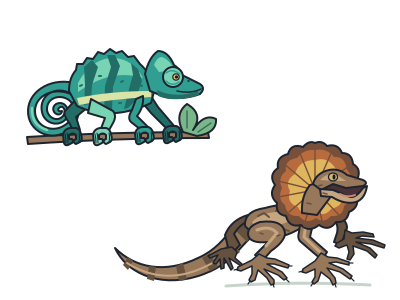
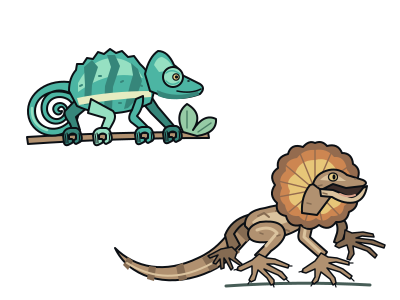
The chameleon and frilled lizard pictured here are closer relatives than either is to a green iguana. Chameleons' closest living relatives are the dragon lizards, including frilled lizards. Their hunting equipment is striking: chameleons shoot out a sticky-tipped tongue to catch insects. In some species, it reaches farther than the length of the body. Their colour changes have limits, though—they cannot copy any background at will.
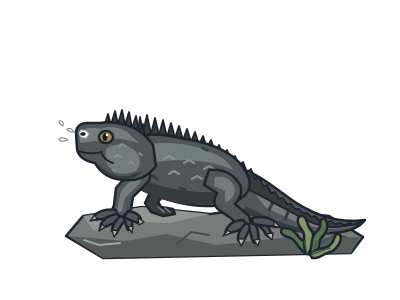
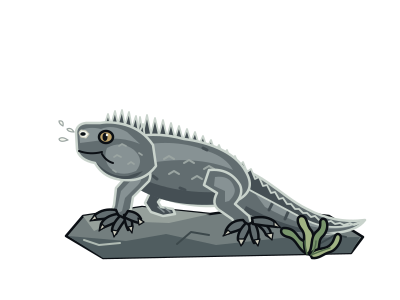
Marine iguanas take a very different approach to dinner. Found naturally only in the Galápagos Islands, they eat algae, the plant-like growth on rocks. Larger individuals swim offshore to feed, while smaller ones often graze near shore at low tide. They are the only lizards that regularly find food at sea.
Five toes, two bundles
Each chameleon foot has five toes grouped into bundles of two and three, making a pincer for gripping branches.
Eyes that look apart
A chameleon can direct its eyes separately, then aim both towards prey.
Sneezing out salt
Marine iguanas remove extra salt through glands near their noses and sneeze it out. White salt can collect on their snouts.
Inside iguanas and chameleons
- Green iguanaA leaf-eating lizard that can drop from a tree 15 metres up and walk away.
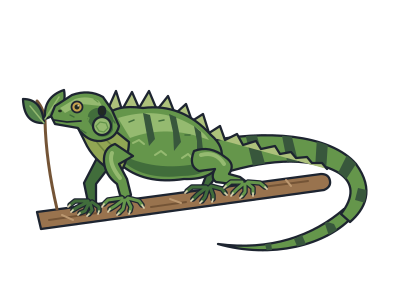
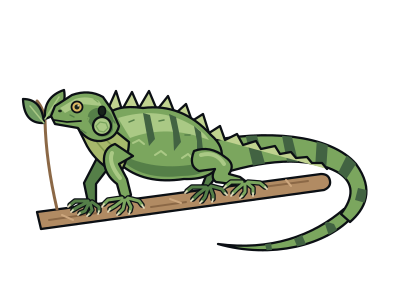
- Marine iguanaThe only lizard that feeds in the sea, sneezing out salt after grazing on seaweed.
- Green basiliskRuns across water on its hind legs, earning the name 'Jesus Christ lizard'.
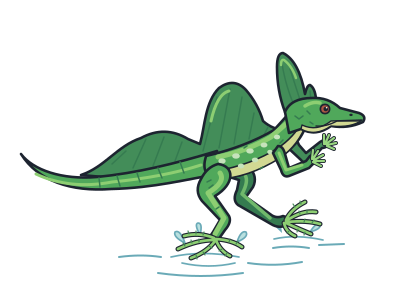
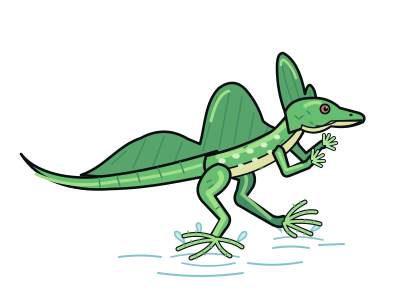
- ChameleonsFrom cat-sized giants to one that fits on a fingertip, chameleons are mostly from Madagascar and Africa.
- Dragon lizardsThe Old World's 'dragons': bearded, frilled, spiny and even gliding lizards.
- Green anoleTurns from green to brown and flashes a pink throat fan to rivals.
- Texas horned lizardA flat, spiky ant-eater nicknamed the horned toad, and the state reptile of Texas.
Next to it on the tree
- NajashAn early snake that still had small back legs, named after the legged serpent of Genesis.
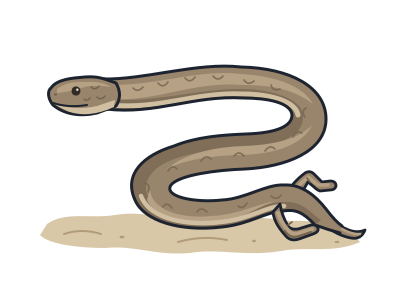
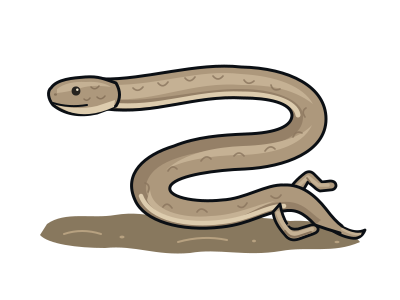
- SnakesLimbless hunters that can swallow prey wider than their own heads.
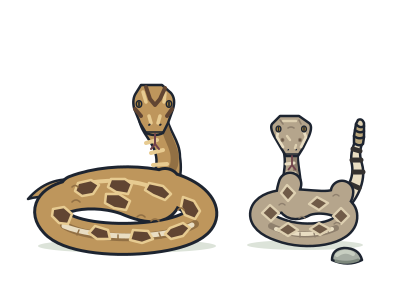
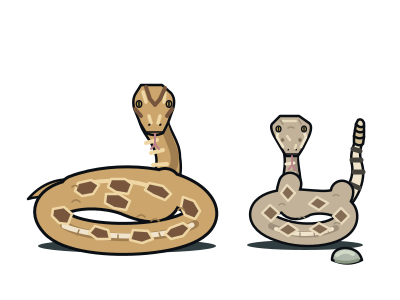
- Monitors and kinIncludes the biggest lizards ever, venomous lizards and lizards with no legs.
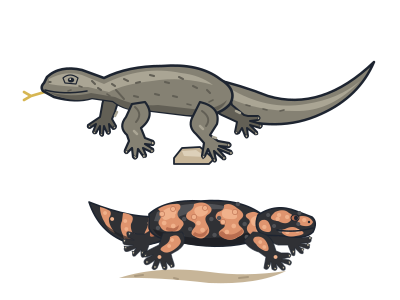
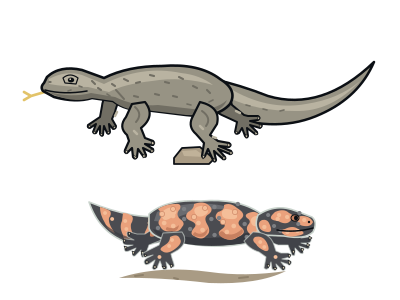
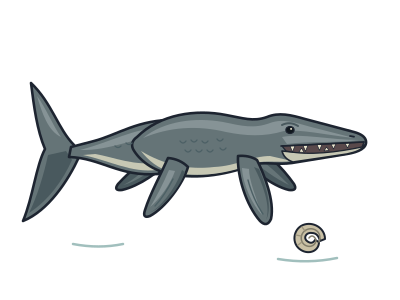
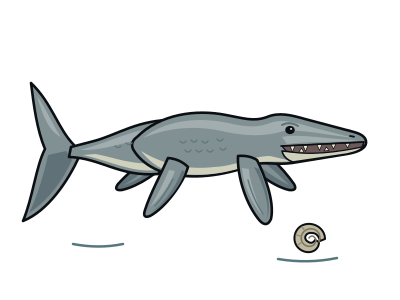
- MosasaursGiant sea lizards with flippers and a shark-like tail fin.