A species
Marine iguana
Amblyrhynchus cristatus
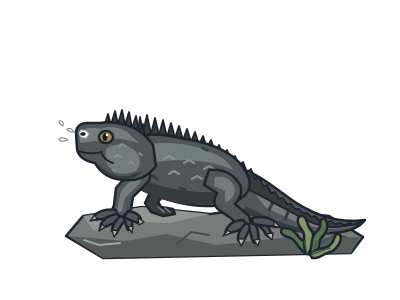
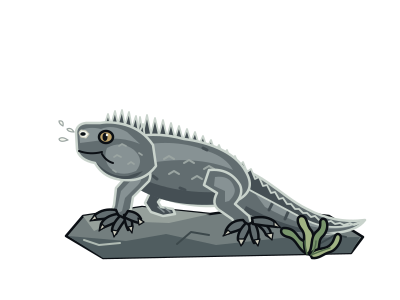
A seaweed-grazing lizard that sneezes out salt.
You and the marine iguana meet in the Amniotes branch, shown at about 320 million years ago (on 4 December, in a calendar from life's shared ancestor to today).
The marine iguana is the only living lizard known to feed in the sea. Its closest living relatives are the Galápagos land iguanas, but this branch of the family has taken to grazing on seaweed-covered rocks. It mainly eats seaweed, rather than hunting fish. Extra salt leaves its body through its nostrils in sneeze-like bursts: a normal part of life, not a cold.
A short, blunt snout helps it crop seaweed close to the rock. Its tail is flattened from side to side and drives it through the water while its legs tuck alongside its body. Strong claws help it grip rocks in moving water. Larger animals can feed farther offshore; smaller ones generally graze near shore, including where low tide exposes seaweed.
These iguanas live naturally only in Ecuador’s Galápagos Islands. Feeding in cold seawater cools their bodies, so they return to land and bask in sunlight to warm up. Being a sea-going lizard does not mean spending all day underwater.
A salty snout
Salt expelled through the nostrils can leave visible crystals on the snout.
Eggs stay ashore
Marine iguanas mate and lay their eggs on land, not underwater.
Island colours
Colour varies between islands. Males become brighter during breeding, with those on Española showing striking red and green.
Next to it on the tree
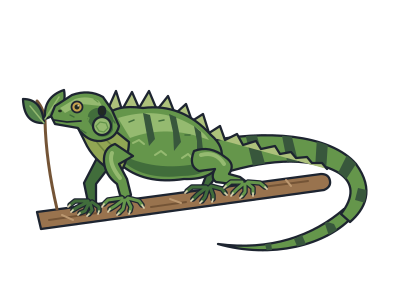
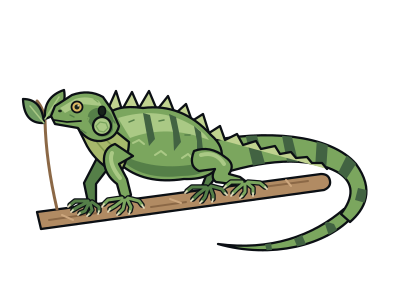
- Green iguanaA leaf-eating lizard that can drop from a tree 15 metres up and walk away.
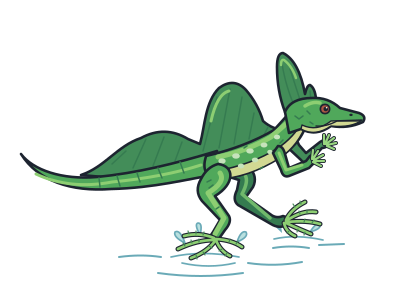
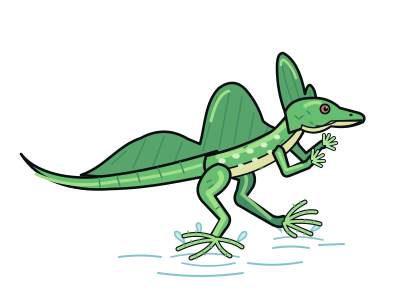
- Green basiliskRuns across water on its hind legs, earning the name 'Jesus Christ lizard'.
- ChameleonsFrom cat-sized giants to one that fits on a fingertip, chameleons are mostly from Madagascar and Africa.
- Dragon lizardsThe Old World's 'dragons': bearded, frilled, spiny and even gliding lizards.
- Green anoleTurns from green to brown and flashes a pink throat fan to rivals.
- Texas horned lizardA flat, spiky ant-eater nicknamed the horned toad, and the state reptile of Texas.