A group of living things
Snakes
Serpentes
No legs, but room for a remarkable meal
This branch is shown at about 110 million years ago; its age is a rough estimate.
You and snakes meet in the Amniotes branch, shown at about 320 million years ago (on 4 December, in a calendar from life's shared ancestor to today).
Snakes are limbless hunters, and some can swallow prey wider than their own heads. A Burmese python can manage an animal several times wider. Yet snakes belong within the wider lizard family: they evolved from lizard ancestors. Their legless bodies and flexible skulls are changes within that family, not a separate starting point.
How does such a meal fit? Snakes do not unhinge or dislocate their jaws. Flexible tissue joins the two halves of the lower jaw, letting them spread apart around food. A python’s head may look too small for its meal, but head width alone does not tell the whole story.
Not all snakes are venomous: Burmese pythons are not. And snakes are hunters that are also hunted. They help control small animals, including introduced rats and mice in Australia, while becoming food for birds and other reptiles.
A warm coil
Female Burmese pythons coil around their eggs until they hatch. Muscle twitches can warm the eggs above the surrounding air temperature.
Eyes without blinking
Burmese pythons have no movable eyelids. A clear protective scale covers each eye and comes off when they shed their skin.
Born, not hatched
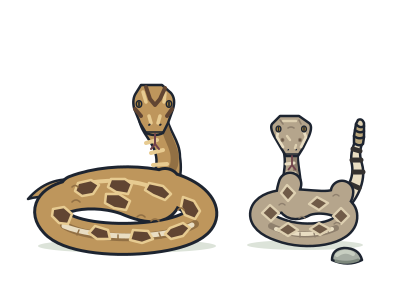
Western diamondback rattlesnakes give birth to live young rather than laying eggs.
Inside snakes
- Brahminy blind snakeA tiny worm-like snake whose populations are all female, laying eggs without males.
- BoasConstrictors that give birth to live young, from rainforest canopies to Amazon swamps.
- PythonsEgg-laying constrictors of Africa, Asia and Australia; mothers coil around their eggs to keep them warm.
- VipersLong hinged fangs fold away when the mouth is shut and swing forward to strike.
- Cobras and kinShort fixed front fangs unite cobras, mambas, coral snakes and the sea snakes.
- Colubrid snakesThe largest snake family: most are harmless, from garden garter snakes to gliding tree snakes.
Next to it on the tree
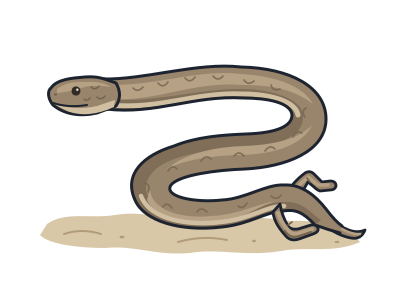
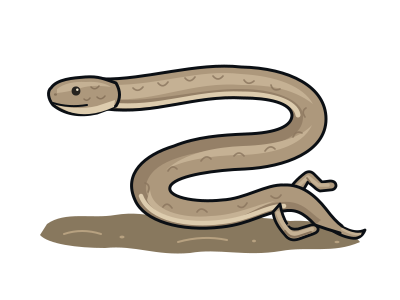
- NajashAn early snake that still had small back legs, named after the legged serpent of Genesis.
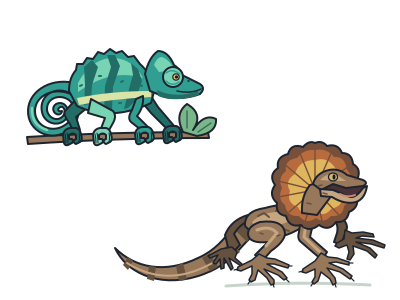
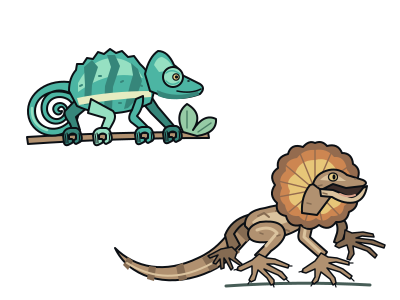
- Iguanas and chameleonsSit-and-wait lizards, from colour-changing chameleons to sea-swimming iguanas.
- Monitors and kinIncludes the biggest lizards ever, venomous lizards and lizards with no legs.
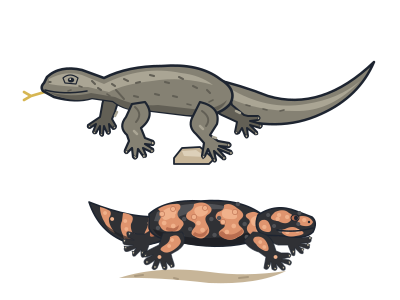
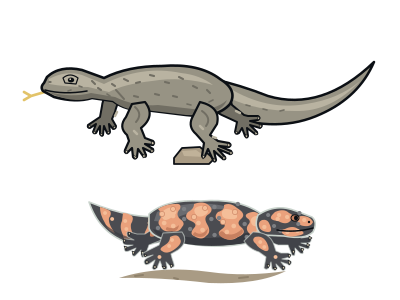
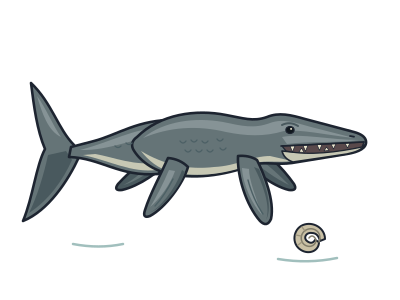
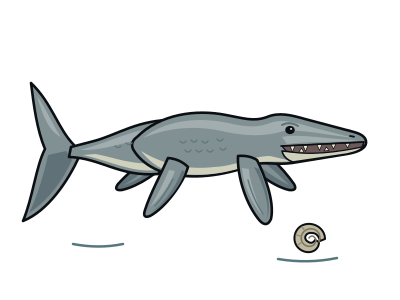
- MosasaursGiant sea lizards with flippers and a shark-like tail fin.