A group of living things
Vipers
Viperidae
Long hinged fangs fold away when the mouth is shut and swing forward to strike.
This branch is shown at about 40 million years ago; its age is a rough estimate.
You and vipers meet in the Amniotes branch, shown at about 320 million years ago (on 4 December, in a calendar from life's shared ancestor to today).
Compare with something else
Long hinged fangs fold away when the mouth is shut and swing forward to strike.
The full page for Vipers is still being written and drawn.
Inside vipers
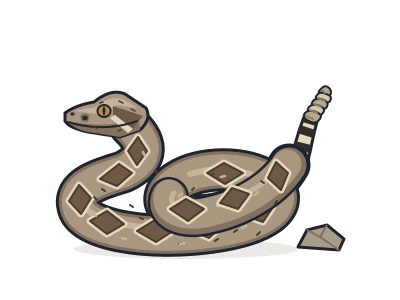
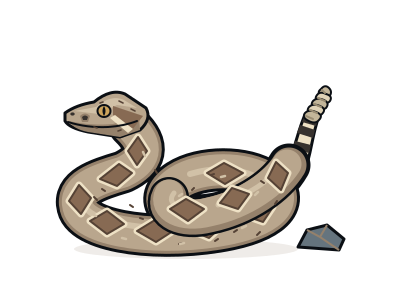
- Western diamondback rattlesnakeSenses warm bodies in the dark with heat pits and rattles a tail made of old skin.
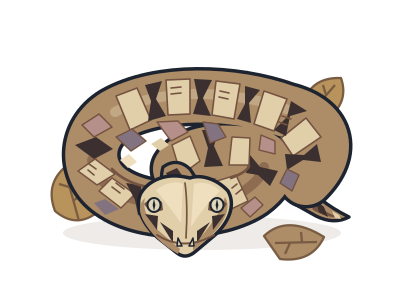
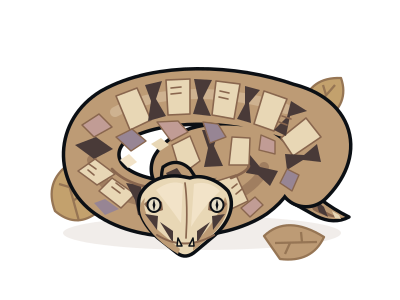
- Gaboon viperHas the longest fangs of any snake and hides perfectly in leaf litter.
- Common adderLives farther north than any other snake, even past the Arctic Circle in Scandinavia.
- SidewinderMoves sideways in looping waves across hot sand, leaving J-shaped tracks.
Next to it on the tree
- Brahminy blind snakeA tiny worm-like snake whose populations are all female, laying eggs without males.
- BoasConstrictors that give birth to live young, from rainforest canopies to Amazon swamps.
- PythonsEgg-laying constrictors of Africa, Asia and Australia; mothers coil around their eggs to keep them warm.
- Cobras and kinShort fixed front fangs unite cobras, mambas, coral snakes and the sea snakes.
- Colubrid snakesThe largest snake family: most are harmless, from garden garter snakes to gliding tree snakes.