A species
Western diamondback rattlesnake
Crotalus atrox
A heat-sensing hunter with an old-skin rattle.
You and the western diamondback rattlesnake meet in the Amniotes branch, shown at about 320 million years ago (on 4 December, in a calendar from life's shared ancestor to today).
The western diamondback senses warm prey in total darkness and rattles a tail tip made from old skin. Its heat pits detect body warmth rather than ordinary visible light. It belongs to the viper family, within the wider branch of the tree that includes both lizards and snakes.
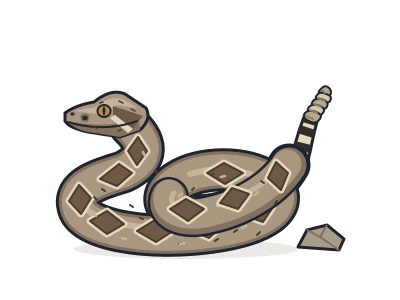
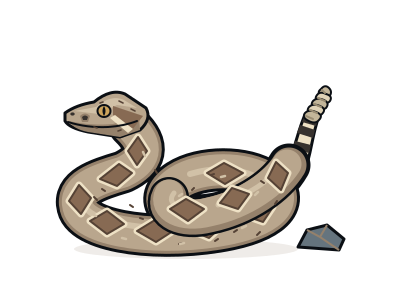
Its rattle keeps specialised pieces of shed skin, not the whole discarded skin. These hollow, loosely linked sections are made of the same material as your fingernails. When the snake shakes its tail, the sections knock together. The sound warns potential enemies; it does not lure prey. But a rattlesnake may hide, stay still or move away silently. No rattle does not mean no danger.
This snake lives across much of the south-western United States and northern Mexico. It is not limited to sandy desert: grasslands, rocky hills and woodland are also home. Look for pale-edged diamonds along its back and bold black-and-white bands on its short tail, just before the rattle.
Not a birthday counter
A new rattle section forms at each skin shed. Shedding rates vary and sections can break off, so counting them cannot reveal age.
A tongue that gathers scents
Its forked tongue collects scent particles and carries them to a sensing organ in the roof of its mouth.
Folding fangs
Its long, hollow front fangs fold back when not in use. Venom helps it subdue prey.