A species
Gaboon viper
Bitis gabonica
Record-breaking fangs, hidden among fallen leaves.
You and the gaboon viper meet in the Amniotes branch, shown at about 320 million years ago (on 4 December, in a calendar from life's shared ancestor to today).
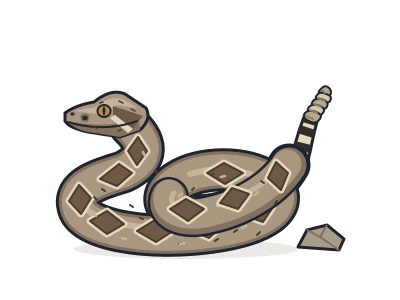
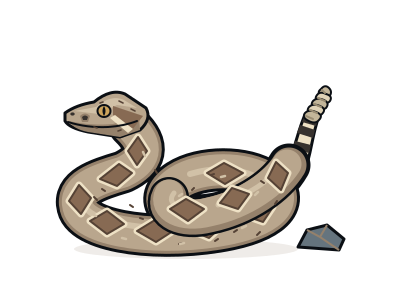
The Gaboon viper has the longest fangs of any snake, but staying hidden is central to how it hunts. Its bold pattern makes it surprisingly hard to spot among fallen leaves. It belongs to the same wider snake family as rattlesnakes, though it is not itself a rattlesnake.
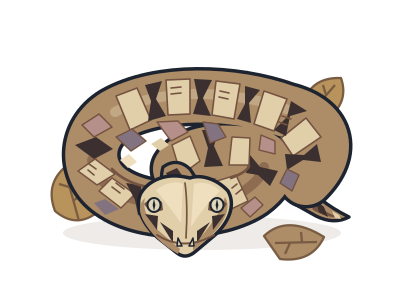
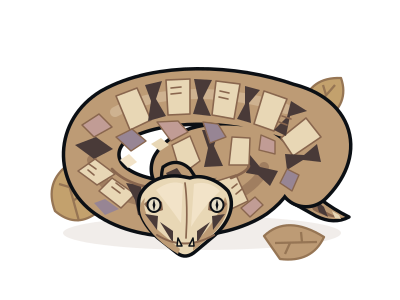
Its colours break up the outline of its body rather than making it stand out. Even its broad head resembles a fallen leaf, complete with a central marking like a leaf’s main vein. Those enormous front fangs stay tucked away when its mouth is closed. The bones holding them swing forwards when it opens its mouth to strike.
Instead of chasing a meal, it usually waits for one. It can lie motionless among fallen leaves for long periods until prey comes within reach. After striking, it commonly keeps hold rather than immediately letting go.
Live young
Females give birth to live young instead of laying eggs outside their bodies.
An independent start
The young care for themselves soon after birth.
Larger females
Females are generally larger and heavier than males.