An extinct species
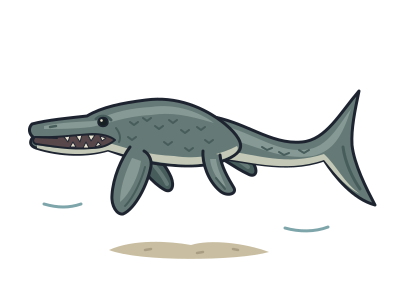
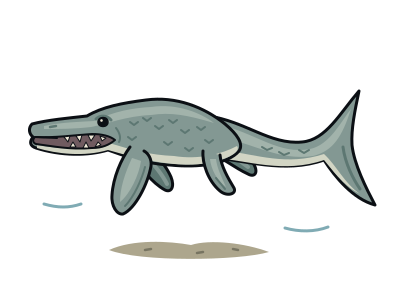
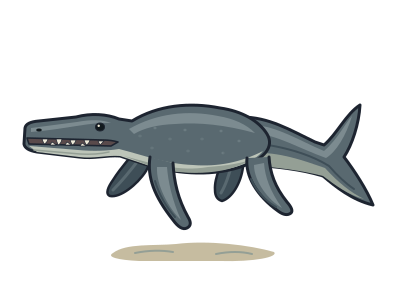
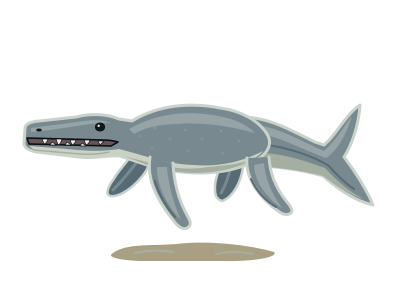
Mosasaurus †
Mosasaurus hoffmannii
A bus-length sea lizard that lived until the asteroid
Lived about 70–66 million years ago.
You and the mosasaurus meet in the Amniotes branch, shown at about 320 million years ago (on 4 December, in a calendar from life's shared ancestor to today).
This sea lizard could have been as long as a bus, yet it belonged to the same great reptile branch as lizards and snakes. It was not a swimming dinosaur. Conservative estimates put the largest individuals at about 11–12 metres. It lived about 70 to 66 million years ago, in the last few million years before the asteroid impact.
Its four limbs had become flippers, and it lived entirely at sea rather than returning to land. Fossils assigned to this species were found in both Europe and North America. Its long, sturdy teeth had backward-curving tips and finely notched cutting edges.
Much of the evidence came from incomplete remains. The original reference fossil was mainly a partial skull, not a complete skeleton, so its full body length had to be reconstructed. This giant and the other mosasaurs disappeared in the mass extinction linked to the asteroid impact about 66 million years ago.
Extra teeth overhead
It had teeth on the roof of its mouth as well as along its jaws.
Named after a river
The first part of its scientific name meant “Meuse lizard”, after the river flowing through Maastricht.
An early clue to extinction
The famous Maastricht fossil helped establish that some animals had become extinct. It was studied before the first dinosaurs were formally described.