A species
London plane
Platanus × hispanica
The camouflage-barked city tree that shrugs off dirty air
You and the london plane meet in the Eukaryotes branch, shown at about 1.8 billion years ago (on 28 July, in a calendar from life's shared ancestor to today).
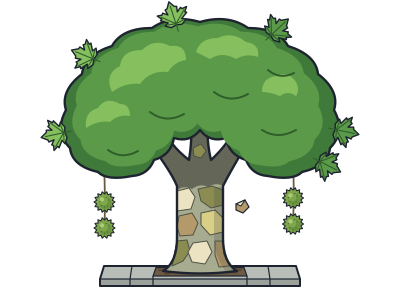
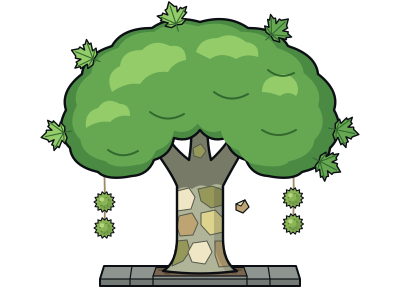
Walk down a big-city avenue and you may spot this tree by its trunk. The bark peels off in jigsaw-shaped patches. Underneath is a camouflage pattern of cream, olive, grey and khaki, so the trunk keeps getting a fresh surface. The tree also copes well with dirty air and with hard, packed-down soil around its roots. That makes it a favourite for planting in cities.
Its pollution trick is often misunderstood. The bark does not soak up dirt. Instead, tiny specks of pollution stick to the bark and get caught in fine hairs on the leaves, a bit like flypaper.
It is a hybrid of two other plane trees: the oriental plane and the American sycamore. The cross probably happened in the 1600s. It has no wild home, so almost every one you see was planted by people.
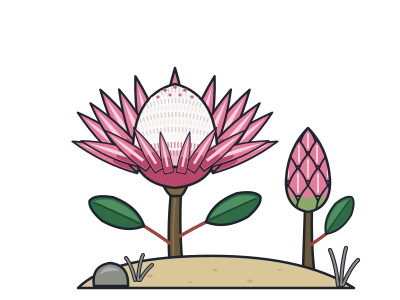
Its relatives on this branch of the tree of life are a surprise: the sacred lotus, which grows in water, and the king protea. These plants look nothing alike. Scientists did not suspect they were related until DNA studies showed it.
Taller than a stack of buses
The tallest London plane in Europe grows at Bryanston School in Dorset. It is about 48.5 metres tall, roughly as high as 11 double-decker buses stacked on top of each other.
Built to last
Plane trees about 300 years old can still be growing strongly. The planes in London's Berkeley Square are thought to have been planted in 1789, and they are still standing.
Best of both parents
The London plane copes with cold better than its oriental plane parent. It is also less likely than its American sycamore parent to catch a common leaf disease.