A species
King protea
Protea cynaroides
A giant artichoke-like flower whose surprising cousins are the lotus and plane trees.
You and the king protea meet in the Eukaryotes branch, shown at about 1.8 billion years ago (on 28 July, in a calendar from life's shared ancestor to today).
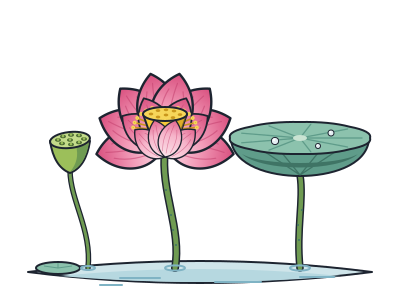
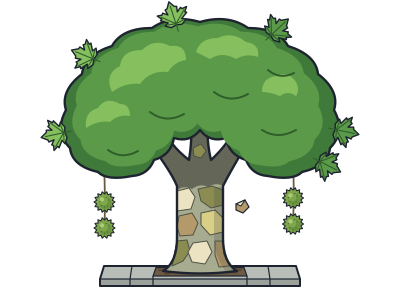
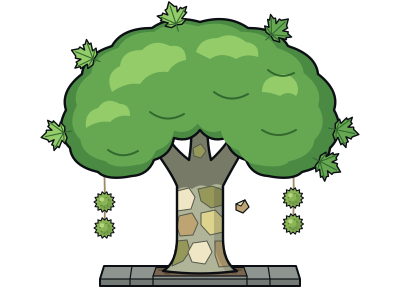
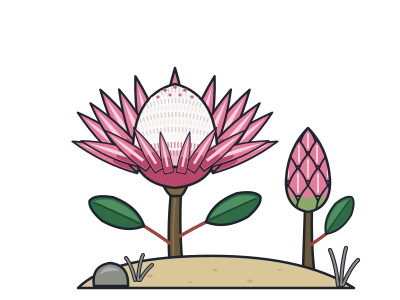
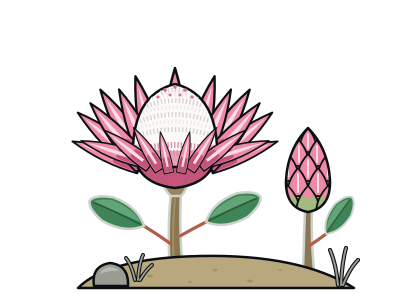
Picture a flower head as wide as a dinner plate, shaped like a giant artichoke. This is South Africa's national flower, and it has the biggest flower head of any protea. Its name even means "like the artichoke". But that is only about looks: it is not a close relative of the artichoke at all. DNA studies show that the protea family's closest living relatives are plane trees and the sacred lotus, a water plant. They look nothing alike, yet they sit together on the same branch of the tree of life.
What looks like one big flower is really hundreds of tiny, hairy flowers packed into a dome. Around them is a crown of stiff, pointed, petal-like leaves called bracts. They can be anything from creamy white to deep crimson. The plant itself is a woody shrub, usually about 1 metre tall. Its thick, leathery leaves help it lose less water.
It grows wild in fynbos, a type of shrubland in South Africa's south-western and southern Cape. Its range runs from the Cederberg mountains east to near the town of Makhanda. Summers there are hot and dry, and fires are a natural part of life. When a fire sweeps through, the king protea usually survives. A thick stem hidden underground holds sleeping buds, and these send up new shoots after the flames have passed.
A team named after a flower
South Africa's national cricket team is nicknamed 'The Proteas'.
A nutty relative
It belongs to the protea family, which has about 1,700 species and includes Australia's banksias and the macadamia. So the macadamia nut is a relative.
Sun-side first
In each flower head, the tiny flowers start opening on the north side. South of the equator, that is the side that gets the most sun.