A species
Sacred lotus
Nelumbo nucifera
A water lily lookalike whose real cousins are plane trees, and whose seeds can wait centuries to sprout.
You and the sacred lotus meet in the Eukaryotes branch, shown at about 1.8 billion years ago (on 28 July, in a calendar from life's shared ancestor to today).
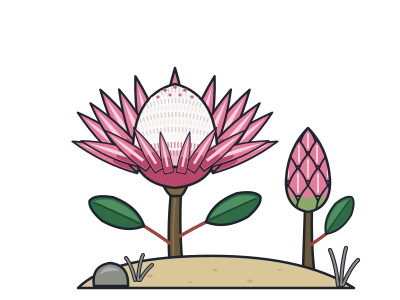
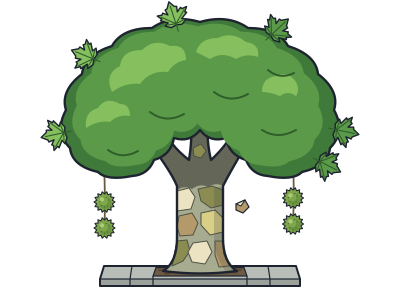
The sacred lotus looks a lot like a water lily, with big round leaves and showy flowers on a pond. But looks can fool you. DNA studies show it is only distantly related to water lilies. Its closest living relatives are plane trees, the big trees that shade many city streets, and proteas.
Its seeds are amazing survivors. Many plant seeds stay alive for 20 years or less. A lotus seed was found in a dried-up ancient lake bed in north-eastern China, and scientists grew it into a plant. The seed was about 1,300 years old. In another batch of seeds about 450 to 500 years old, more than eight in ten still sprouted.
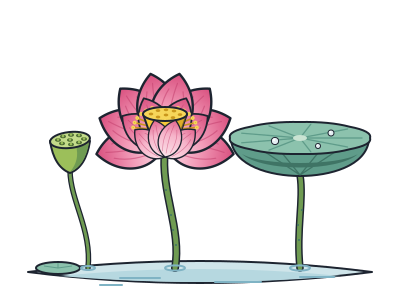
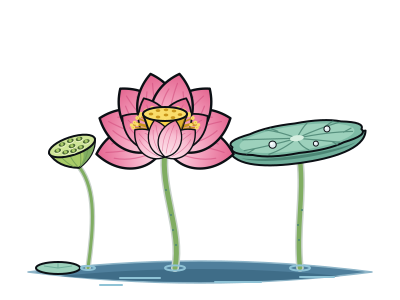
Water lily pads usually float on the water. Many lotus leaves are different: they rise on tall stalks up to about 2 metres long, and a leaf can be nearly a metre across. Water rolls off the leaves in silvery beads and carries dirt away with it, so the leaves stay clean. The pink or white flowers have a flat yellow seed head in the middle, shaped like a showerhead.
It grows wild in shallow fresh water in South, South-East and East Asia and in northern Australia. People in China have grown it for at least 4,000 years. They eat nearly every part, from the seeds to the thick underground stems sold as 'lotus root'.
Flowers that keep warm
Lotus flowers make their own heat. In the Adelaide Botanic Garden, they stayed at about 30 to 35 °C even when the air cooled to about 10 °C.
Only two of a kind
Only two kinds of lotus are alive today. One is the sacred lotus of Asia and Australia. The other is the American lotus of North America and the Caribbean.
Bush food
The sacred lotus was a staple food for Aboriginal people in northern Australia.