A species
Greater flamingo
Phoenicopterus roseus
Food makes it pink; its upside-down beak finds the next meal.
You and the greater flamingo meet in the Amniotes branch, shown at about 320 million years ago (on 4 December, in a calendar from life's shared ancestor to today).
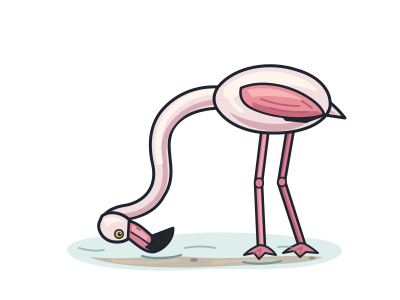
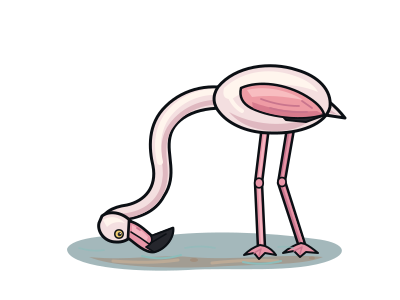
The greater flamingo gets its pink colour from its food—and eats with its head upside down. Natural colourings called carotenoids come from foods such as algae and tiny shrimp. Its webbed feet stir up the bottom, bringing food into the muddy water. Then its tongue pumps water through its bent beak. Comb-like plates trap small living things while the water escapes. It filters food from the mud rather than simply eating mud.
Its family connections are surprising too. Outside the flamingo family, its closest living relatives are grebes: small waterbirds that look very different. A long neck and pink feathers are not a reliable guide to a bird’s nearest relatives.
Greater flamingos can gather in flocks of thousands. When displaying to attract a partner, groups make coordinated head movements, spread their wings and march together. Their feeding may look unusual, but their group displays are just as striking.
That joint is an ankle
The visible backward-bending joint is its ankle. Its knee sits higher up, hidden by feathers.
Both parents feed the chick
Both parents make a nourishing liquid called crop milk. Despite its name, it is not mammal milk.
Shared egg duty
Both parents take turns keeping the egg warm.