A species
Bee hummingbird
Mellisuga helenae
The smallest bird alive, lighter than a small coin
You and the bee hummingbird meet in the Amniotes branch, shown at about 320 million years ago (on 4 December, in a calendar from life's shared ancestor to today).
The bee hummingbird is the smallest bird alive. From the tip of its beak to the end of its tail it is only about 5 to 6 centimetres long. A male weighs under 2 grams, which is less than a small coin. Even so, it sits on the dinosaur branch of the tree of life, like every other bird.
Its nearest neighbours on the tree are other hummingbirds. The ruby-throated hummingbird of North America weighs about twice as much. The bee hummingbird's closest relative is the vervain hummingbird of Hispaniola and Jamaica, which is the second-smallest bird. Further out, hummingbirds are related to swifts and treeswifts. All of them have small legs that are not much use for anything except perching or clinging.
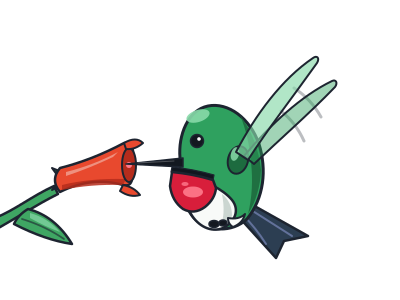
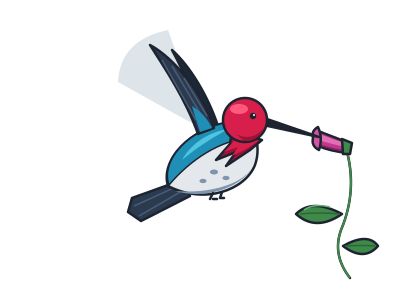
This tiny bird lives wild only in Cuba, in thick, damp forest, swamps and sometimes gardens. Its wings beat about 80 times a second and make a buzz like a bumblebee's. Its bee-like size and buzz probably gave the bird its name. It mostly drinks nectar from flowers, but it also eats small insects and spiders.
The female builds the nest on her own from cobwebs, bark and lichen. The nest is only about 2.5 centimetres across. She lays one or two eggs, each about the size of a coffee bean.
A cool night's sleep
By day its body is about 41°C. At night it can drop to about 30°C to save energy, in a deep rest called torpor.
Showing off
When a male is courting a female, his wings can speed up to about 200 beats a second.
Small but long-lived
For such a tiny bird, it can live a surprisingly long time: up to about seven years in the wild.