A species
Bald eagle
Haliaeetus leucocephalus
A tree-top home that keeps on growing
You and the bald eagle meet in the Amniotes branch, shown at about 320 million years ago (on 4 December, in a calendar from life's shared ancestor to today).
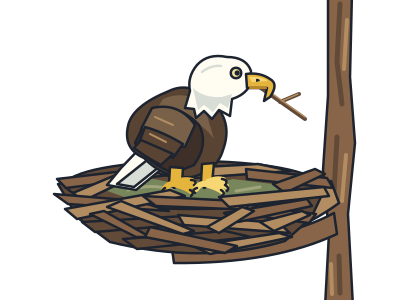
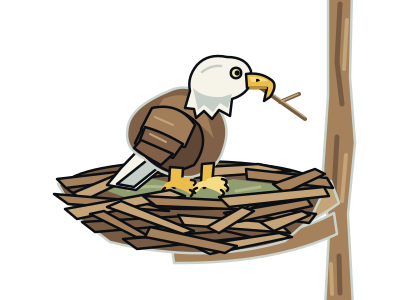
Bald eagles build the largest tree nests of any animal. These giant home-builders belong to the same bird family as golden eagles and red-tailed hawks. Pairs may return to a nest and add more sticks year after year.
One record-breaking nest in Florida measured about 3 metres across and 6 metres deep. That is exceptional, not an everyday eagle home. Typical nests are about 1.5–1.8 metres across: wide enough for a person to lie across. They usually sit close to the trunk, below the treetop, where sturdy branches support them.
Both partners bring building materials, but the female usually does most of the arranging. They weave sticks together and soften the nest with grass, moss and downy feathers. These homes are often near water, where the eagles find their main food: fish. They also eat birds, small mammals and animals they find already dead.
Wings can be oars
A bald eagle floating on water can paddle across using its wings like oars.
White heads come later
Young birds are mottled brown and white. The familiar adult colour pattern develops at about five years old.
A month on the eggs
A nesting attempt usually has one to three dull-white eggs. They take about five weeks to hatch.
Next to it on the tree
- Haast's eagleThe largest eagle ever, which hunted moa in New Zealand until about 600 years ago.
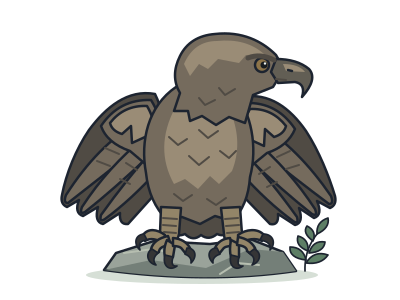
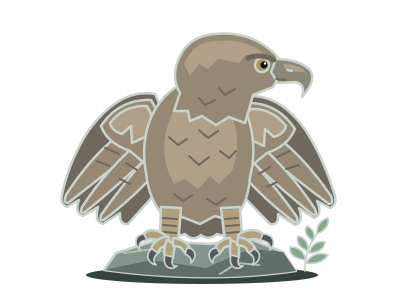
- Golden eagleHunts hares and foxes across mountains and has been flown by falconers for thousands of years.
- Harpy eagleA rainforest eagle with talons as long as a bear's claws that snatches sloths from treetops.
- Red-tailed hawkIts harsh scream is the 'eagle' cry heard in countless films.
- Griffon vultureSoars in groups over mountains, spotting food from kilometres away and cleaning up the land.