An extinct species
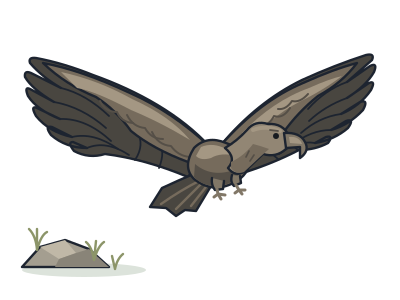
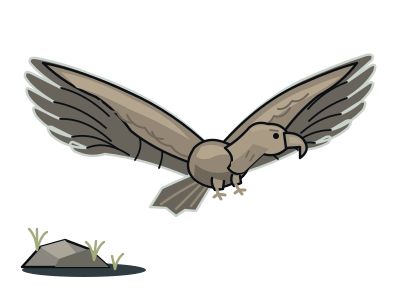
Argentavis †
Argentavis magnificens
Enormous wings, but not a giant eagle
Lived about 9–6 million years ago.
You and the argentavis meet in the Amniotes branch, shown at about 320 million years ago (on 4 December, in a calendar from life's shared ancestor to today).
With an estimated wingspan of about six metres, this was one of the largest flying birds ever. Yet it was not an enormous eagle. It belonged to the teratorns, an extinct family of large birds. It lived in what is now Argentina during a period roughly 9 to 6 million years ago.
Its fossils were found from the Andean foothills to Argentina’s central plains. The original find was only a partial skeleton, including skull fragments and parts of the shoulder, wings and legs. These bones provided clues to its enormous size, but they did not preserve a complete bird with its feathers in place.
Computer models suggested that this giant soared on rising warm air and winds pushed upwards by slopes. Running downhill into a headwind might have helped it take off. One study suggested that its muscles could not have powered continuous flapping. These were explanations tested with models, rather than behaviour directly recorded by fossils.
Named in 1980
Kenneth Campbell and Eduardo Tonni formally described the species in 1980.
Clues to wing feathers
A forearm fragment preserved three feather-attachment bumps, spaced about three centimetres apart.
Not necessarily silver
Its name referred to Argentina and described the bird as magnificent. It did not establish that its feathers were silver.
Next to it on the tree
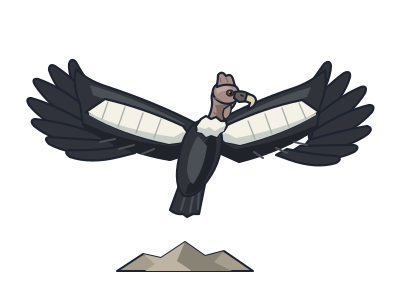
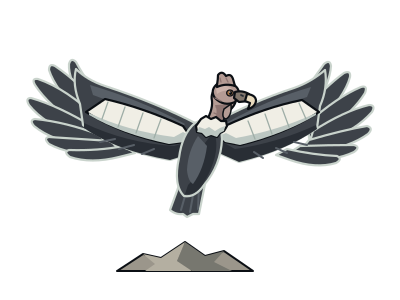
- Andean condorSoars for hours over the Andes, barely flapping its three-metre wings.
- Turkey vultureFinds dead animals by smell, a rare sense among birds, even under a forest canopy.
- SecretarybirdA long-legged African eagle that hunts on foot, stamping on snakes with lightning kicks.
- OspreyDives feet-first for fish and can turn one toe backwards to grip slippery prey.
- Hawks and eaglesThe biggest family of daytime raptors, including kites, hawks, eagles and Old World vultures.