A species
Living beach ball
Syringammina fragilissima
One single cell up to the size of a grapefruit, living on the deep sea floor.
You and the living beach ball meet in the Eukaryotes branch, shown at about 1.8 billion years ago (on 28 July, in a calendar from life's shared ancestor to today).
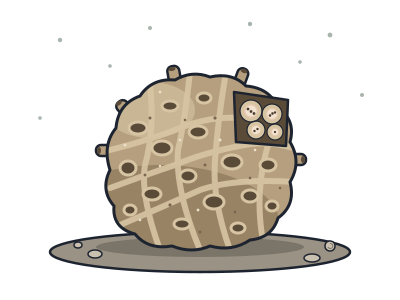
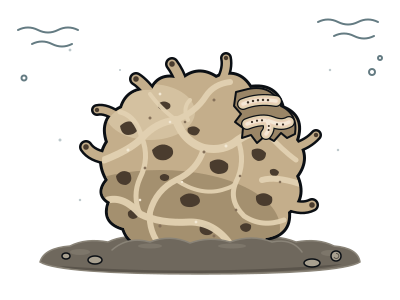
Picture a crumbly, sandy ball as big as a grapefruit, sitting on cold, dark mud about a kilometre or more under the sea. Now imagine that its whole living part is just one cell. This deep-sea giant can grow to about 20 centimetres across. That makes it one of the largest single-celled living things known.
Its family is surprising too. It belongs to the forams, a group mostly made up of tiny shelled cells whose shells help form some kinds of limestone. When it was first found, nobody knew where it fitted among living things.
Its one cell spreads through hundreds of hollow, branching tubes that join up with each other. The cell holds many nuclei, but it is never split into separate cells. It gives off a natural glue that sticks sand grains and bits of seabed together into a gritty case. It has no mouth, eyes or legs, and scientists still do not know how it feeds.
Crowds of them cover patches of seabed in the north-east Atlantic, and they have also been found off New Zealand. Their cases are like apartment blocks. Just four empty cases held more than 3,600 smaller forams, along with hundreds of small animals in each case.
First of its kind
It was the first of its deep-sea group known to science. John Murray described it in 1882, after the ship Triton dragged one up from the seabed off western Scotland.
Heavy crystals inside
Its living material contains tiny crystals of barium sulphate, a heavy mineral.
Protected home
One of its best-known homes, the Darwin Mounds off Scotland, was damaged by fishing nets dragged along the bottom. That kind of fishing was banned there in 2004.
Next to it on the tree
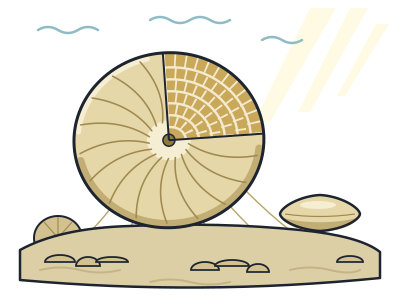
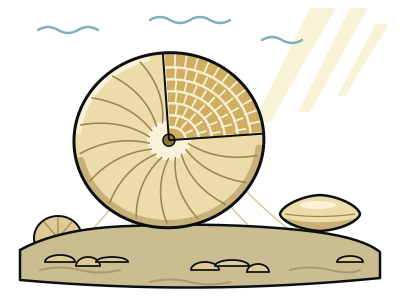
- Pyramid coin-shellCoin-sized shells packed into the limestone of the Giza pyramids.
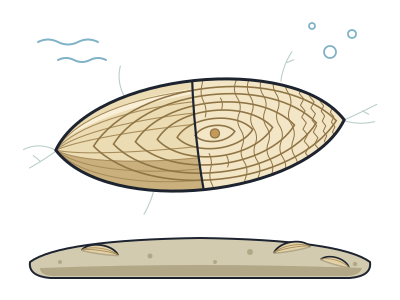
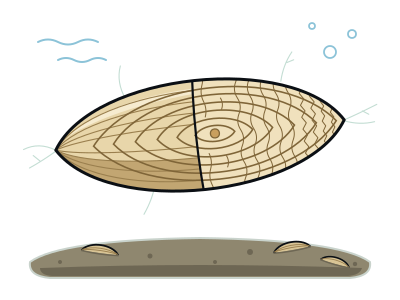
- FusulinidsRice-grain shells that crowded warm seas for 80 million years, then died in the Great Dying.
- GlobotruncanaKeeled, wheel-shaped plankton shells of the dinosaur age, wiped out by the asteroid impact.
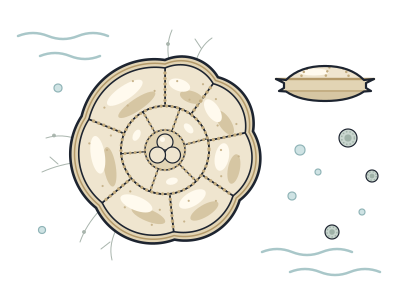
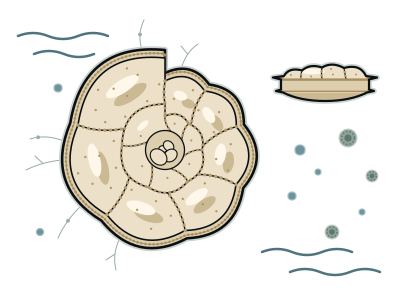
- GlobigerinaA floating foram whose shells carpet the ocean floor and record past climates.
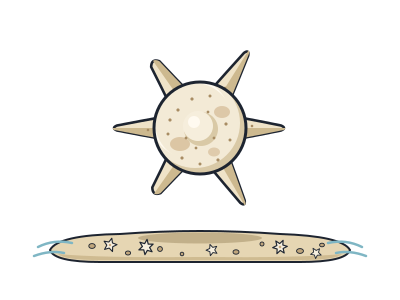
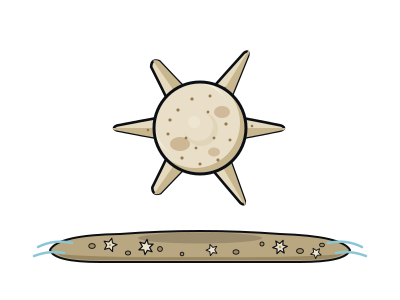
- Star sandThe tiny star-shaped grains on some Okinawan beaches are the shells of this foram.