An extinct group
Fusulinids †
Fusulinida
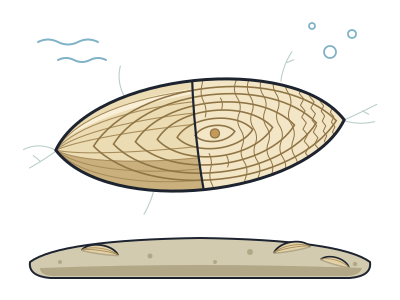
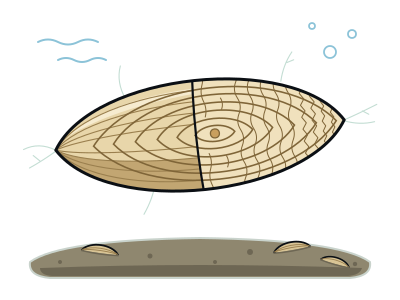
Rice-grain shells, each holding just one cell, that crowded warm seas for 80 million years.
Lived about 330–252 million years ago.
You and fusulinids meet in the Eukaryotes branch, shown at about 1.8 billion years ago (on 28 July, in a calendar from life's shared ancestor to today).
Picture a seabed scattered with tiny shells, many shaped like grains of rice. For about 80 million years, from roughly 330 to 252 million years ago, warm shallow seas were crowded with them. Yet each shell held just one cell. These were fusulinids, a group of forams. On the tree of life, forams sit closer to kelp and diatoms than to any animal.
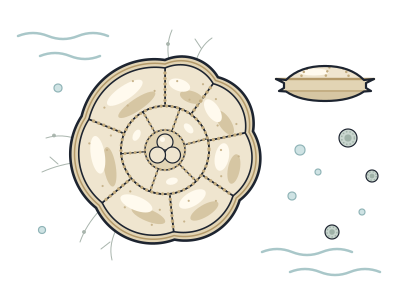
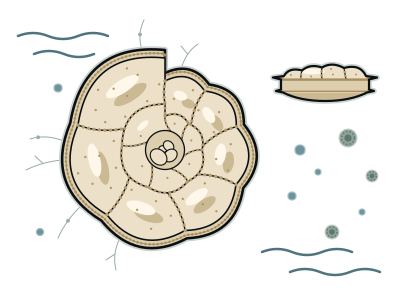
Most were a few millimetres to about 1 cm long. The earliest were smaller than a pinhead and roughly round. Over time many became longer and narrower, and some grew to more than about 5 cm, which is huge for a single cell. Inside, the hard limy shell was coiled like a Swiss roll and split into dozens of small chambers.
They seem to have liked clear, warm, shallow water, and may have lived on or near reefs. In places their shells piled up so thickly that whole layers of limestone are made almost entirely of them.
Then trouble came. The biggest kinds vanished first, about 260 million years ago. The smaller ones carried on until the Great Dying, the huge extinction about 252 million years ago, when the whole group died out.
Rock clocks
Fusulinid species changed quickly and spread widely, so geologists use them to work out the age of rocks and to match rock layers in different parts of the world.
Named after wheat
One common kind found in Kansas is called Triticites, from the Latin word for wheat. Many look so alike from the outside that experts must slice the shell open to tell species apart.
Found almost everywhere
Fusulinid fossils have been found on every continent except Antarctica.
Next to it on the tree
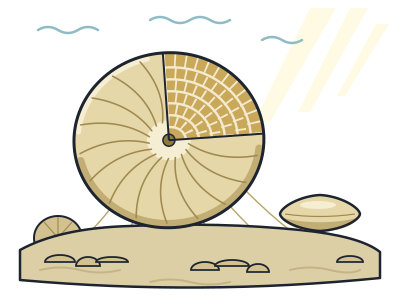
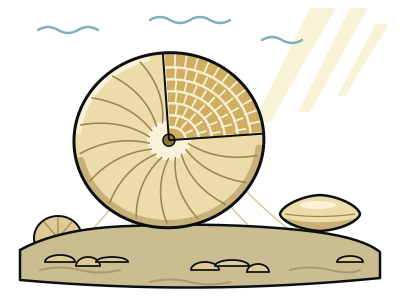
- Pyramid coin-shellCoin-sized shells packed into the limestone of the Giza pyramids.
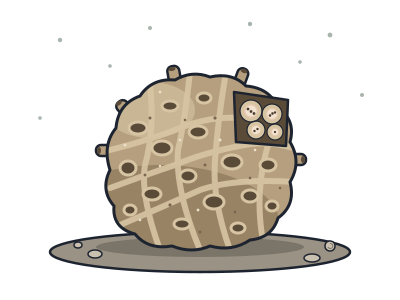
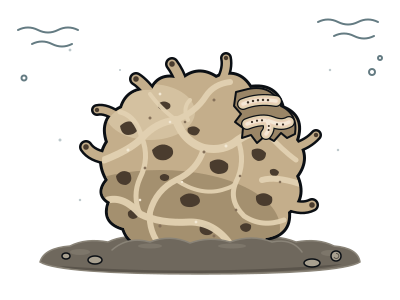
- Living beach ballA single cell up to 20 centimetres across, living on the deep sea floor.
- GlobotruncanaKeeled, wheel-shaped plankton shells of the dinosaur age, wiped out by the asteroid impact.
- GlobigerinaA floating foram whose shells carpet the ocean floor and record past climates.
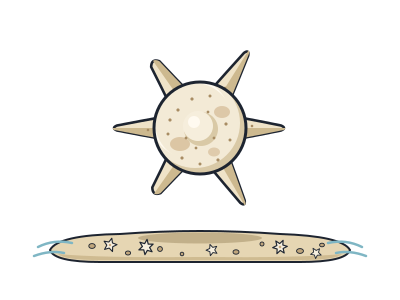
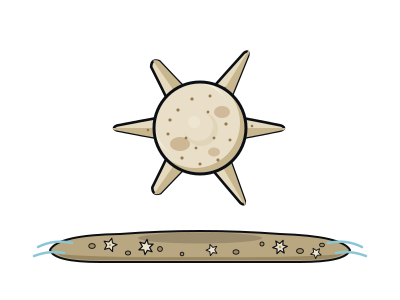
- Star sandThe tiny star-shaped grains on some Okinawan beaches are the shells of this foram.