An extinct species
Globotruncana †
Globotruncana
Tiny wheel-shaped shells that drifted through dinosaur-age oceans until the asteroid struck.
Lived about 86–66 million years ago.
You and the globotruncana meet in the Eukaryotes branch, shown at about 1.8 billion years ago (on 28 July, in a calendar from life's shared ancestor to today).
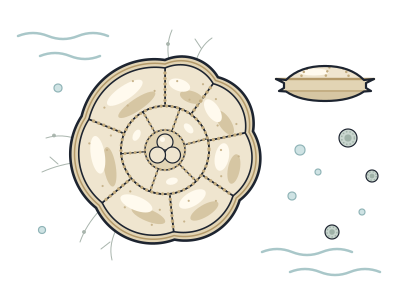
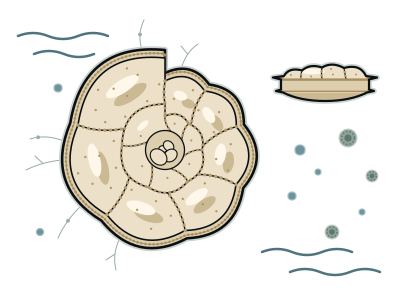
About 86 to 66 million years ago, in the age of the dinosaurs, tiny wheel-shaped shells drifted through the oceans, mostly in warm seas. They were part of the plankton. Each shell was usually under 1 millimetre across, about the size of a grain of sand. It looked like a mini seashell, but it was not an animal. Each shell was home to a single cell.
This drifter was a foram, a single-celled living thing that builds a shell. Its relatives on the tree are other forams, such as the coin-shaped pyramid coin-shell and the giant sea-floor 'living beach ball'. Further out, forams are related to radiolarians, and to kelp and diatoms. Snails are only very distant relatives.
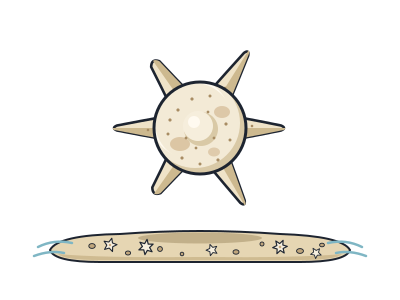
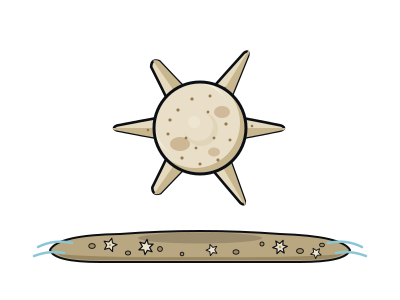
Fossils show a shell made of calcite, the mineral in chalk. It was shaped like a flattened coin, with its chambers coiling outward in a low spiral. Two ridges called keels ran around the square-cut rim, like the double edge of a tyre. In life, very fine threads probably reached out from the shell to catch food, just as they do in forams today.
Then, about 66 million years ago, an asteroid hit Earth. Most kinds of drifting forams died out, and these keeled wheels were among them. In rocks laid down just after the impact, they are gone.
A clue to the asteroid
At Gubbio in Italy, a geologist noticed that the forams below a thin layer of clay were bigger and more varied than the ones above it. That puzzle led to the discovery that the clay was rich in a rare metal, iridium, and then to the idea that an asteroid impact caused the extinction.
Found worldwide
One major fossil database lists about 15 species. Their fossils turn up in cores of rock drilled from the sea floor all around the world.
A few survivors
Not every drifting foram was lost. A few small kinds survived the impact, and all later drifting forams, including those alive today, came from them.
Next to it on the tree
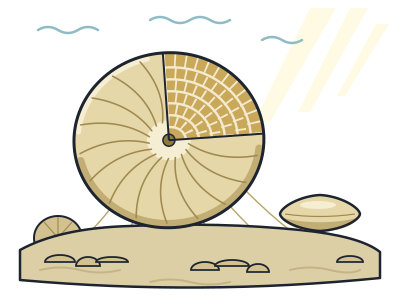
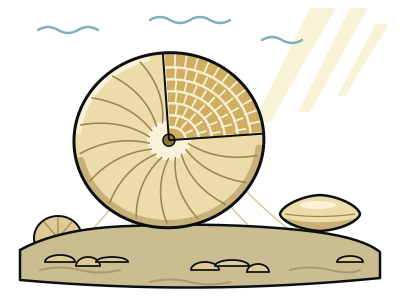
- Pyramid coin-shellCoin-sized shells packed into the limestone of the Giza pyramids.
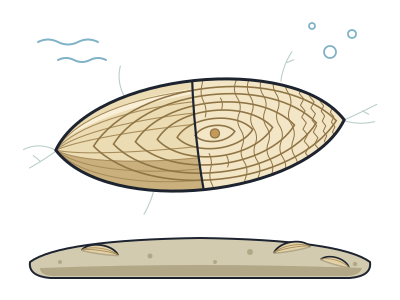
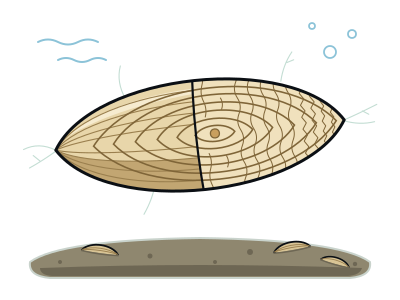
- FusulinidsRice-grain shells that crowded warm seas for 80 million years, then died in the Great Dying.
- Living beach ballA single cell up to 20 centimetres across, living on the deep sea floor.
- GlobigerinaA floating foram whose shells carpet the ocean floor and record past climates.
- Star sandThe tiny star-shaped grains on some Okinawan beaches are the shells of this foram.