A species
Toco toucan
Ramphastos toco
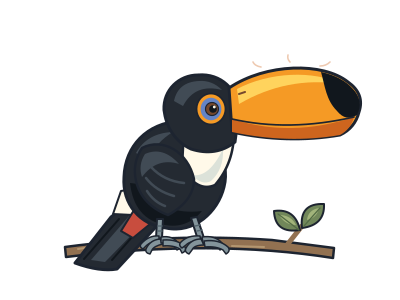
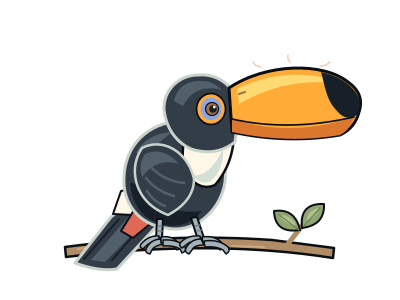
A giant, lightweight beak that helps release heat.
You and the toco toucan meet in the Amniotes branch, shown at about 320 million years ago (on 4 December, in a calendar from life's shared ancestor to today).
The toco toucan's giant beak works like a radiator, releasing body heat into the air. The bird can adjust this cooling system by changing how much blood flows through its beak. In warm conditions, more blood flows through it; in cooler conditions, the flow drops to save heat. Unlike most of its body, the beak has no insulating feathers covering its many blood vessels.
That impressive beak is not a heavy, solid block. Inside is an airy framework of bony fibres and thin membranes. Outside, overlapping layers form a strong shell made from keratin, the same material as your fingernails. This structure gives the beak strength without making it unnecessarily heavy.
Despite its unusual appearance, this bird has a familiar-looking relative on the tree: the black woodpecker. Toucans and woodpeckers belong to the same wider bird group. A toucan is not a parrot, even if its striking beak might suggest otherwise.
Biggest toucan
The toco toucan is the largest species in the toucan family.
A two-way grip
Each foot has two toes pointing forwards and two backwards, a grip also found in woodpeckers.
Tucked up to rest
While resting, it can tuck its beak beneath a wing and fold its tail over its back, helping reduce heat loss.
Next to it on the tree
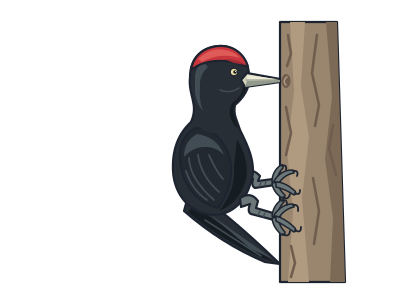
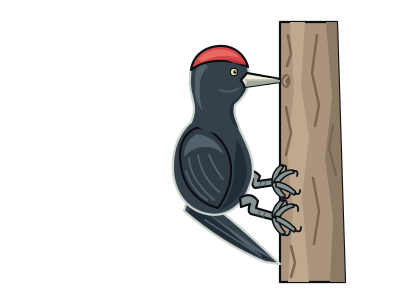
- Black woodpeckerDrums loudly on trees to signal, and chisels big oblong holes to reach carpenter ants.
- Acorn woodpeckerFamilies store thousands of acorns, each wedged into its own drilled hole in a 'granary' tree.
- Greater honeyguideLeads people to wild bees' nests with a chattering call, then eats the wax left behind.