A species
Tetrahymena
Tetrahymena thermophila
A pond cell behind two Nobel Prizes
You and the tetrahymena meet in the Eukaryotes branch, shown at about 1.8 billion years ago (on 28 July, in a calendar from life's shared ancestor to today).
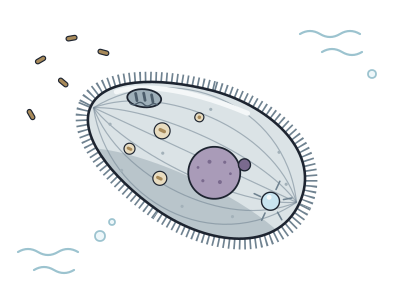
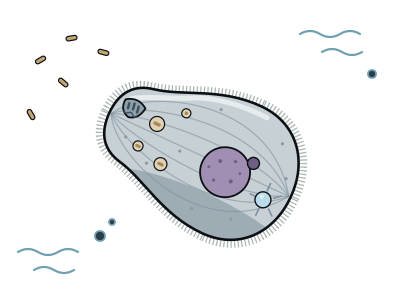
This tiny pond swimmer has helped win two Nobel Prizes. It is a single cell, about half the width of a human hair, covered in rows of beating hairs called cilia. On the tree it sits with other ciliates, such as Paramecium. Surprisingly, it also belongs to a wider group that includes dinoflagellates and the malaria parasite.
In 1978, Elizabeth Blackburn and Joseph Gall used it to read the DNA at the tips of chromosomes, called telomeres. Its tips repeat the short code TTGGGG, very like our own TTAGGG. In 1985, Blackburn and her student Carol Greider found telomerase in it. This enzyme can rebuild the tips that wear down each time a cell divides. Blackburn and Greider shared the 2009 Nobel Prize in Physiology or Medicine with Jack Szostak.
In 1982, Thomas Cech showed that a piece of its RNA could cut itself out and join the pieces on either side back together, with no help from proteins. This showed that RNA can act like an enzyme. Until then, most scientists thought only proteins could speed up chemical reactions like this. Cech shared the 1989 Nobel Prize in Chemistry with Sidney Altman, who studied a different organism.
Why this cell? Its working nucleus holds tens of thousands of tiny chromosomes, so it has a huge number of tips to study. It is also easy to grow: in good conditions, one cell can split in two in under two hours.
Mating type is not simply inherited
A cell's mating type is not copied from its parents. Each new line of cells ends up with one of the types its genes allow, more or less by chance. The new cells also go through a young stage when they cannot mate. They only become ready about 50 to 80 cell divisions later.
Not really a hot-spring lover
Its name means 'heat-loving', but it lives in ordinary ponds. It grows best at about 35 °C, can keep growing at nearly 41 °C, and can survive at 15 °C.
Where lab cells came from
The standard lab strains come from wild cells collected at Woods Hole, Massachusetts, in the early 1950s.
Next to it on the tree
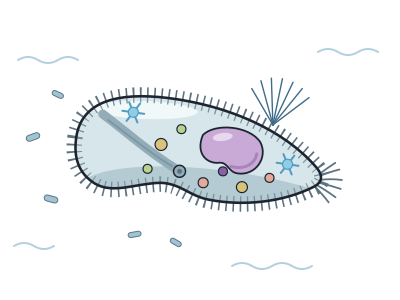
- ParameciumA slipper-shaped cell that rows with hairs and fires tiny harpoons when threatened.
- Trumpet animalculeA blue, trumpet-shaped single cell big enough to see by eye, and able to regrow from a fragment.
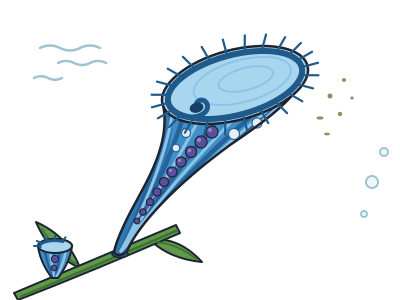
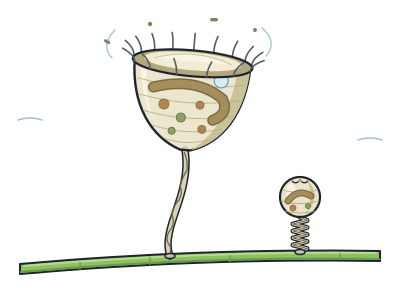
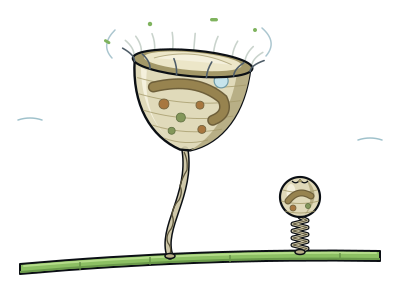
- Bell animalculeA bell on a spring-loaded stalk that snaps shut faster than almost anything alive.
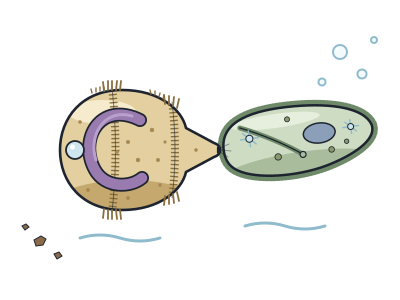
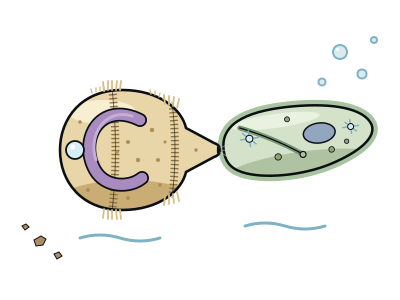
- Barrel ciliateA barrel-shaped hunter that swallows Paramecium whole, prey nearly as big as itself.
- Walking ciliateInstead of swimming, it strolls on tufts of fused hairs that work like little legs.