A species
Barrel ciliate
Didinium nasutum
A tiny barrel-shaped hunter that swallows prey nearly as big as itself
You and the barrel ciliate meet in the Eukaryotes branch, shown at about 1.8 billion years ago (on 28 July, in a calendar from life's shared ancestor to today).
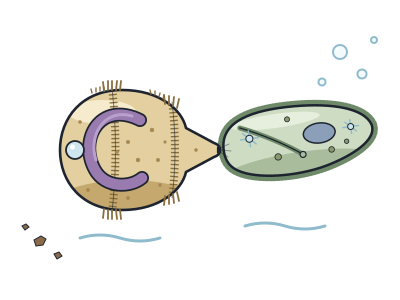
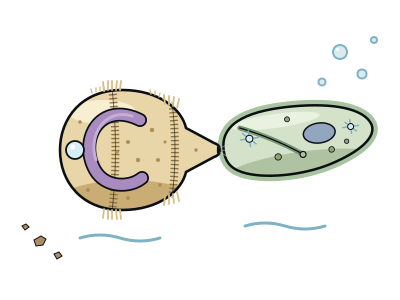
The barrel ciliate is a single cell that hunts other single cells. Its favourite food is Paramecium, a fellow ciliate on the same branch of the tree of life. The surprising part is that it swallows its prey whole, even though a Paramecium can be about as big as the hunter, or even bigger. Imagine gulping down someone your own size in one go.
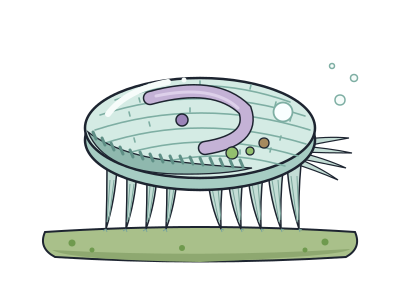
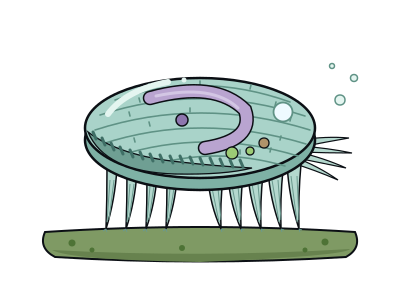
Its body is shaped like a tiny barrel. Two belts of beating hairs, called cilia, circle it like the hoops on a barrel, and they make it a fast swimmer. At the front is a blunt, cone-shaped snout with the mouth at its tip.
When a Paramecium bumps into the snout, the hunter fires two kinds of tiny darts at once. Short ones stick to the prey's surface. Long ones pierce it but stay anchored in the snout, a bit like fishing lines. The darts stun and hold the prey. Then the mouth stretches wide and the prey is dragged inside, squeezed as it goes. Afterwards the mouth closes and the snout forms again.
When prey runs out, the barrel ciliate seals itself inside a hard-shelled ball called a cyst and waits. Cysts have stayed alive for at least 10 years, waking up when they are put among plenty of Paramecium.
A famous experiment
In the 1930s the Russian scientist Georgy Gause kept these hunters and Paramecium together in small containers. When he added new animals every few days, the two populations rose and fell in waves. Until then, those waves had only been predicted by maths.
You are what you eat
Its size depends on its food. Cells fed on bigger kinds of Paramecium grow bigger. Cells about to split in two were about one and a half times larger on big prey than on small prey.
A green shield
One kind of Paramecium carries green algae inside its body. The algae give it some protection from this hunter.
Next to it on the tree
- ParameciumA slipper-shaped cell that rows with hairs and fires tiny harpoons when threatened.
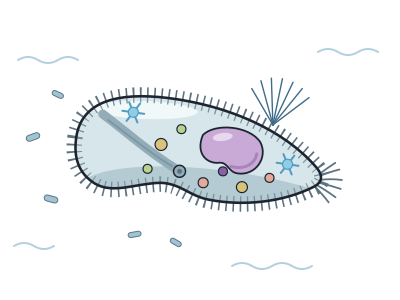
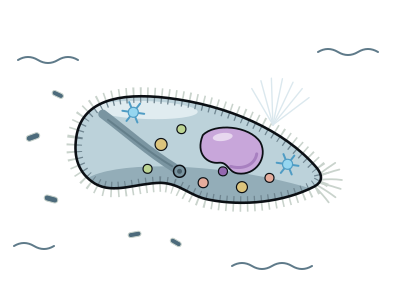
- Trumpet animalculeA blue, trumpet-shaped single cell big enough to see by eye, and able to regrow from a fragment.
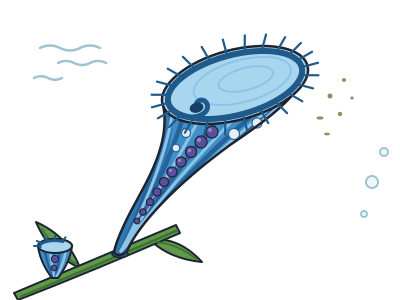
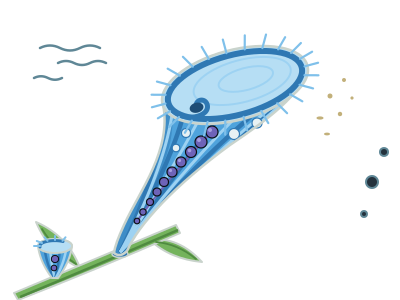
- Bell animalculeA bell on a spring-loaded stalk that snaps shut faster than almost anything alive.
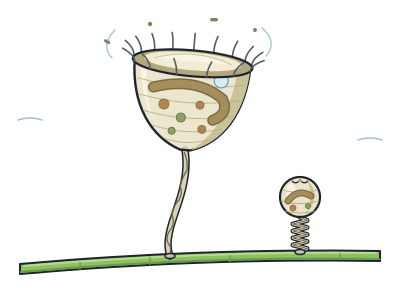
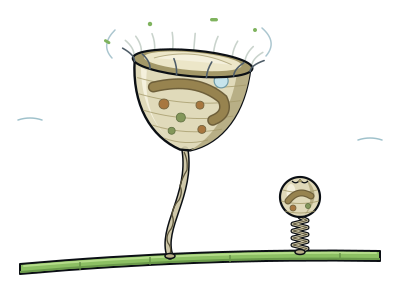
- TetrahymenaA pond ciliate behind two Nobel Prizes: chromosome tips and RNA that acts like an enzyme.
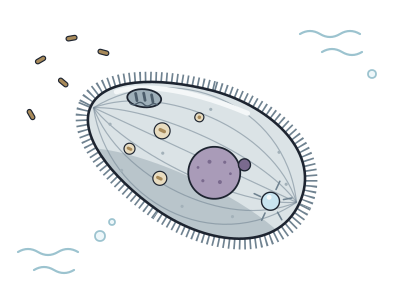
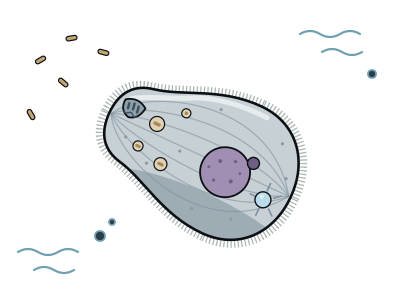
- Walking ciliateInstead of swimming, it strolls on tufts of fused hairs that work like little legs.