A species
Sun bear
Helarctos malayanus
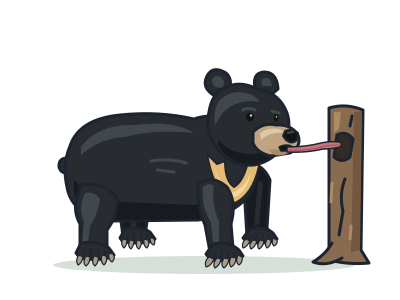
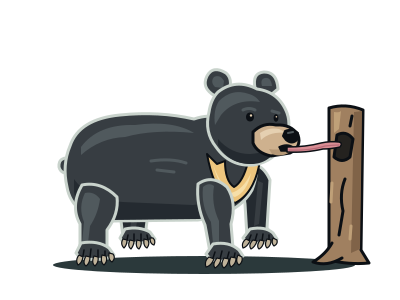
The smallest bear, with a long tongue for honey.
You and the sun bear meet in the Placental mammals branch, shown at about 95 million years ago (on 23 December, in a calendar from life's shared ancestor to today).
The sun bear is the smallest of the world's eight living bear species, with a long tongue that reaches honey inside trees. It belongs to the same bear family as polar bears and brown bears. This is no baby version of a bigger bear: even fully grown, it stays small.
Honey is only part of the menu. Fruit and insects are major foods, and that narrow tongue helps reach insects tucked into tight spaces too. Large paws, bare soles and long, curved claws help it climb trees. It searches for food both among the branches and down on the forest floor.
Its home is tropical forest in parts of mainland Southeast Asia, Sumatra and Borneo. Unlike some of its bear relatives, it does not hibernate: these forests provide food throughout the year. Fallen logs, branches and hollow tree trunks can all offer resting places.
An individual pattern
The pale chest marking differs between bears, rather like a fingerprint.
Humming cubs
Cubs hum while drinking their mother's milk.
A mother's arms
Mothers sometimes carry cubs in their front paws while walking upright.
Next to it on the tree
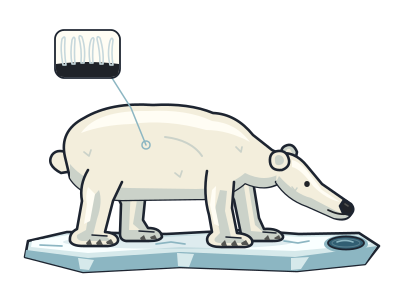
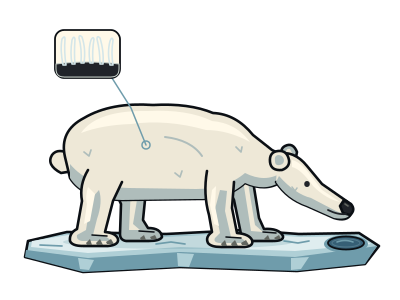
- Polar bearBlack skin beneath colourless hairs that scatter light into a pale coat; an Arctic seal hunter.
- Giant pandaOften spends about 12–14 hours a day eating bamboo, held with a wrist-bone “thumb”.


- Brown bearThe grizzly: can smell food kilometres away and the polar bear's close relative.
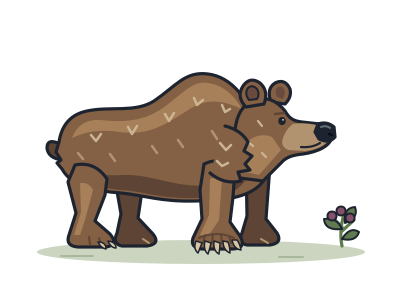
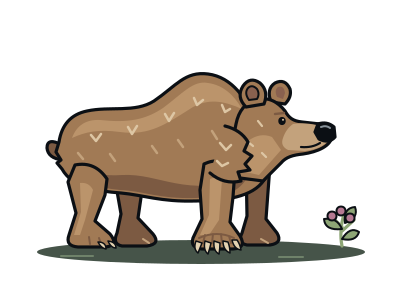
- Cave bearA huge ice-age bear whose bones fill European caves.
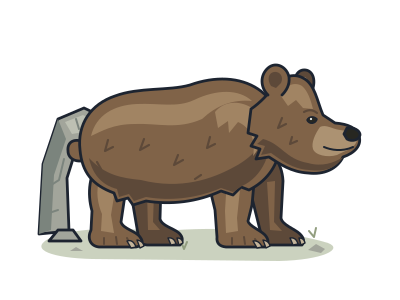
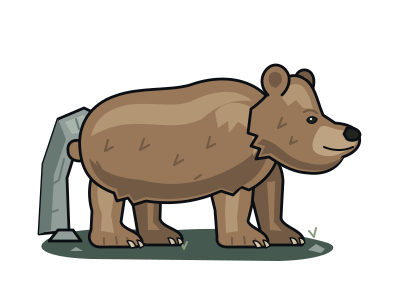
- American black bearNorth America’s most common bear, often brown or even white despite the name.
- Andean bearSouth America’s only bear, with pale face markings, and the inspiration for Paddington.
- Giant short-faced bearOne of the largest meat-eating land mammals ever, a long-legged Ice Age bear of North America.