

A species
Giant panda
Ailuropoda melanoleuca
A bamboo-eating bear with a wrist-bone “thumb”
You and the giant panda meet in the Placental mammals branch, shown at about 95 million years ago (on 23 December, in a calendar from life's shared ancestor to today).
A giant panda spends about 12–14 hours a day eating, mostly bamboo. It holds the stems with a surprising tool: a “thumb” made from an enlarged wrist bone, rather than a true finger. Despite this unusual diet, it belongs firmly in the bear family, alongside polar bears and brown bears.
That family connection helps explain a puzzle inside its body. A panda’s digestive system is still more like a meat-eater’s than a plant-eater’s. It gets nutrients from bamboo inefficiently, so it needs to eat large amounts. Strong jaw muscles and broad back teeth help crush the bamboo, while its teeth also peel tough stalks.
Wild giant pandas live only in China, in misty mountain forests with thick bamboo beneath the trees. Adults usually spend time alone, but they are not completely disconnected. Scent messages left on trees, rocks and the ground help them detect other pandas and find potential mates.
Apple-sized beginnings
A newborn weighs about 85–140 grams, roughly the weight of a small apple.
A sheep-like hello
A friendly panda greeting can sound like a lamb’s bleat. Pandas also honk, bark and growl.
A changing food supply
Bamboo of one kind can flower and die across an area together, forcing pandas to find another food patch.
Next to it on the tree
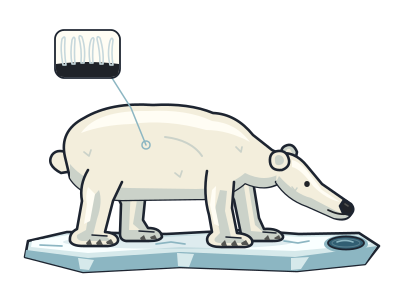
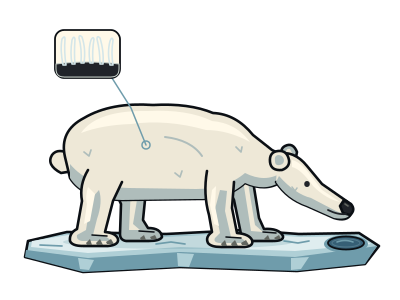
- Polar bearBlack skin beneath colourless hairs that scatter light into a pale coat; an Arctic seal hunter.
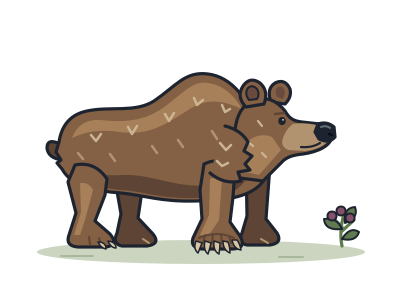
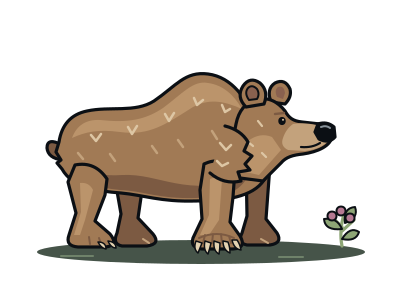
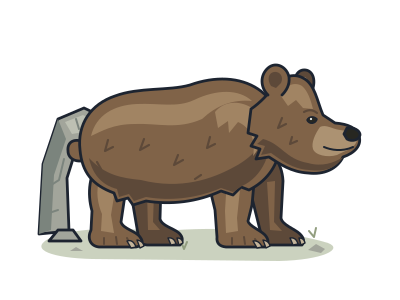
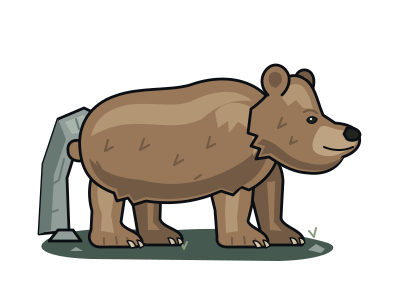
- Brown bearThe grizzly: can smell food kilometres away and the polar bear's close relative.
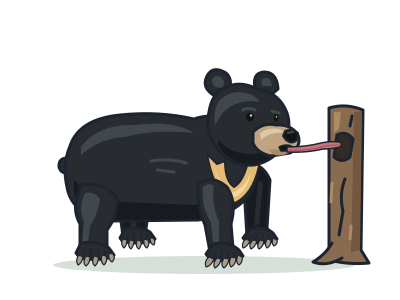
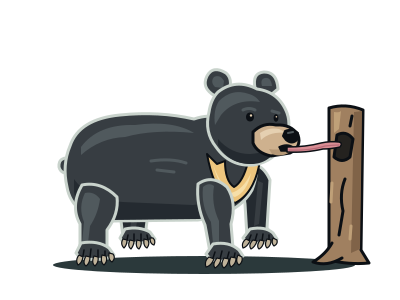
- Sun bearThe smallest bear, with a long tongue for honey and insects.
- Cave bearA huge ice-age bear whose bones fill European caves.
- American black bearNorth America’s most common bear, often brown or even white despite the name.
- Andean bearSouth America’s only bear, with pale face markings, and the inspiration for Paddington.
- Giant short-faced bearOne of the largest meat-eating land mammals ever, a long-legged Ice Age bear of North America.