A species
Polar bear
Ursus maritimus
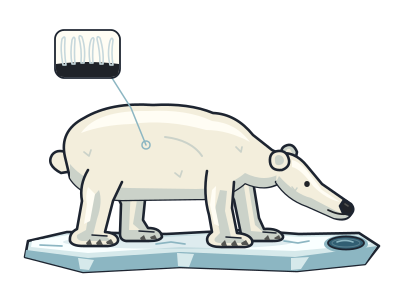
Black skin, clear hairs and a life on sea ice.
You and the polar bear meet in the Placental mammals branch, shown at about 95 million years ago (on 23 December, in a calendar from life's shared ancestor to today).
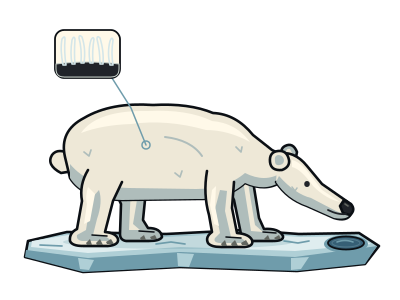
An adult polar bear has black skin beneath a coat of see-through hairs. The hairs scatter and reflect light, making the fur look white rather than transparent. This Arctic hunter is the brown bear’s closest living bear relative. Despite their different ways of life, the two are so closely related that they sometimes have young together, though this is rare.
Sea ice is the polar bear’s hunting platform. Its main food is ringed seals and bearded seals, which provide rich supplies of fat. A bear can find a seal’s breathing hole by smell, then wait beside it for hours or even days until a seal comes up for air.
Broad paws help spread the bear’s weight across the ice. They can reach about 30 centimetres across: roughly the size of dinner plates. Small bumps on the footpads improve grip, while fur between the toes and pads helps keep the feet warm.
Pink at first
Newborn cubs have pink skin. It darkens during their first few months.
Paddles and steering
Swimming polar bears paddle with their front paws and use their back paws to help steer.
Keeping warmth in
Small, rounded ears and a short tail help limit heat loss in the Arctic cold.
Next to it on the tree
- Giant pandaOften spends about 12–14 hours a day eating bamboo, held with a wrist-bone “thumb”.


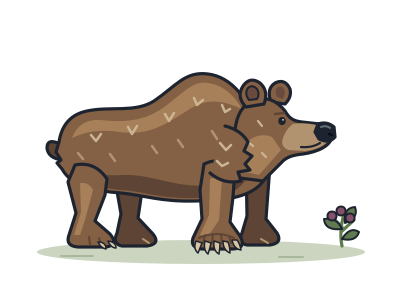
- Brown bearThe grizzly: can smell food kilometres away and the polar bear's close relative.
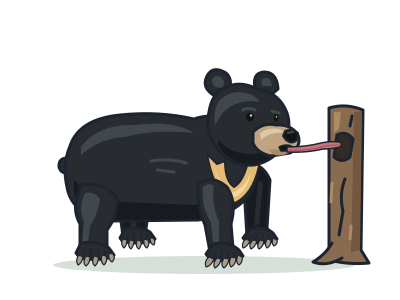
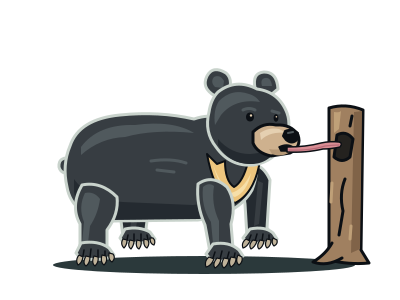
- Sun bearThe smallest bear, with a long tongue for honey and insects.
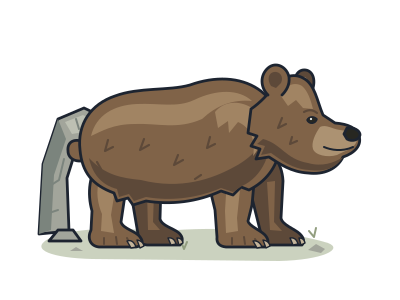
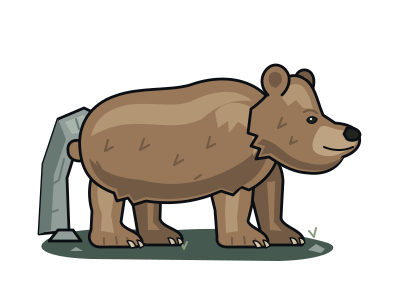
- Cave bearA huge ice-age bear whose bones fill European caves.
- American black bearNorth America’s most common bear, often brown or even white despite the name.
- Andean bearSouth America’s only bear, with pale face markings, and the inspiration for Paddington.
- Giant short-faced bearOne of the largest meat-eating land mammals ever, a long-legged Ice Age bear of North America.