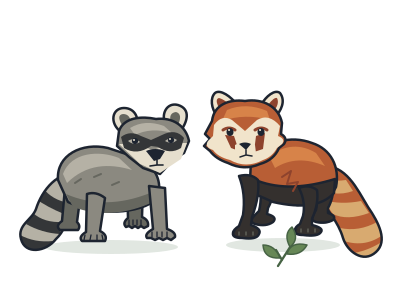
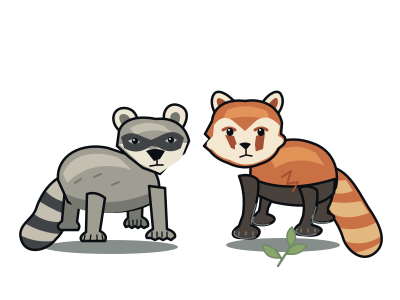
A group of living things
Weasels, raccoons and relatives
Musteloidea
The red panda’s family connections go beyond its name.
This branch is shown at about 30 million years ago; its age is a rough estimate.
You and weasels, raccoons and relatives meet in the Placental mammals branch, shown at about 95 million years ago (on 23 December, in a calendar from life's shared ancestor to today).
The red panda is not a bear like the giant panda. Its closer relatives include raccoons, skunks and weasels. But it is not a kind of raccoon, either: red pandas have their own family within this wider group.
There are four families here: red pandas; raccoons and their relatives; skunks and stink badgers; and weasels and their relatives. The weasel family includes otters, European badgers and wolverines, despite their very different shapes and ways of life. Members of this wider group live in forests, grasslands and tundra, as well as watery habitats.
Family ties do not mean matching meals. Bamboo makes up most of a red panda’s diet, especially leaves and tender shoots. Raccoons eat both plants and animals, including fruit, nuts, insects, crayfish and eggs.
The original panda
The red panda was scientifically described in 1825, before the giant panda.
Sensitive paws
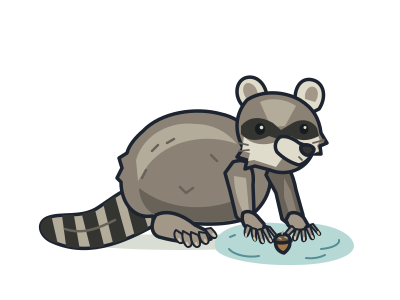
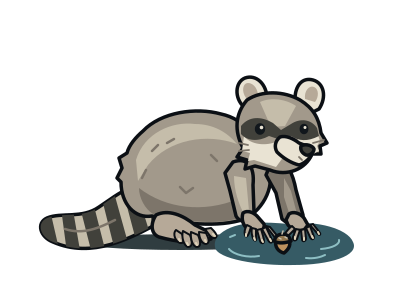
Raccoons have five toes on each foot. Their sensitive front paws help them handle food.
A winter together
Young raccoons usually stay with their mother through their first winter.
Inside weasels, raccoons and relatives
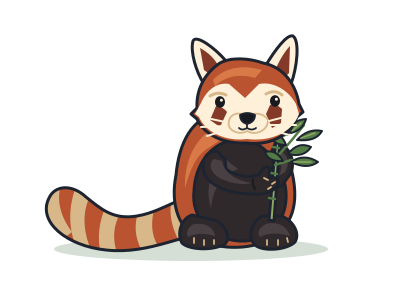
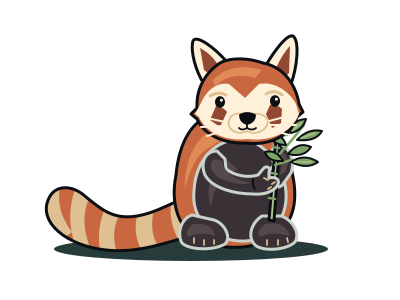
- Red pandaShares bamboo eating and a false thumb with giant pandas, but has closer ties to raccoons and weasels.
- RaccoonSensitive front paws explore food by touch; their wet-paw advantage remains uncertain.
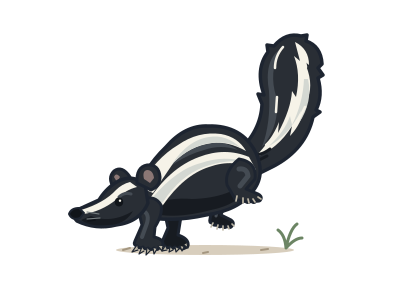
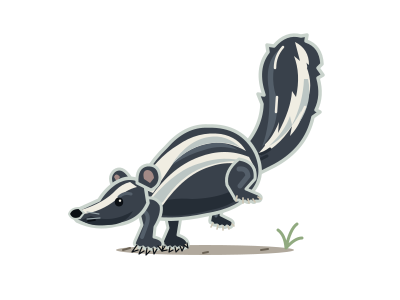
- Striped skunkUsually warns with stamps and a raised tail before spraying; brief handstands are also reported.
- Weasel familyThe largest carnivoran family, from tiny weasels to otters, badgers and the wolverine.
- South American coatiA ringtailed raccoon relative that roams in noisy bands, probing for food with a long snout.