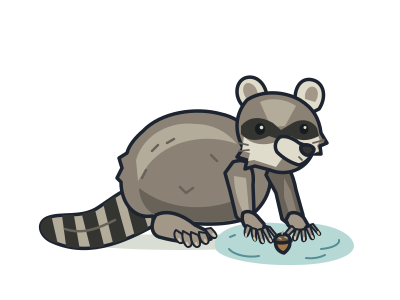
A species
Raccoon
Procyon lotor
A masked explorer with a feel for food.
You and the raccoon meet in the Placental mammals branch, shown at about 95 million years ago (on 23 December, in a calendar from life's shared ancestor to today).
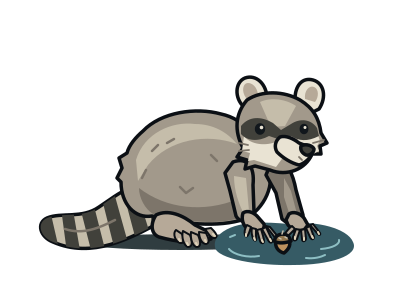
A raccoon explores food with sensitive, finger-like front toes. Saying it can “see” with its fingers is only a comparison: it gathers information by touch, not by looking through its paws. It feels along the bottoms of streams and ponds for food, and usually picks food up before bringing it to its mouth.
Raccoons belong to a wider group that includes otters, badgers and red pandas. Its closer relatives include coatis, ringtails, kinkajous and olingos. That black eye mask and bushy, ringed tail make the raccoon itself easy to recognise.
Mainly active at night, it lives in places ranging from woodland and wetlands to farmland and towns. Its natural range stretches from southern Canada to Panama. People have also introduced it to parts of Europe and Asia, where populations have become established.
A winter with mum
Young raccoons often stay with their mother through their first winter.
Confident climbers
Raccoons are strong swimmers and can climb down trees head-first.
More than a chatter
Their sounds include grunts, squeaks, hisses and a purr compared with a housecat’s.
Next to it on the tree
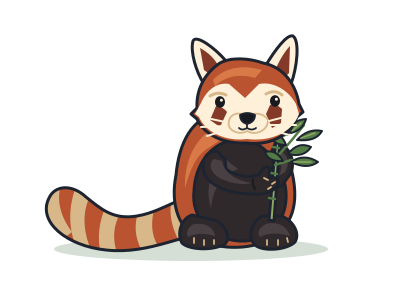
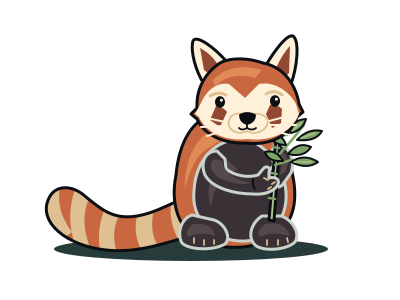
- Red pandaShares bamboo eating and a false thumb with giant pandas, but has closer ties to raccoons and weasels.
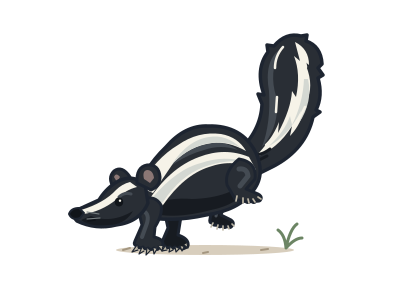
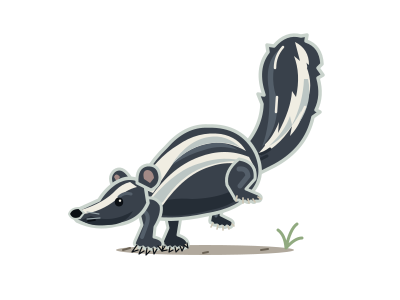
- Striped skunkUsually warns with stamps and a raised tail before spraying; brief handstands are also reported.
- Weasel familyThe largest carnivoran family, from tiny weasels to otters, badgers and the wolverine.
- South American coatiA ringtailed raccoon relative that roams in noisy bands, probing for food with a long snout.