An extinct species
Homo floresiensis †
Homo floresiensis
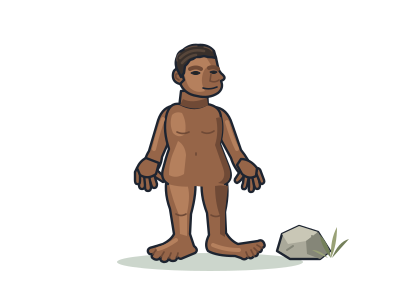
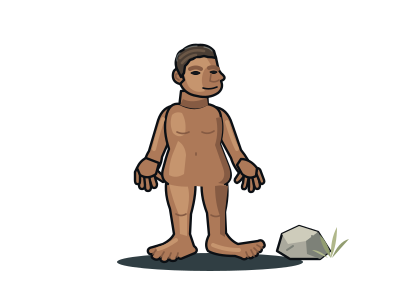
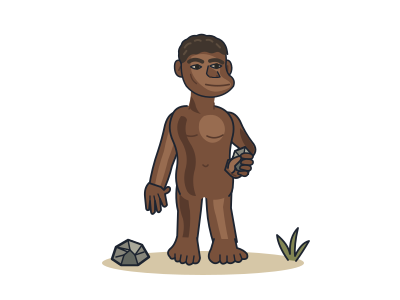
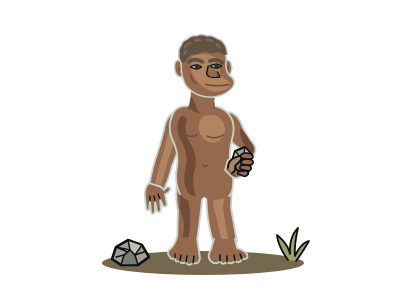
The metre-tall human relative nicknamed the “hobbit”.
Lived about 190,000–50,000 years ago.
You and the homo floresiensis meet in the Humans and chimpanzees branch, shown at about 7 million years ago (on 31 December, in a calendar from life's shared ancestor to today).
Compare with something elseThe “hobbit” was a human relative about a metre tall—roughly the height of a metre ruler standing upright. It lived on Flores, an island in Indonesia, where all its known remains were found. Despite its small size, it belonged on the human branch of our family tree, not the chimpanzee branch.
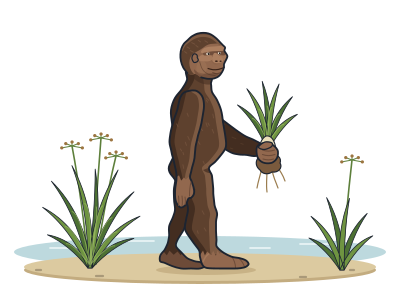
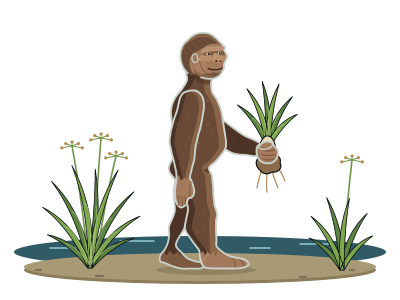
Evidence placed it on Flores about 190,000 to 50,000 years ago. That range combined stone tools attributed to this species with younger bones, dated to about 100,000 to 60,000 years ago. Its best-preserved individual had an almost-complete skull but only a partial skeleton. The bones showed short legs, a broad pelvis and large feet. It walked on two legs.
This was not simply a tiny version of a modern human. Its forehead sloped backwards, its jaw lacked a projecting chin, and its teeth were large for its body. Stone tools found alongside the remains showed that this small human relative could make and use tools.
Small, but grown up
Fully developed wisdom teeth showed that the best-preserved individual was an adult, not a child.
A name from fiction
The “hobbit” nickname referred to the small people in Tolkien’s stories.
An island journey
Its ancestors had somehow crossed the sea to Flores. This did not prove that they built boats.
Next to it on the tree
- HumanYou are here: one twig on a very large tree.


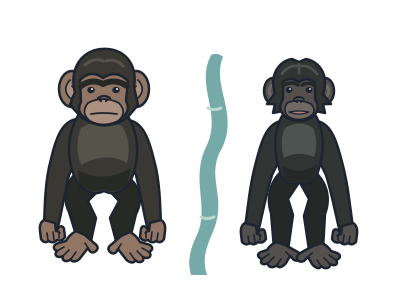
- Chimpanzees and bonobosTwo apes split by the Congo River: one more warlike, one more peaceful.
- "Lucy" (Australopithecus)Walked upright 3.2 million years ago with a brain the size of a chimp's.
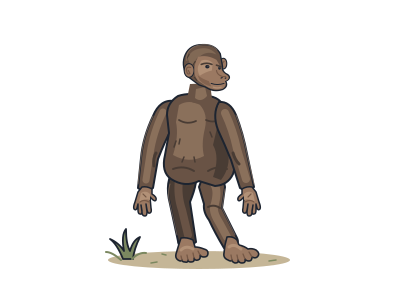
- Homo erectusThe first human relative to leave Africa, and it lasted nearly two million years.
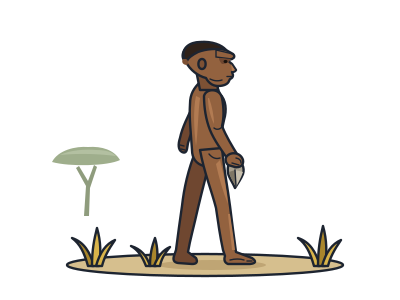
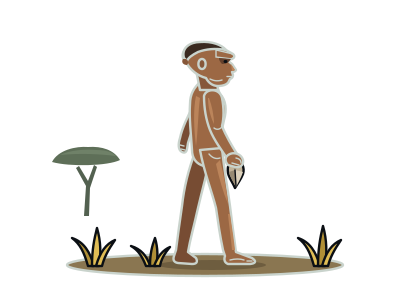
- NeanderthalAmong our closest extinct relatives; many people carry some Neanderthal DNA.
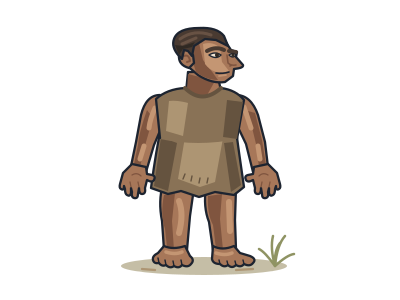
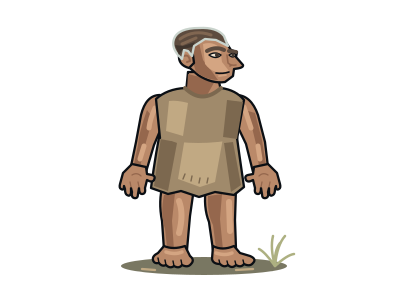
- Homo habilisThe "handy man", an early member of our genus linked to early stone tools.
- DenisovansFirst recognised from ancient DNA; an inherited gene version helps Tibetans cope with thin mountain air.
- Paranthropus boiseiA human cousin with huge cheek teeth and a skull crest, nicknamed "Nutcracker Man".