An extinct species
Homo erectus †
Homo erectus
Probably the first human relative to walk out of Africa, and one of the longest-lasting.
Lived about 1.9–0.11 million years ago.
You and the homo erectus meet in the Humans and chimpanzees branch, shown at about 7 million years ago (on 31 December, in a calendar from life's shared ancestor to today).
Compare with something elseMost scientists think this was the first human relative to leave Africa. Its fossils turn up in Africa, in Georgia in western Asia, and as far east as China and Indonesia. It also lasted an astonishingly long time. It lived from about 1.9 million to about 110,000 years ago, so the species survived for close to 1.8 million years.
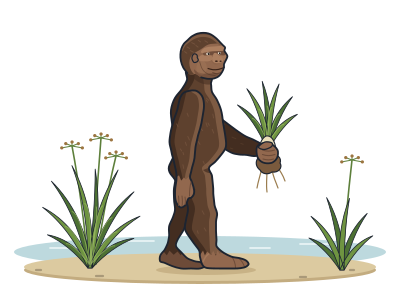
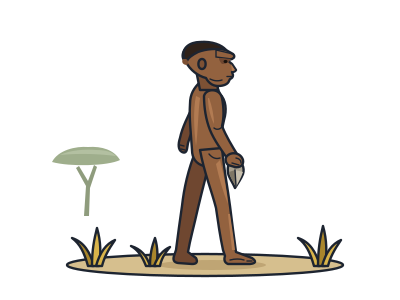
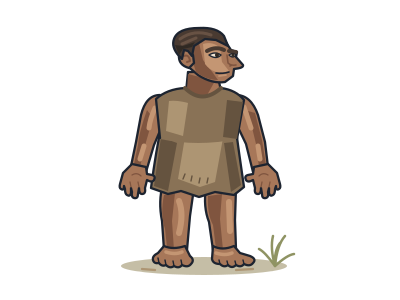
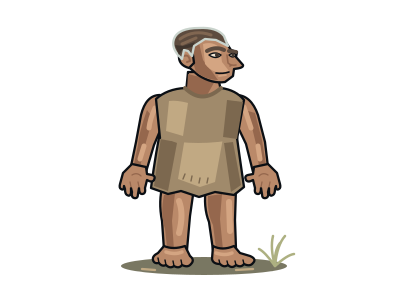
Its bones show that it walked fully upright, with long legs and shorter arms like ours. Adults stood about 145 to 185 cm tall, roughly the height of a person today. Its skull was long and low, with a sloping forehead, a heavy bony ridge above the eyes and a broad, flat nose. Its brain was bigger than those of most earlier relatives, and it grew larger over time. Even so, on average it stayed smaller than ours.
It is linked with teardrop-shaped stone hand axes, and the earliest known traces of hearths date from the time it lived. Scientists think it probably ate a lot of meat, and perhaps honey and starchy plant parts dug from the ground. These ideas come from tools, bones and campsites, because nobody saw it alive.
It was not simply a step on a straight path to us. Other kinds of human relative lived at the same time as it did. On the tree it sits beside us as a sister branch, not as a rung on a ladder.
A boy as tall as an adult
The most complete skeleton of this species, called Turkana Boy, was found in Kenya in 1984 and has 108 bones. He was probably only somewhere between about 7 and 12 years old when he died, yet he was already about 155 cm tall.
Found over 130 years ago
The first fossil of this species, nicknamed 'Java Man', was found in Indonesia in 1891 by a Dutch doctor named Eugène Dubois.
Looked after by others?
One early human relative from Dmanisi in Georgia had lost all but one tooth and still lived for years afterwards. This suggests that others in the group may have helped care for this individual.
Next to it on the tree
- HumanYou are here: one twig on a very large tree.


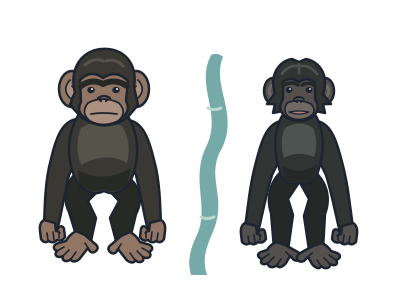
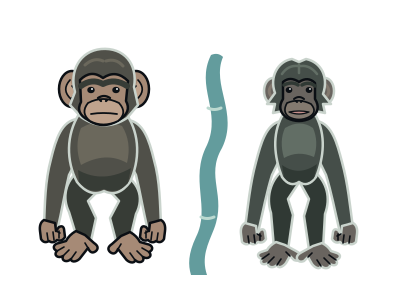
- Chimpanzees and bonobosTwo apes split by the Congo River: one more warlike, one more peaceful.
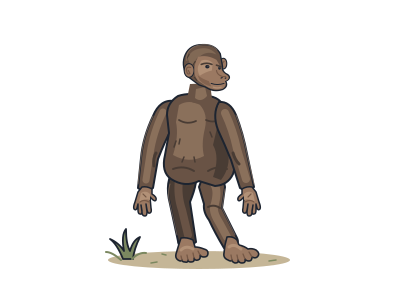
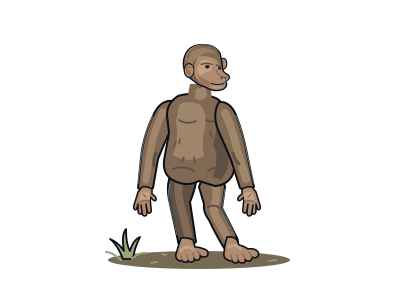
- "Lucy" (Australopithecus)Walked upright 3.2 million years ago with a brain the size of a chimp's.
- NeanderthalAmong our closest extinct relatives; many people carry some Neanderthal DNA.
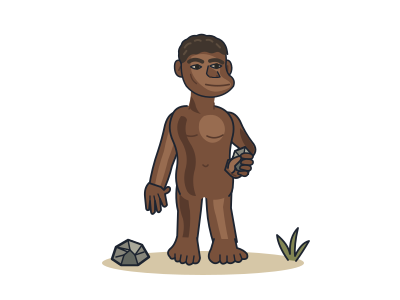
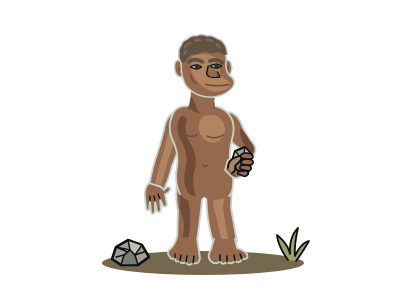
- Homo habilisThe "handy man", an early member of our genus linked to early stone tools.
- DenisovansFirst recognised from ancient DNA; an inherited gene version helps Tibetans cope with thin mountain air.
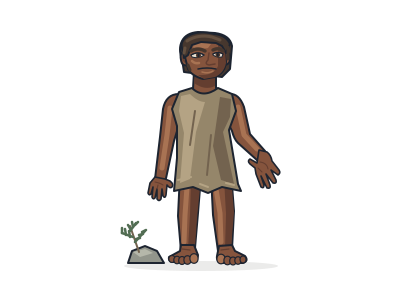
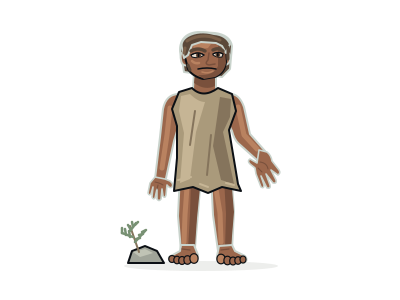
- Homo floresiensisThe "hobbit": a metre-tall human relative living on an Indonesian island.
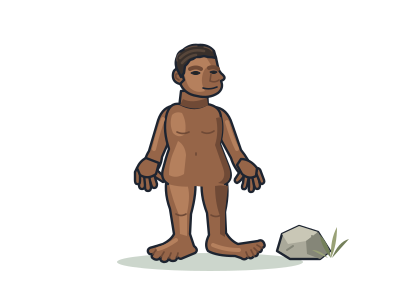
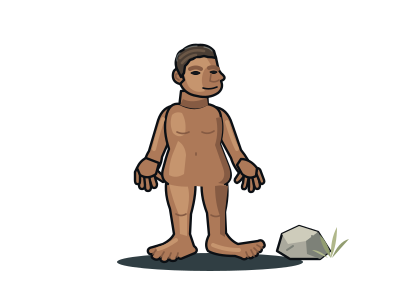
- Paranthropus boiseiA human cousin with huge cheek teeth and a skull crest, nicknamed "Nutcracker Man".