A species
Grey crowned crane
Balearica regulorum
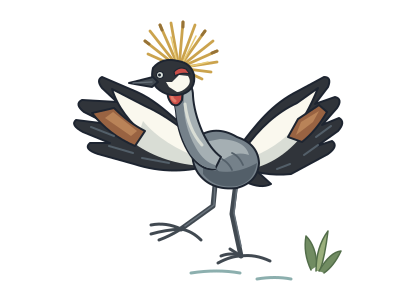
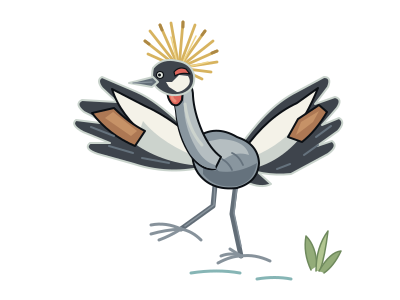
A golden-crowned dancer with leaps and bows
You and the grey crowned crane meet in the Amniotes branch, shown at about 320 million years ago (on 4 December, in a calendar from life's shared ancestor to today).
The grey crowned crane dances with leaps and deep bows beneath a crown of stiff, golden feathers. Either partner can start a dance, adding head-bobbing and wing-flapping. These displays are not just about finding a mate. They also help partners stay close and can ease tension between birds.
Its close relative, the black crowned crane, wears a golden crown too, but has a black body instead of a grey one. The flamingo and hummingbird shown nearby on this tree are more distant relatives. Both male and female grey crowned cranes wear the crown and have almost identical colouring.
These birds live in eastern and southern Africa, where wetlands meet open grassland. Tall wetland plants shelter their nests, while nearby grassland provides feeding grounds. Their varied meals include seeds, grass tips, insects and other small animals. They also eat crops such as maize. The species is Endangered and its population is falling. Losing wetlands is one of the threats it faces.
Stamping for supper
It stamps its feet to disturb insects, then catches them.
A shared song
Partners call together in a duet that helps maintain their bond and defend their territory.
Quick first steps
Chicks can leave the nest within hours of hatching.