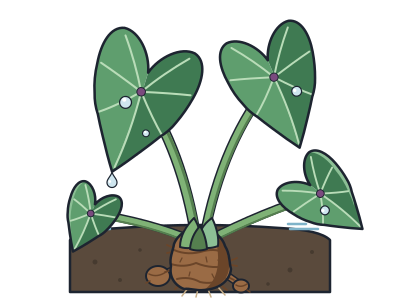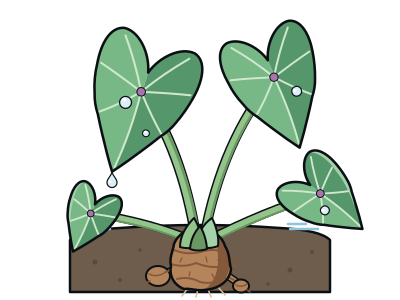

A species
Watermeal
Wolffia globosa
A whole flowering plant smaller than a grain of rice
You and the watermeal meet in the Eukaryotes branch, shown at about 1.8 billion years ago (on 28 July, in a calendar from life's shared ancestor to today).
Look closely at a still, sunny pond and you might see what looks like fine green sand on the water. Each grain is a whole plant, and one of the smallest flowering plants on Earth. A typical one is about 0.6 mm long, far smaller than a grain of rice. It weighs about as much as two grains of table salt.
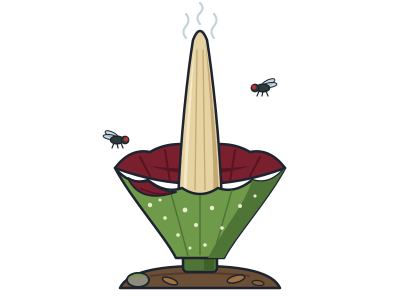
Here is the surprise: watermeal belongs to the arum family, the same family as the giant titan arum shown beside it. It is not algae or pond scum. It is a true flowering plant that can make flowers, fruit and seeds.
Watermeal has no roots, no stem and no true leaves. The whole plant is one see-through green body called a frond, shaped a bit like a tiny egg with a flat top. It rarely flowers. When it does, a tiny flower with no petals sits in a small pit on top. Mostly it makes more of itself by budding. A daughter plant grows out of a pouch at one end, so you often see pairs joined together.
It floats on quiet ponds, ditches and rice fields, often mixed with other duckweeds. It is native to warm parts of Asia but has spread to other continents.
Through the eye of a needle
A single plant can pass through the eye of an ordinary sewing needle, and about 5,000 of them could fit in a thimble.
Water eggs for dinner
In Thailand and Laos people gather it from ponds and streams and cook it in curries and stir-fries. One Thai name, khai nam, means 'water eggs'.
Hitching a ride
Watermeal travels from pond to pond stuck to the feet of water birds. It has even been reported in water from melted hailstones.
Next to it on the tree
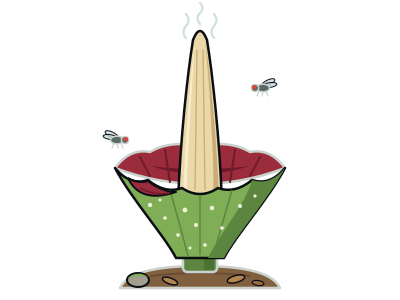
- Titan arumA giant flower spike up to three metres tall that smells like rotting meat to lure flies.
- Swiss cheese plantThe house plant with holey leaves, which may let wind and dappled light through in the rainforest.
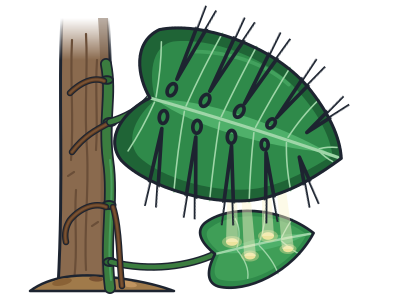
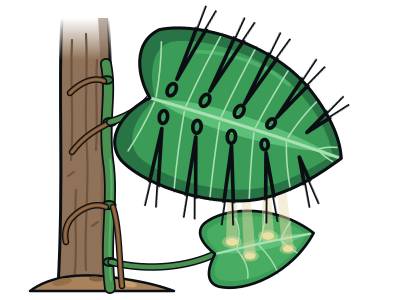
- TaroA starchy root eaten across the tropics, with elephant-ear leaves that shed water.