An extinct species
Deinonychus †
Deinonychus antirrhopus
The discovery that helped put birds back in the dinosaur family
Lived about 115–108 million years ago.
You and the deinonychus meet in the Amniotes branch, shown at about 320 million years ago (on 4 December, in a calendar from life's shared ancestor to today).
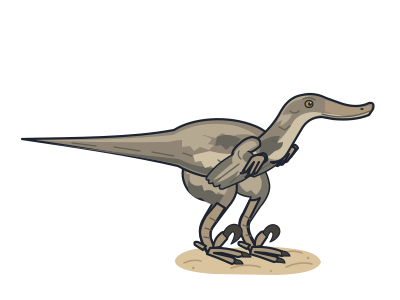
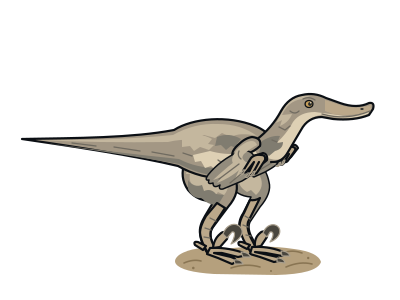
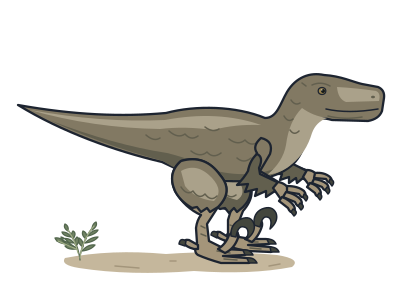
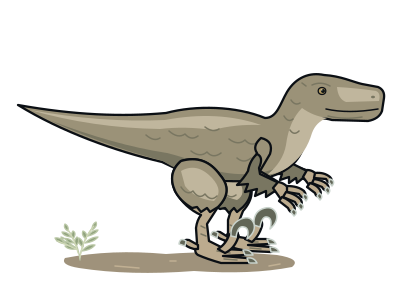
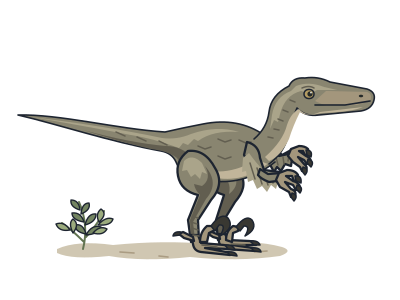
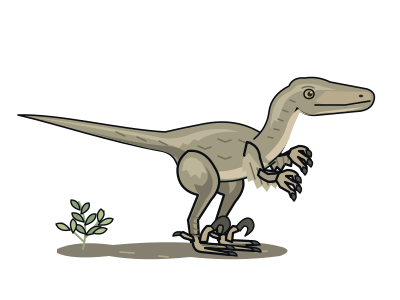
The 1964 discovery in Montana helped overturn the picture of dinosaurs as slow, lumbering animals. The bones suggested an active, bird-like predator. Earlier remains had been collected in the 1930s, but these finds gave scientist John Ostrom enough evidence for a detailed reconstruction. It was a close relative of the smaller Velociraptor, and its skeleton helped revive the idea that birds evolved from dinosaurs.
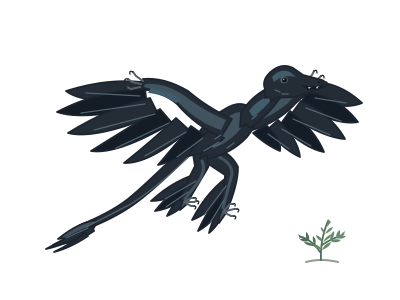
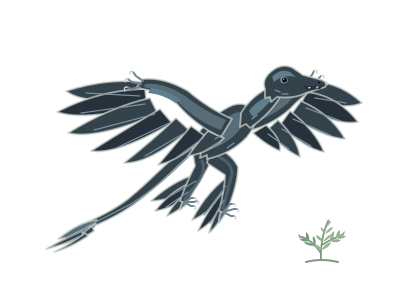
It lived about 115 to 108 million years ago. Fossil bones showed three-fingered hands and a half-moon-shaped wrist bone, features also found in the early bird Archaeopteryx. These similarities helped reveal the family connection. This predator was a relative of birds, not their direct ancestor. Archaeopteryx had already lived before it.
Its hollow bones and the shape of its legs suggested an active, agile animal. A long, stiffened tail helped balance its body. The reconstruction came from scattered bones belonging to several individuals, rather than one complete skeleton. Those remains revealed much about its shape, but did not settle exactly how fast it ran.
Five years to a name
Ostrom formally described and named it in 1969, five years after the important Montana discovery.
A raised claw
Each foot carried a large, curved claw on its second toe, held clear of the ground when walking.
Saw-edged teeth
Its teeth curved backwards and had edges with tiny saw-like notches, rather like a steak knife.