A species
Common kingfisher
Alcedo atthis
A small diver with a bullet-train connection
You and the common kingfisher meet in the Amniotes branch, shown at about 320 million years ago (on 4 December, in a calendar from life's shared ancestor to today).
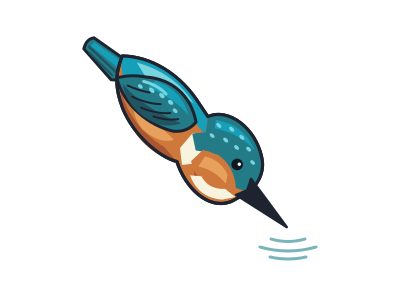
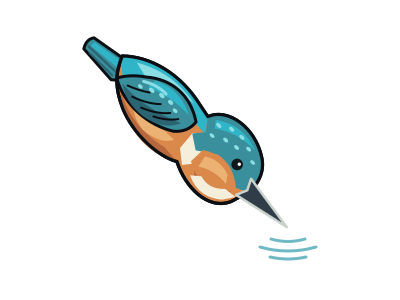
A kingfisher’s clean entry into water inspired the nose of a Japanese bullet train. Engineer and birdwatcher Eiji Nakatsu drew on that shape while developing the 500-Series Shinkansen. Its streamlined nose was about 15 metres long. It helped reduce pressure changes as trains entered tunnels, making the booms at tunnel exits quieter. These were not caused by trains breaking the sound barrier.
The common kingfisher also has some surprising family connections. The wider bird group containing kingfishers is the sister group of the group containing woodpeckers and toucans. These are neighbouring branches of the bird family tree, but woodpeckers and toucans are not themselves kingfishers.
With its bright blue back and orange breast, this little bird usually watches for fish from a waterside perch. It can also hover above the water before diving. Small fish make up most of its meals, though it also eats water insects and small animals such as shrimps. Its pointed bill grasps fish rather than spearing them.
Blue without blue dye
Tiny structures in its feathers scatter light to produce blue. The colour does not come from blue pigment.
A clue on the bill
Adult males have a black bill. Adult females have an orange-pink area on the lower bill.
Shared parenting
Both partners dig a nesting tunnel into a steep waterside bank. Both also help keep the eggs warm and feed the chicks.
Next to it on the tree
- Laughing kookaburraA giant Australian kingfisher whose dawn chorus sounds like wild laughter.
- European bee-eaterCatches bees in flight, then rubs them on a branch to remove the sting before eating.
- Lilac-breasted rollerTumbles through the air in a rolling courtship flight, flashing eight different colours.