A species
Common cuckoo
Cuculus canorus
A chick raised by another bird’s family
You and the common cuckoo meet in the Amniotes branch, shown at about 320 million years ago (on 4 December, in a calendar from life's shared ancestor to today).
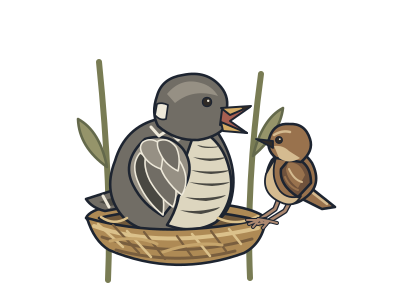
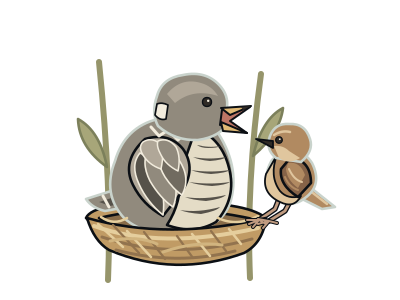
The common cuckoo lays its eggs in other birds’ nests and leaves those birds to raise its chicks. This relative of roadrunners has a surprising family arrangement: its young grow up with parents of another species. In Britain, dunnocks, meadow pipits and reed warblers commonly take on that role.
When a female lays her egg, she commonly removes one already in the nest. The nest’s owners keep the cuckoo egg warm. After hatching, the young cuckoo often pushes the other eggs or chicks out. The foster parents then feed the growing youngster, and may keep feeding it for about two weeks after it leaves the nest.
Many cuckoo eggs resemble the eggs of the birds raising them, with similar colours and markings. Different female lines produce different-looking eggs. In Europe, plain blue cuckoo eggs are mainly found in common redstart nests. Research shows that this blue egg colour passes from mothers to daughters.
Two different voices
Males make the familiar two-note ‘cuck-oo’ call. Females make a bubbling call instead.
Hairy meals
Common cuckoos eat insects, with hairy caterpillars among their favourite foods.
Youngsters travel separately
Many adults leave Britain for Africa in June. Young cuckoos depart later, without travelling alongside their biological parents.