A group of living things
Sturgeons and paddlefish
Acipenseriformes
Armoured sturgeons and paddle-snouted relatives—with a surprising family connection.
This branch is shown at about 140 million years ago; its age is a rough estimate.
You and sturgeons and paddlefish meet in the Bony fish and their descendants branch, shown at about 430 million years ago (on 24 November, in a calendar from life's shared ancestor to today).
Some of these ancient-looking fish grow into giants. Their skeletons are mostly cartilage—the flexible material in your ears—with some true bone. Their tails look shark-like, but the family connection is surprising: sturgeons and paddlefish belong together among the ray-finned bony fishes, not with sharks.
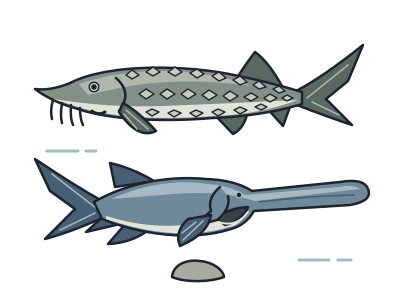
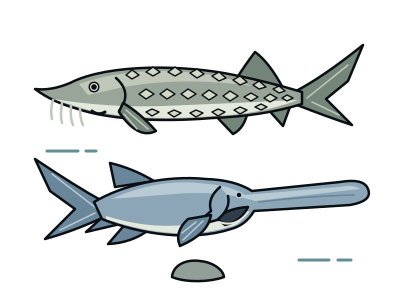
A sturgeon wears rows of bony plates along its body. Four soft feelers hang beneath its snout, helping it find food near the bottom. It can also detect weak electrical signals from prey. These senses help it find a meal even in cloudy water.
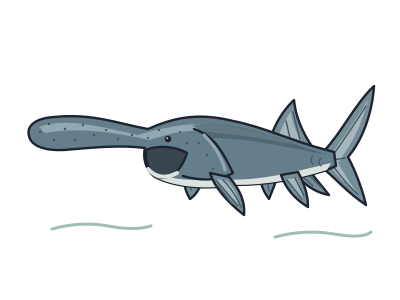
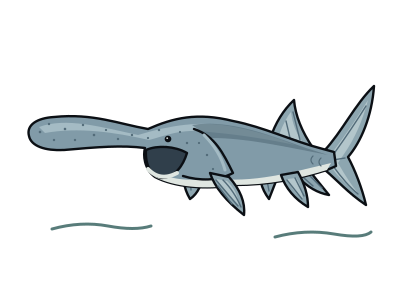
Its American paddlefish relative has a very different food-finding tool: a long, broad, flattened snout covered with electrical sensors. These help it locate tiny drifting animals; the paddle is not simply a digging shovel. Unlike a sturgeon, an American paddlefish has largely bare skin rather than rows of armour. The two belong on the same family branch, but they are far from lookalikes.
A toothless adult
Adult sturgeons have no teeth. Their downward-facing mouth can extend out from the head.
A long life
Green sturgeons can live for about 60 to 70 years.
An impressive paddle
An American paddlefish's snout can make up about one-third of its total length.
Inside sturgeons and paddlefish
- Beluga sturgeonA bony-plated giant that can outlive people and grow longer than a car; source of caviar.
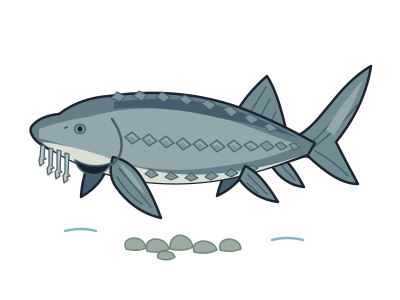
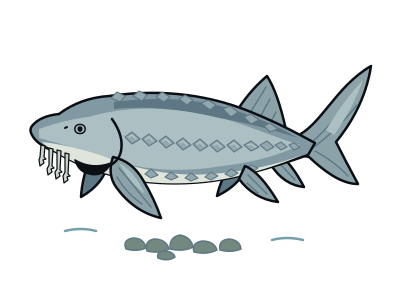
- American paddlefishIts long paddle-shaped snout is covered in sensors that detect the electric fields of plankton.
- Chinese paddlefishA sword-snouted Yangtze giant, one of the biggest river fish ever, last seen alive in 2003.
Next to it on the tree
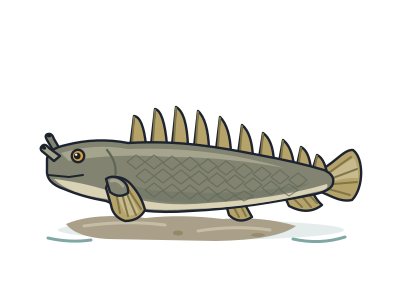
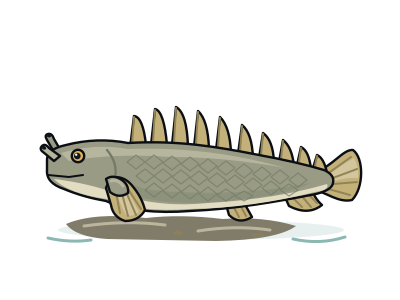
- Senegal bichirA fish with lungs that can wriggle across land on its fins, from the oldest ray-finned lineage.
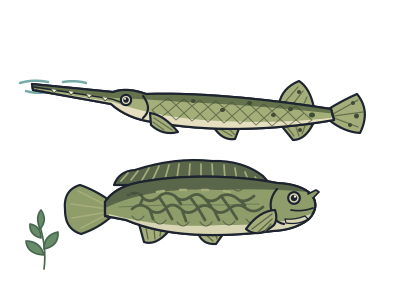
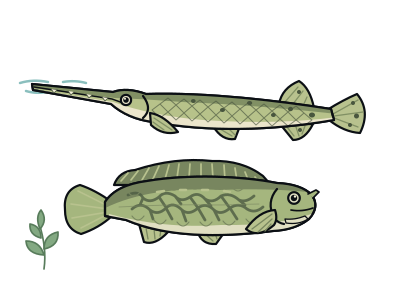
- Gars and bowfinArmoured, air-gulping river fish: the closest living relatives of almost every other fish.
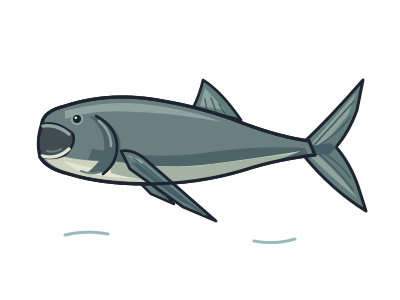
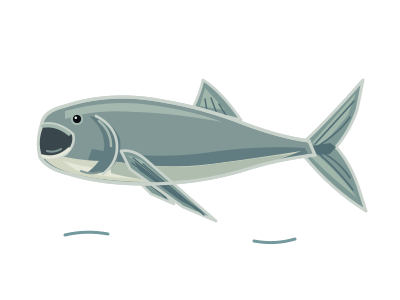
- LeedsichthysA Jurassic filter-feeder up to about 16 metres long, the largest bony fish ever found.
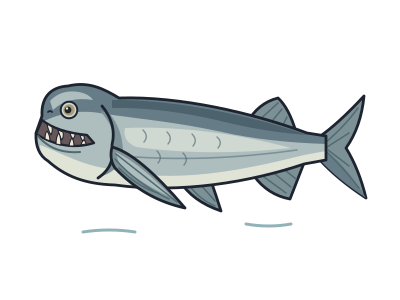
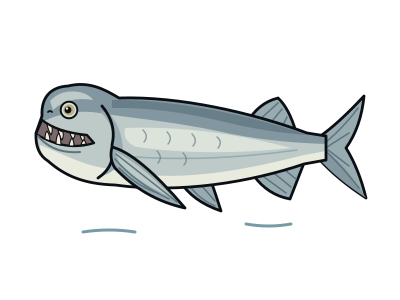
- XiphactinusA bulldog-faced Cretaceous fish over 5 metres long, found fossilised with a whole fish in its belly.
- TeleostsAbout 30,000 species: nearly every fish you have eaten or kept in a tank.