A group of living things
Gars and bowfin
Holostei
Armour, air gulps and a surprising fish family.
This branch is shown at about 295 million years ago; its age is a rough estimate.
You and gars and bowfin meet in the Bony fish and their descendants branch, shown at about 430 million years ago (on 24 November, in a calendar from life's shared ancestor to today).
An armoured gar and an air-gulping bowfin might seem an unlikely pair. Yet together they form the closest living branch to teleosts, the group containing the vast majority of living fish species. These two branches are sister groups: each is the other's closest living relative. Gars and bowfins are relatives of those fishes, not their ancestors.
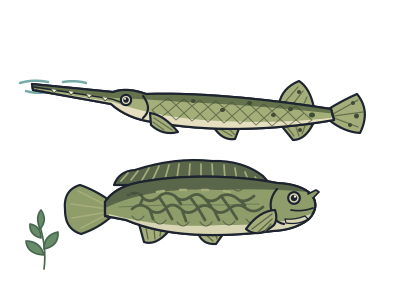
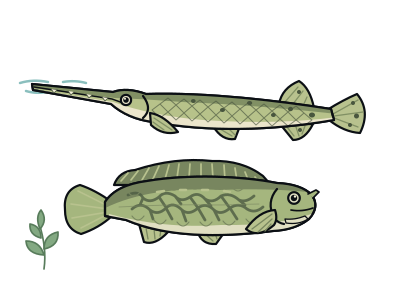
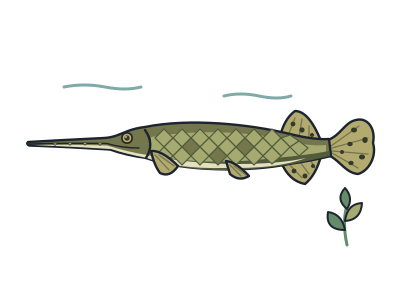
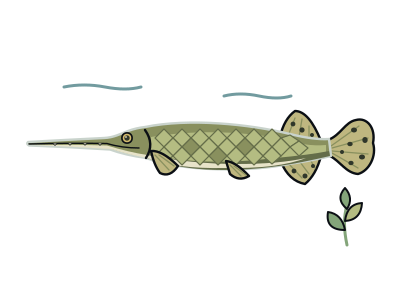
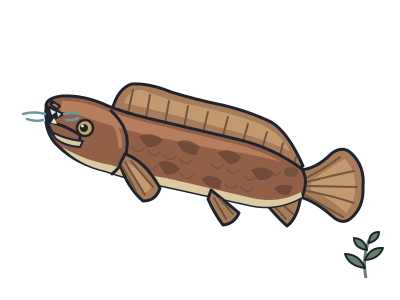
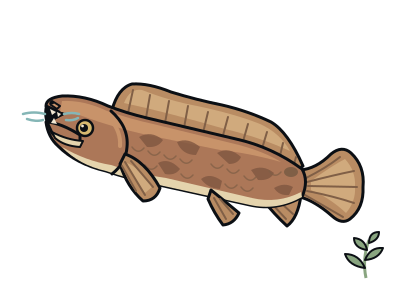
The two pictured fish wear very different coats. A longnose gar has hard, diamond-shaped scales that fit together like a suit of armour. A bowfin has rounded scales instead. The gar has long, narrow jaws, while the bowfin has a broad, blunt head and a long, low back fin.
Both can rise to the surface and gulp air. Inside, an air sac called a swim bladder absorbs oxygen, helping them survive when the water has little oxygen available. This adds to breathing through their gills; it does not make them land animals. Their homes include slow rivers, lakes and sheltered backwaters.
An extra-long snout
A longnose gar's snout is more than twice as long as the rest of its head.
A plate beneath the jaw
A bowfin has a bony plate beneath its lower jaw.
A sideways strike
Adult longnose gars mainly eat fish. They may wait near the surface or approach slowly before making a sudden sideways strike.
Inside gars and bowfin
Next to it on the tree
- Senegal bichirA fish with lungs that can wriggle across land on its fins, from the oldest ray-finned lineage.
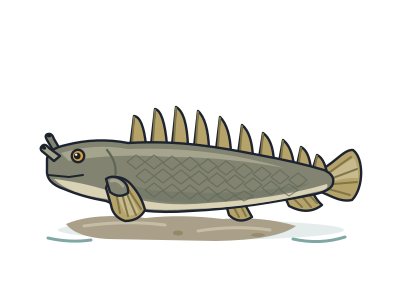
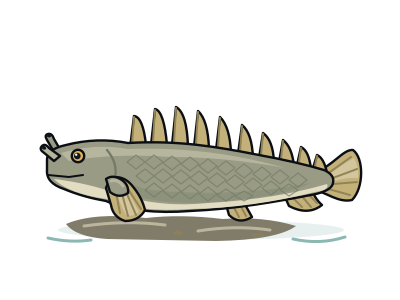
- Sturgeons and paddlefishGiant, ancient-looking fish with cartilage skeletons, bony plates and long sensitive snouts.
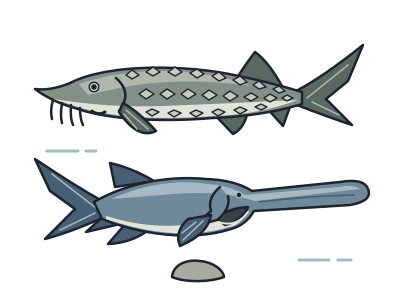
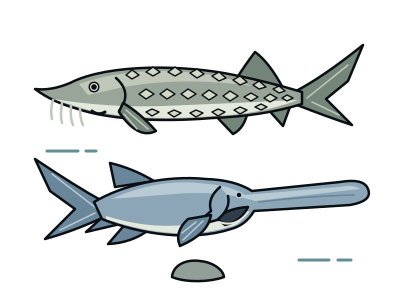
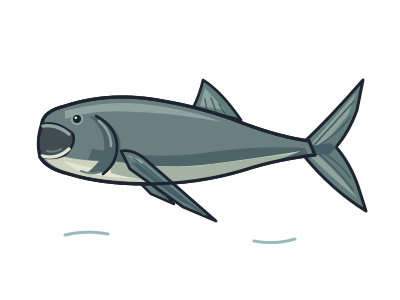
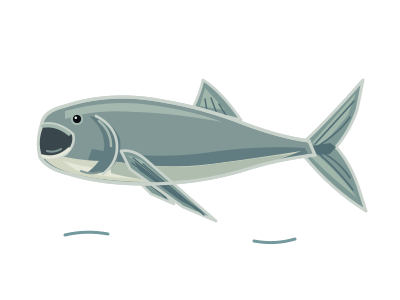
- LeedsichthysA Jurassic filter-feeder up to about 16 metres long, the largest bony fish ever found.
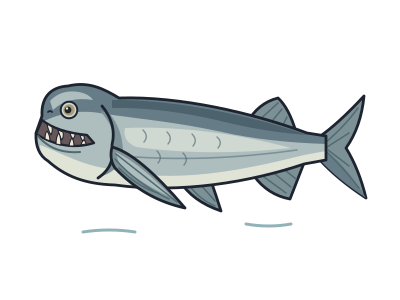
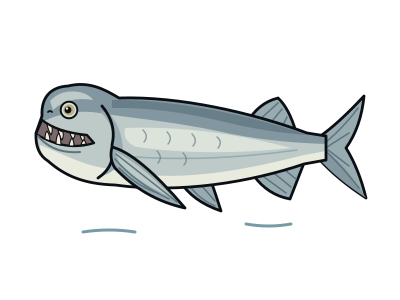
- XiphactinusA bulldog-faced Cretaceous fish over 5 metres long, found fossilised with a whole fish in its belly.
- TeleostsAbout 30,000 species: nearly every fish you have eaten or kept in a tank.