A species
Longnose gar
Lepisosteus osseus
A needle-snouted hunter in ancient-looking armour
You and the longnose gar meet in the Bony fish and their descendants branch, shown at about 430 million years ago (on 24 November, in a calendar from life's shared ancestor to today).
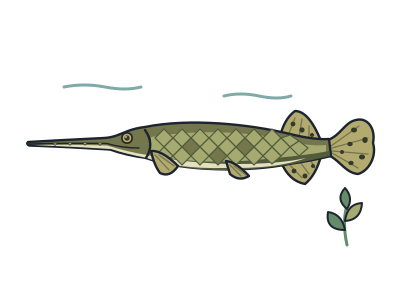
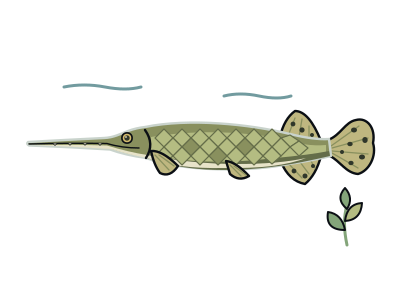
With its needle-like snout and armour-like scales, the longnose gar looks like a visitor from another age. Its hard, diamond-shaped scales and bony head coverings help protect it from predators. Its family connection is less obvious: gars and bowfins are each other's closest living groups of relatives, despite their different looks.
The ancient appearance is real, but needs a little care. Fossil gars from about 150 million years ago already had a recognisably similar overall body shape. That was during dinosaur times. It does not mean today's longnose gar species has existed unchanged since then. The resemblance belongs to the wider gar family, and evolution has not stopped.
This hunter can approach with tiny fin movements, looking like a drifting stick. Then it makes a sudden sideways grab for prey. Quiet river backwaters are places to look for it, including those along the Mississippi River.
An extra way to breathe
Longnose gars gulp air and absorb its oxygen through an internal sac called the swim bladder. This helps them survive warm water with little oxygen.
Sticky-snouted babies
New hatchlings use a sticky disc on their snout to cling to underwater objects while using up their yolk supply.
Eggs are not food
Gar eggs are poisonous to humans and must not be eaten.