An extinct species
Xiphactinus †
Xiphactinus audax
A bulldog-faced giant with a relative in its belly
Lived about 100–66 million years ago.
You and the xiphactinus meet in the Bony fish and their descendants branch, shown at about 430 million years ago (on 24 November, in a calendar from life's shared ancestor to today).
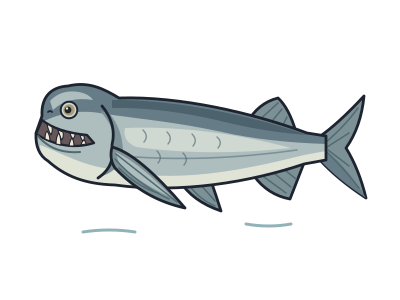
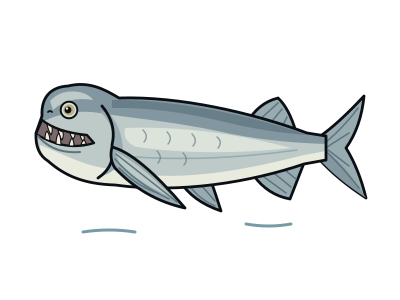
This bulldog-faced fish grew over 5 metres long—and one fossil preserved a whole fish in its belly. That meal was a relative: both belonged to the same extinct branch of the fish family tree. Despite its fearsome appearance, this giant was a bony, ray-finned fish, not a shark or a marine dinosaur.
It lived during the Late Cretaceous, a span from about 100 to 66 million years ago. This species was not securely known from that whole span. Its home was the sea, including the vast inland seaway that crossed central North America. An upturned mouth and large, uneven teeth gave its blunt face that bulldog-like look.
The famous fish-within-a-fish fossil captured a striking size comparison. The predator measured about 4 metres, roughly the length of a small family car. The swallowed fish, called Gillicus, was about 2 metres long—about half its length. Fossil bones preserved this meal directly, rather than leaving researchers to guess what it had eaten.
A giant could become a meal
Despite its size, it was sometimes eaten by the large shark Cretoxyrhina.
Whole skeletons survived
Several complete skeletons were preserved in Kansas rocks about 85 million years old.
Built for movement
Its powerful tail and long side fins supported researchers’ reconstruction of an active ocean predator.
Next to it on the tree
- Senegal bichirA fish with lungs that can wriggle across land on its fins, from the oldest ray-finned lineage.
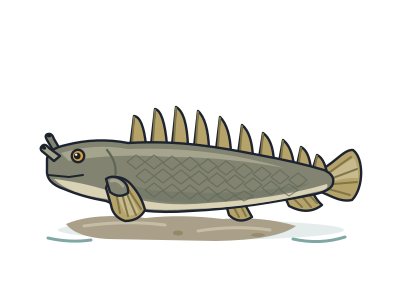
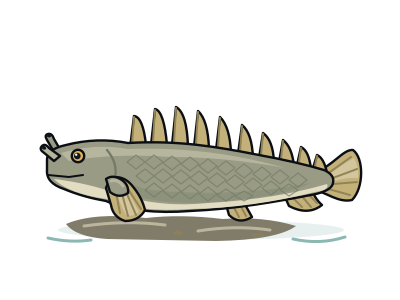
- Sturgeons and paddlefishGiant, ancient-looking fish with cartilage skeletons, bony plates and long sensitive snouts.
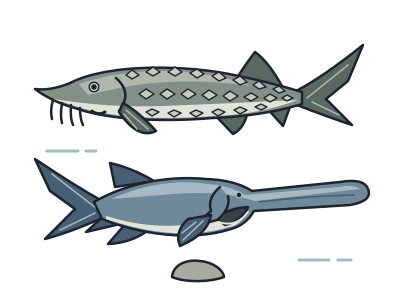
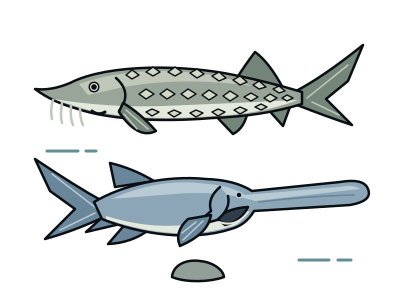
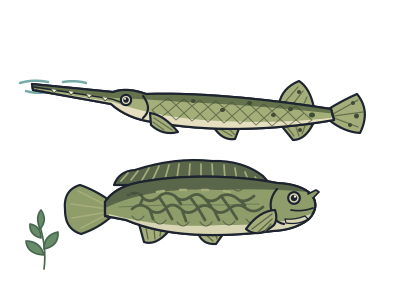
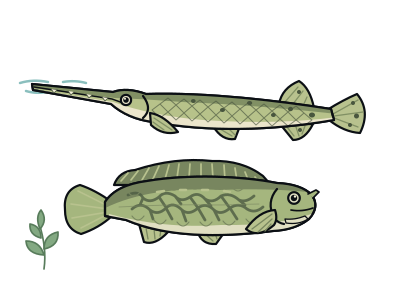
- Gars and bowfinArmoured, air-gulping river fish: the closest living relatives of almost every other fish.
- LeedsichthysA Jurassic filter-feeder up to about 16 metres long, the largest bony fish ever found.
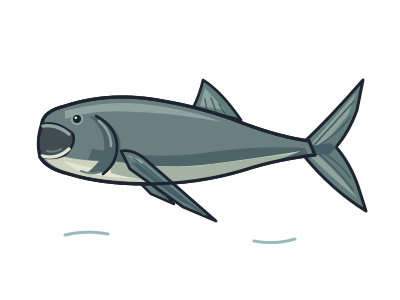
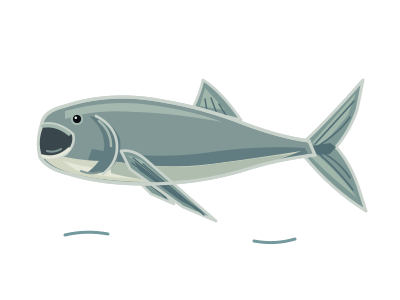
- TeleostsAbout 30,000 species: nearly every fish you have eaten or kept in a tank.