A group of living things
Teleosts
Teleostei
From dinner plates to fish tanks, one enormous fish family
This branch is shown at about 250 million years ago; its age is a rough estimate.
You and teleosts meet in the Bony fish and their descendants branch, shown at about 430 million years ago (on 24 November, in a calendar from life's shared ancestor to today).
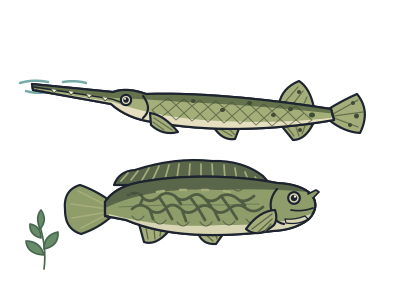
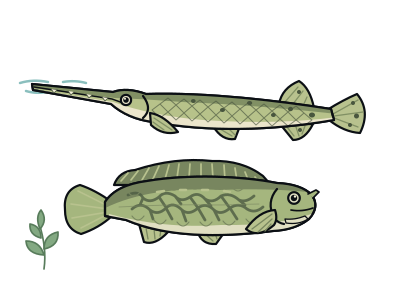
About 30,000 species belong to this branch of the fish family tree. Think of fish on a plate or in a tank: salmon, cod, goldfish and clownfish are all members. So are eels, catfish and pufferfish. Their very different shapes can hide this family connection. But teleosts are not every fish: gars and bowfin belong to a separate neighbouring branch.
Many members have overlapping scales, fitted like roof tiles, that protect the body while letting it bend. Many can also push their mouths forwards to help suck in food. An internal gas-filled chamber called a swim bladder helps many stay at a chosen depth without constantly swimming upwards. These are common features, not rules for every member.
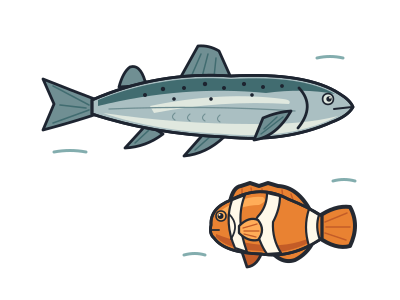
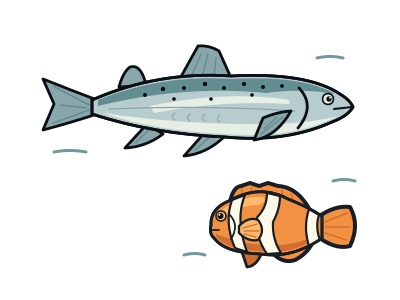
Picture a salmon beside a clownfish. Migratory Atlantic salmon hatch in rivers, grow at sea and return to their birth rivers to breed. Common clownfish shelter among sea-anemone tentacles, protected from stings by their mucus.
A colourful view
Most teleosts can see colours.
Fish can make sounds
Some toadfish make sounds by using muscles to vibrate their swim bladder.
A change in the family
The largest fish in a common clownfish group is female. If she dies, the breeding male can become female.
Inside teleosts
- Eels and tarponsEels, tarpons and bonefish all start life as see-through, leaf-shaped larvae.
- BonytonguesAncient freshwater fish with toothed tongues, from the giant arapaima to fish that talk by electricity.
- Herring, carp and kinHerring and anchovies turn out to be closer cousins of carp and catfish than of salmon.
- Salmon, cod, perch and kinTwo-thirds of all fish, from salmon and deep-sea dragonfish to every spiny-finned fish.
Next to it on the tree
- Senegal bichirA fish with lungs that can wriggle across land on its fins, from the oldest ray-finned lineage.
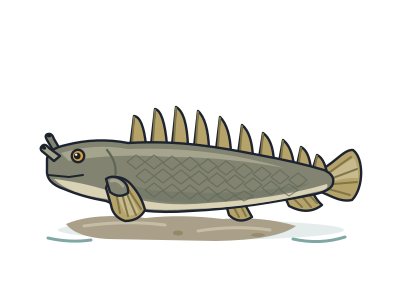
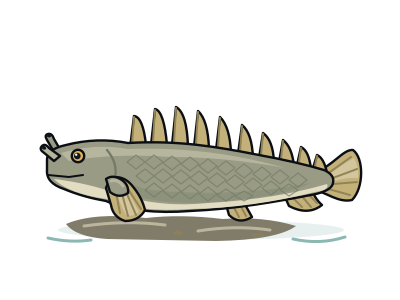
- Sturgeons and paddlefishGiant, ancient-looking fish with cartilage skeletons, bony plates and long sensitive snouts.
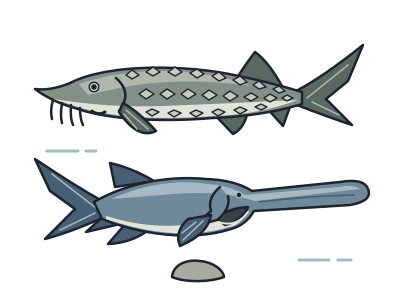
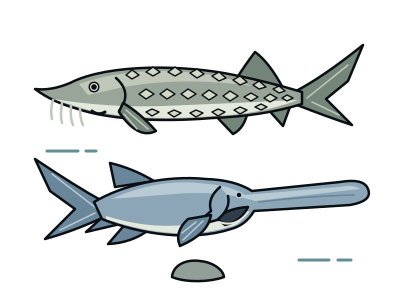
- Gars and bowfinArmoured, air-gulping river fish: the closest living relatives of almost every other fish.
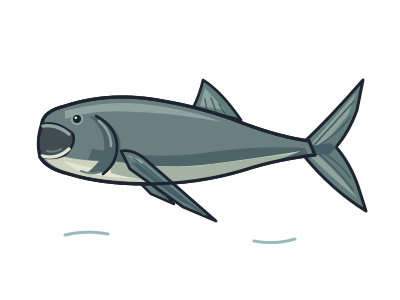
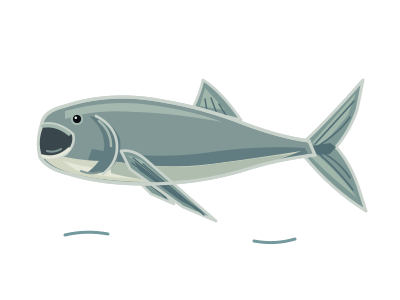
- LeedsichthysA Jurassic filter-feeder up to about 16 metres long, the largest bony fish ever found.
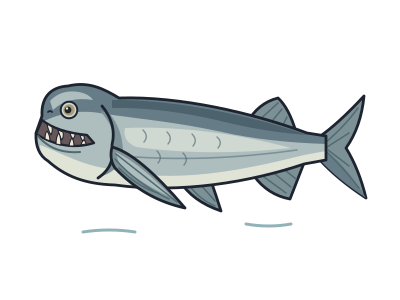
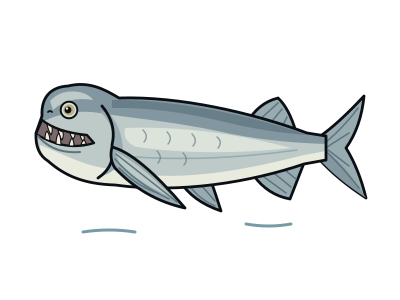
- XiphactinusA bulldog-faced Cretaceous fish over 5 metres long, found fossilised with a whole fish in its belly.