An extinct species
Leedsichthys †
Leedsichthys problematicus
A bus-beating giant that fed on tiny animals
Lived about 165–152 million years ago.
You and the leedsichthys meet in the Bony fish and their descendants branch, shown at about 430 million years ago (on 24 November, in a calendar from life's shared ancestor to today).
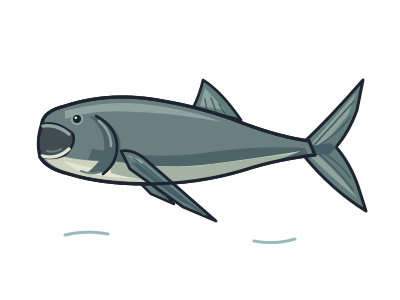
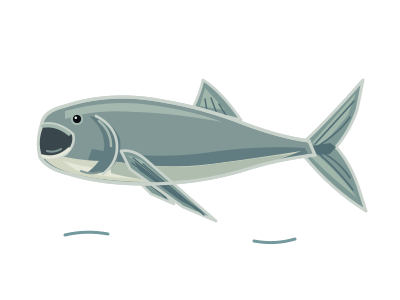
This giant relative of today's ray-finned fish was the largest bony fish ever found. Reconstructions put it at up to about 16 metres long—longer than a standard city bus. It lived in Jurassic seas. Despite its size, it fed on tiny drifting animals, rather than hunting large prey.
It belonged to an extinct family called pachycormids. Its feeding role resembled those of whale sharks and baleen whales, but it was neither a shark nor a mammal. Similar ways of finding food had appeared in very different branches of the family tree.
Fossils preserved comb-like structures beside its gills. These structures, called gill rakers, supported the idea that it strained small animals from seawater. Much of its skeleton was only weakly hardened into bone, which likely helped explain its poor preservation. Scientists therefore had to reconstruct its giant body from incomplete remains, rather than measure a whole fish.
A towering tail
A reconstructed tail from near Peterborough measured about 2.7 metres from top to bottom—taller than a person.
Named for a collector
Its name honoured fossil collector Alfred Nicholson Leeds.
Thousands of pieces
Excavating the specimen nicknamed Ariston produced more than 2,300 separate pieces over two field seasons.
Next to it on the tree
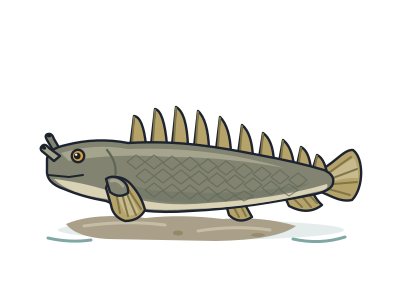
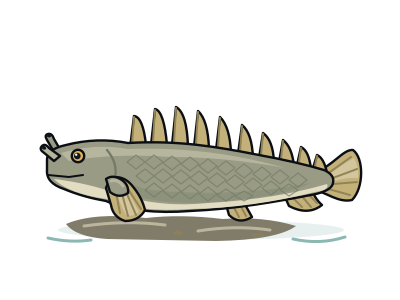
- Senegal bichirA fish with lungs that can wriggle across land on its fins, from the oldest ray-finned lineage.
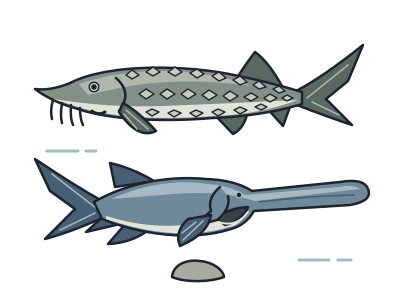
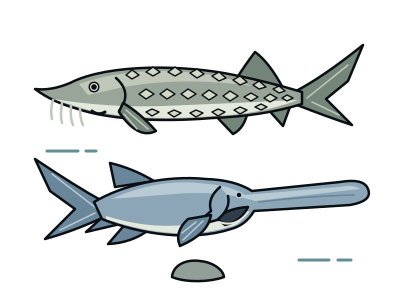
- Sturgeons and paddlefishGiant, ancient-looking fish with cartilage skeletons, bony plates and long sensitive snouts.
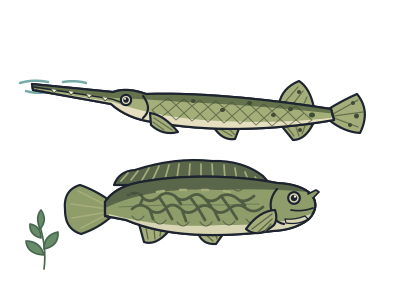
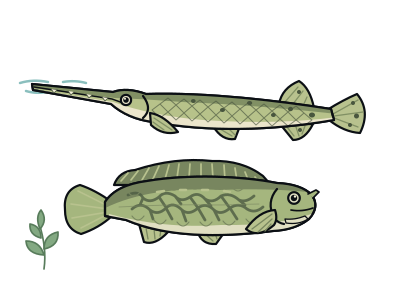
- Gars and bowfinArmoured, air-gulping river fish: the closest living relatives of almost every other fish.
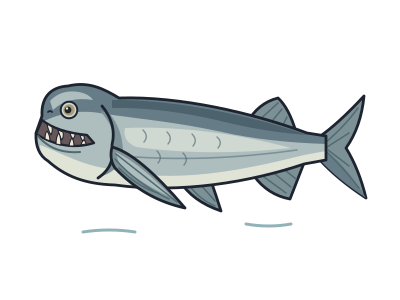
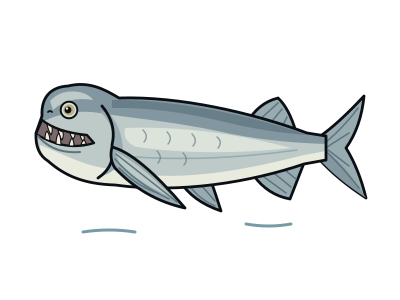
- XiphactinusA bulldog-faced Cretaceous fish over 5 metres long, found fossilised with a whole fish in its belly.
- TeleostsAbout 30,000 species: nearly every fish you have eaten or kept in a tank.