A species
Senegal bichir
Polypterus senegalus
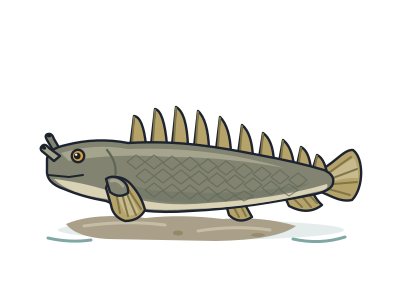
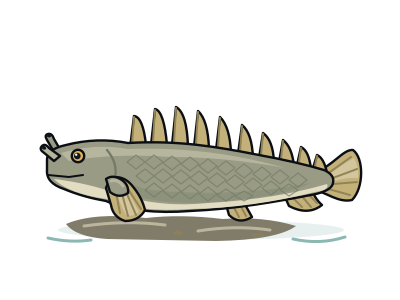
A lung-breathing fish with fins that help it wriggle over land
You and the senegal bichir meet in the Bony fish and their descendants branch, shown at about 430 million years ago (on 24 November, in a calendar from life's shared ancestor to today).
The Senegal bichir is a fish with lungs that can wriggle across land, bending its body and bracing with its strong front fins. Its family, which includes other bichirs and ropefish, is the earliest-branching living ray-finned fish lineage. This whole family—not this species alone—is the sister group to all other living ray-finned fish, including sturgeons and gars.
It has a pair of lungs as well as gills. In the shallow, swampy waters it inhabits, there may be very little oxygen dissolved in the water. Breathing air helps it cope. It lives in freshwater swamps, lagoons and sheltered, muddy river edges across parts of Africa.
Moving on its fins does not make it an ancestor of animals that walk on land. Scientists study it as a living comparison for how fins can support movement outside water. It is still a water-dwelling fish, not an animal of dry land.
Diamond armour
Hard, shiny, diamond-shaped scales protect its body.
A salamander-like start
Young Senegal bichirs have gills that project outside their bodies, giving them a salamander-like appearance.
Eggs among plants
Eggs are deposited among thick vegetation rather than in a constructed nest.
Next to it on the tree
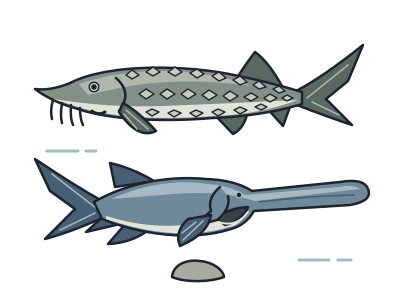
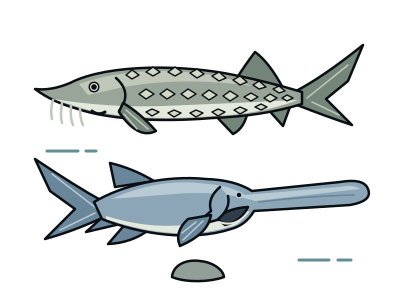
- Sturgeons and paddlefishGiant, ancient-looking fish with cartilage skeletons, bony plates and long sensitive snouts.
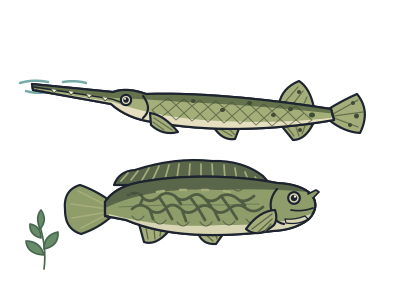
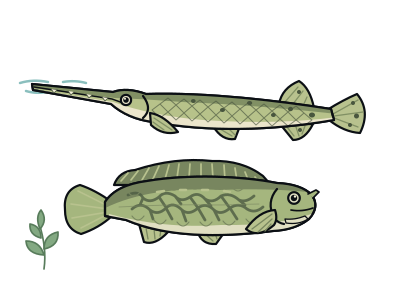
- Gars and bowfinArmoured, air-gulping river fish: the closest living relatives of almost every other fish.
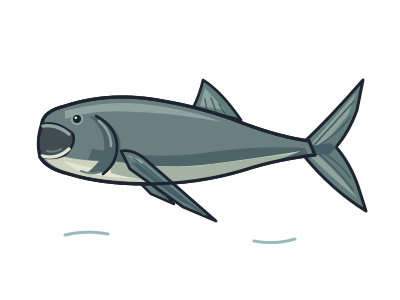
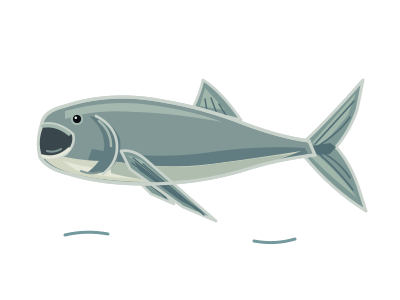
- LeedsichthysA Jurassic filter-feeder up to about 16 metres long, the largest bony fish ever found.
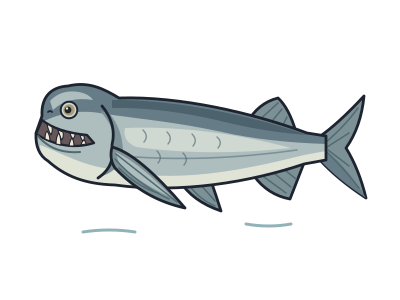
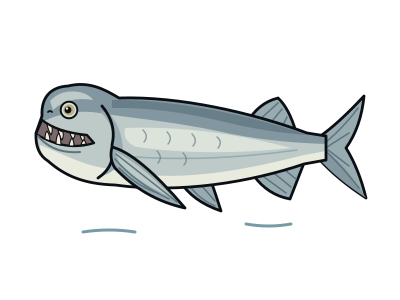
- XiphactinusA bulldog-faced Cretaceous fish over 5 metres long, found fossilised with a whole fish in its belly.
- TeleostsAbout 30,000 species: nearly every fish you have eaten or kept in a tank.