A species
Beluga sturgeon
Huso huso
An armoured giant, a paddlefish relative and the source of beluga caviar.
You and the beluga sturgeon meet in the Bony fish and their descendants branch, shown at about 430 million years ago (on 24 November, in a calendar from life's shared ancestor to today).
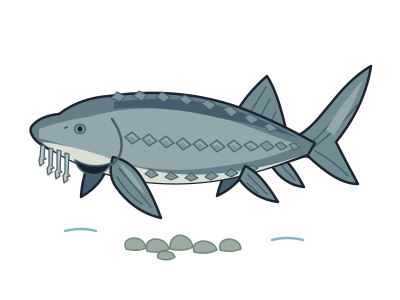
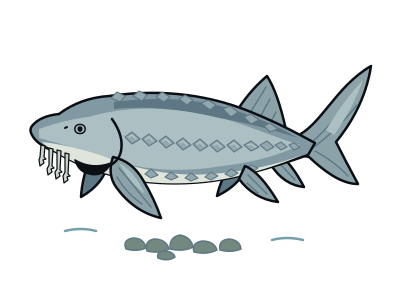
A bony-plated giant, the beluga sturgeon has reportedly grown longer than a car and outlived most people. These are exceptional fish, though: ordinary adults are roughly 2–3 metres long. This is the fish behind beluga caviar, which is made from females’ eggs. Despite its name, it is not a beluga whale.
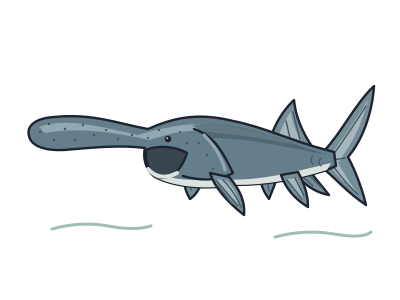
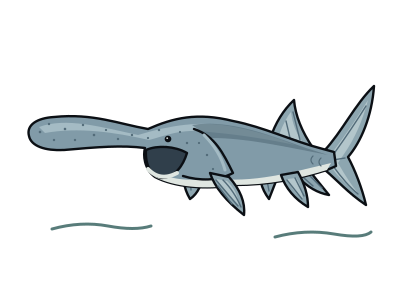
Its close relatives include the American paddlefish, shown beside it on the tree. That relative filters tiny drifting organisms from the water. The beluga has a different feeding style, but both belong to the same wider group: the sturgeons and paddlefish.
Belugas live and feed at sea, then travel into freshwater rivers to breed. That journey is now harder in the Danube, where the Iron Gates dams block their upstream route. Fishing for meat and caviar has also helped drive their decline. The species is classed as Critically Endangered, meaning it faces an extremely high risk of extinction in the wild.
An open-water hunter
Adults mainly hunt other fish in open water, unlike many sturgeons that search the bottom for small animals.
Not every year
Females do not breed every year; several years can pass between breeding attempts.
No parental care
Parents do not guard or care for their eggs or young.