A species
Agar weed
Gelidium amansii
The wiry red seaweed behind dessert jellies and the jelly scientists grow germs on.
You and the agar weed meet in the Eukaryotes branch, shown at about 1.8 billion years ago (on 28 July, in a calendar from life's shared ancestor to today).
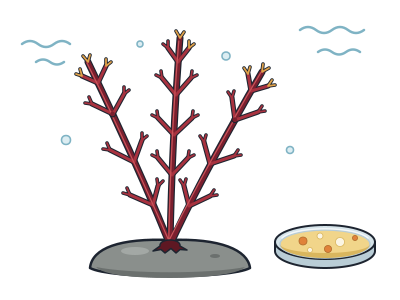
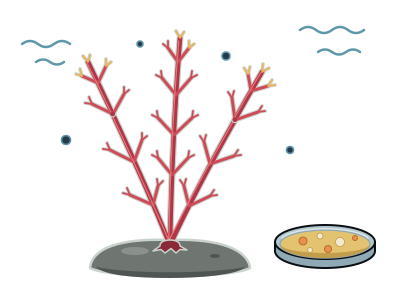
This small, wiry seaweed has two very different jobs. Its jelly sets desserts, and it also fills the dishes that scientists use to grow germs. Boil it, and the liquid cools into a firm jelly called agar.
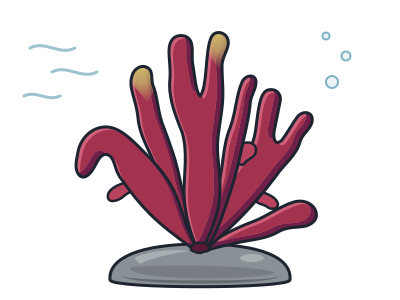
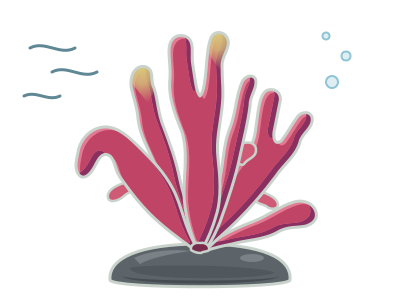
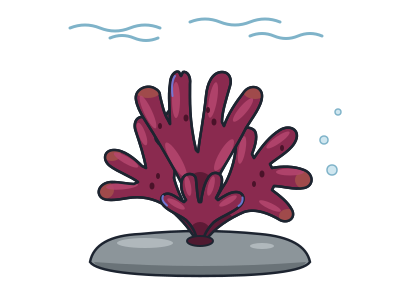
Agar weed is a red seaweed, a relative of nori, dulse and Irish moss. Red algae sit beside plants on the tree of life, but they are not plants. They have no true roots, leaves or flowers. Agar weed grows in bushy tufts about as tall as a pencil or a school ruler. It grips rocks in shallow water off Japan, Korea, China and Taiwan. Fresh plants are dark red, but sunlight or soaking can bleach them yellow.
In Japan, where it is called tengusa, people have long boiled it to make jelly noodles called tokoroten. Then in 1881 a woman named Fanny Hesse suggested using agar to grow microbes. Gelatin, the jelly used before, melted in the warmth that disease germs need, and some microbes could eat it. Agar stayed solid. Much of the best lab agar still comes from this group of seaweeds.
Made by winter weather
Traditional dried agar, called kanten, is left outdoors for about two weeks to freeze and dry naturally. The cold Suwa area of Nagano in Japan makes over 60% of the country's kanten.
Hard to melt
A typical agar jelly sets at about 32 to 39°C but does not melt again until about 85°C. That is far hotter than a hot bath.
Harvests under pressure
Tengusa harvests are falling as ocean currents shift. Warmer winters are also shortening the season for making kanten outdoors.
Next to it on the tree
- Nori seaweedThe red alga wrapped around sushi.
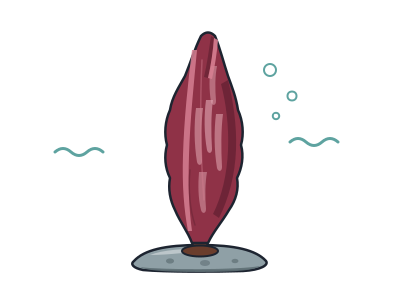
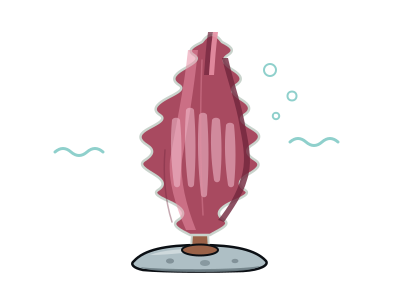
- BangiomorphaA billion-year-old red seaweed: the oldest known living thing to reproduce sexually.
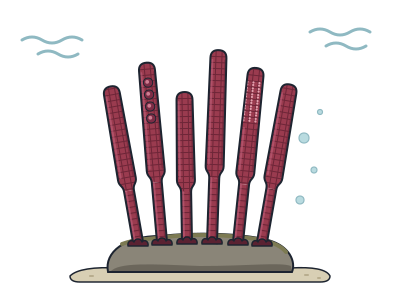
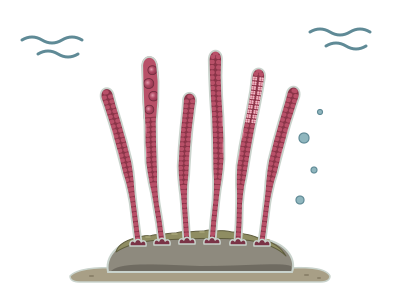
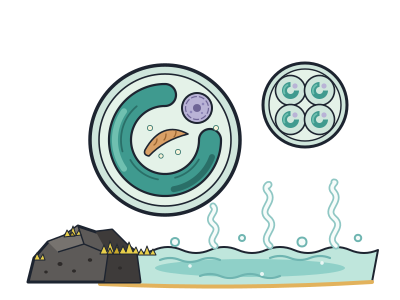
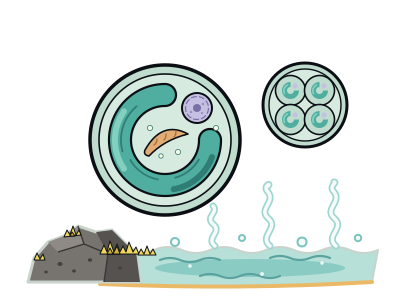
- Hot-spring red algaThrives in boiling acid springs and borrowed genes from bacteria to survive there.
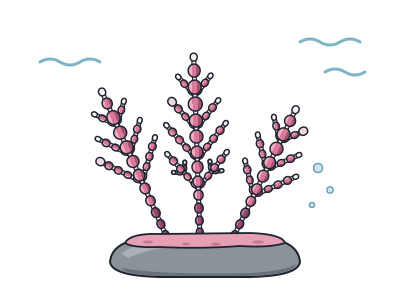
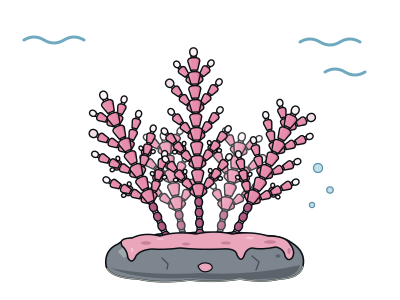
- Coral weedA seaweed that builds a skeleton of chalk, helping cement coral reefs together.
- Irish mossA purple-red seaweed whose jelly thickens ice cream and toothpaste.
- DulseA chewy red seaweed that coastal people have snacked on for over a thousand years.