A species
Dulse
Palmaria palmata
A salty, chewy red seaweed that people on northern coasts have snacked on for centuries.
You and the dulse meet in the Eukaryotes branch, shown at about 1.8 billion years ago (on 28 July, in a calendar from life's shared ancestor to today).
Dulse is a chewy red seaweed that people on cold northern coasts have eaten for centuries. An early Irish law text from about 1,300 years ago is said to have promised travellers a serving of dulse. In Iceland it appears in the old sagas. People there chewed it raw and ground it into bread dough, and it helped them get through famines and hard winters.
People still go "dulsing" today. They wait for low tide, pick the seaweed off the rocks and dry it on the beach. It is eaten raw as a salty snack or cooked into soups, stews and breads. It is also pan-fried into crispy chips.
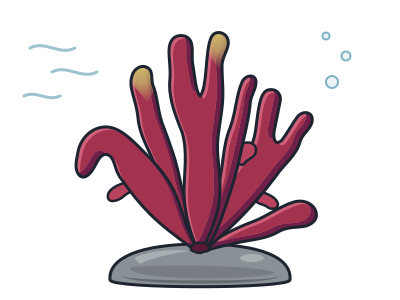
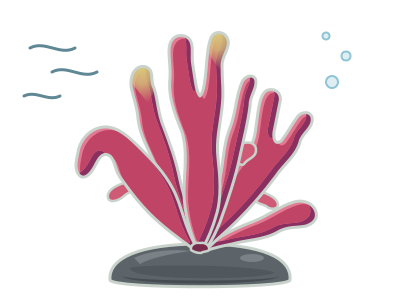
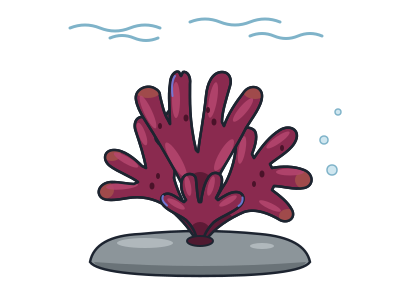
Dulse may not look like a plant, but it is family. On the tree of life, red algae sit right next to land plants, so dulse is a distant relative of grass and trees. Its flat, leathery fronds split like the fingers of a hand. They are usually somewhere between a school ruler and an arm in length. Dulse has no roots. A small disc grips a rock or a kelp stalk, and the whole frond takes in what it needs from the seawater.
Tiny mothers
Male dulse plants are leafy blades that take about 9 to 12 months to grow up. Female plants are tiny crusts smaller than 1 millimetre that mature within days. After fertilisation, the young plant grows on top of the female and covers her completely.
Free snack by law
Iceland's law book from the 1200s let people eat berries and dulse on someone else's land without being punished. Anyone caught taking dulse unlawfully had to pay a fine.
A fair with seaweed
In Northern Ireland, people traditionally eat dulse at the Ould Lammas Fair in Ballycastle, County Antrim. The fair is held every August and goes back to the 1600s.
Next to it on the tree
- Nori seaweedThe red alga wrapped around sushi.
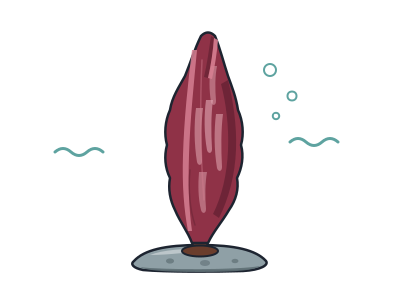
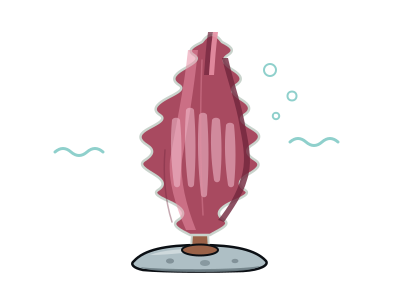
- BangiomorphaA billion-year-old red seaweed: the oldest known living thing to reproduce sexually.
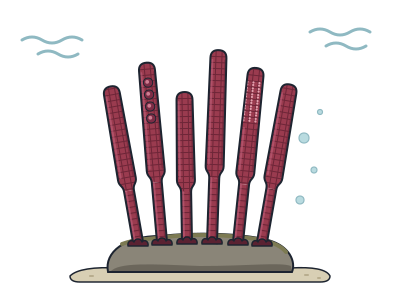
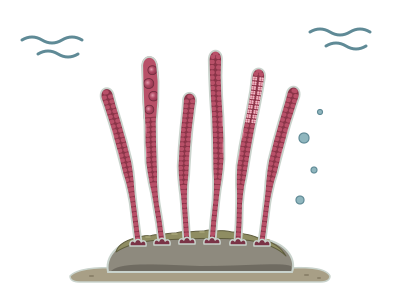
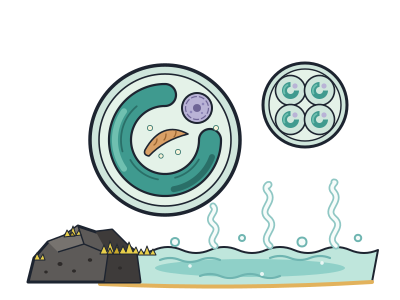
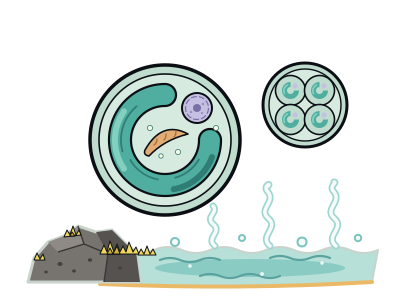
- Hot-spring red algaThrives in boiling acid springs and borrowed genes from bacteria to survive there.
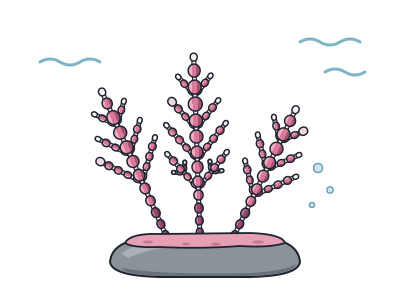
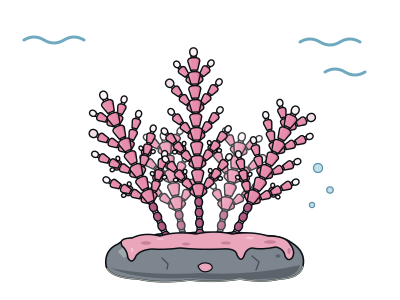
- Coral weedA seaweed that builds a skeleton of chalk, helping cement coral reefs together.
- Irish mossA purple-red seaweed whose jelly thickens ice cream and toothpaste.
- Agar weedThe wiry seaweed whose jelly sets desserts and fills the dishes scientists grow microbes on.