An extinct species
Bangiomorpha †
Bangiomorpha pubescens
A billion-year-old red seaweed and the oldest known living thing to reproduce sexually
Known from about 1,047 million years ago.
You and the bangiomorpha meet in the Eukaryotes branch, shown at about 1.8 billion years ago (on 28 July, in a calendar from life's shared ancestor to today).
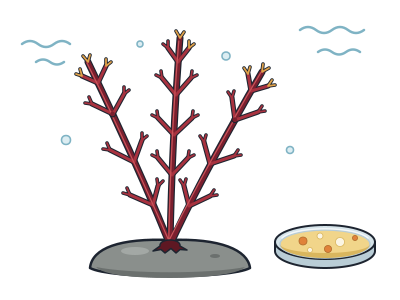
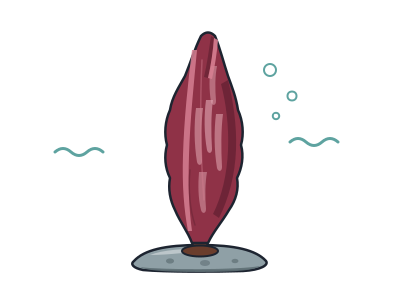
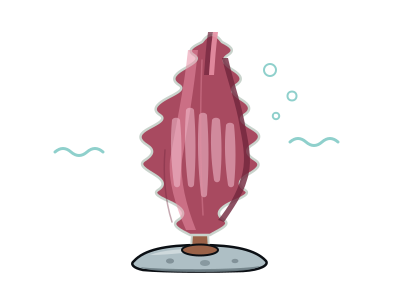
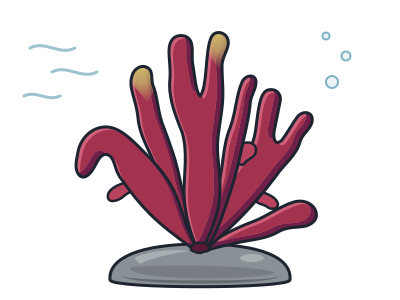
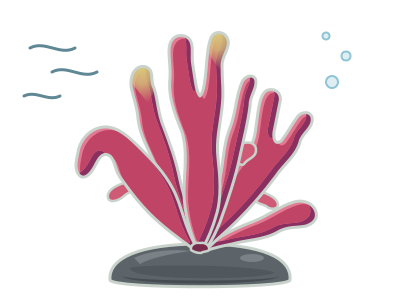
About 1,050 million years ago, a tiny red seaweed probably grew in shallow seas. Its fossils hold the oldest known evidence of sexual reproduction on Earth. It probably belonged to the same group of red seaweeds as nori, which people still eat today.
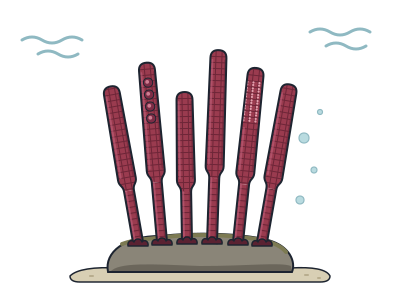
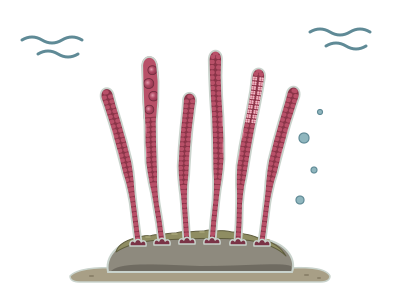
Its fossils, found in glassy rock in Arctic Canada, show clusters of upright threads. Each thread was up to about 2 millimetres long, a bit smaller than a sesame seed. Some parts of a thread were a single stack of tiny cells, a bit like a pile of coins. Other parts were several rows thick. Each thread was fixed to a surface by a small anchor called a holdfast.
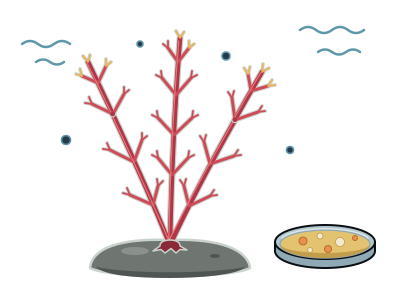
Why do scientists think it had sex? The fossils show two kinds of thread. One kind made a few large spores. The other made many small ones. When scientists compared the threads with a living red seaweed called Bangia, they concluded that the threads with many small spores were the sexual ones.
These fossils do not show what colour it was. Because it looked so much like living red seaweeds, it is usually pictured as purplish-red, and scientists think it made its food from sunlight. That part is a well-supported guess, not something the rocks show.
Named after a look-alike
Its name means 'Bangia-shaped', after the living red seaweed it closely resembles.
Younger than first thought
It was first described as about 1.2 billion years old. In 2017–2018, scientists dated layers of black rock lying above and below the fossils and found they were about 1.05 billion years old.
A long wait for a name
The fossils were first discovered in 1990, but the species was not named until 2000, when Nicholas Butterfield described it.
Next to it on the tree
- Nori seaweedThe red alga wrapped around sushi.
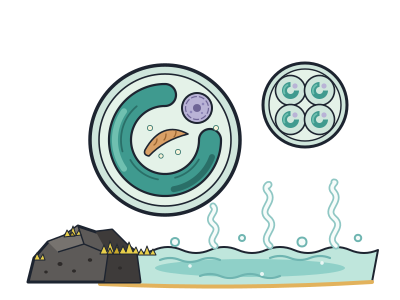
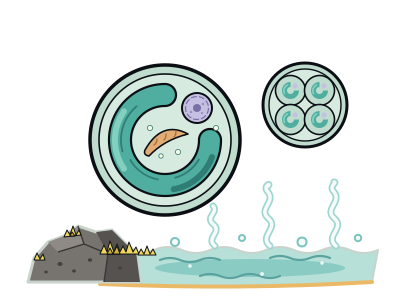
- Hot-spring red algaThrives in boiling acid springs and borrowed genes from bacteria to survive there.
- Coral weedA seaweed that builds a skeleton of chalk, helping cement coral reefs together.
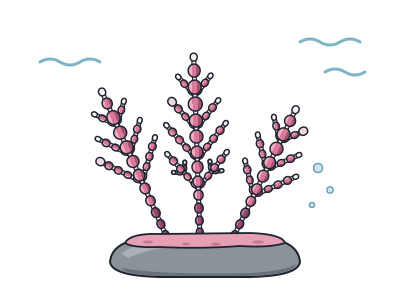
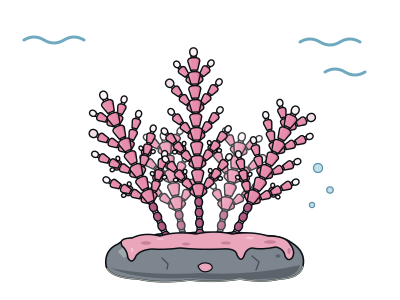
- Irish mossA purple-red seaweed whose jelly thickens ice cream and toothpaste.
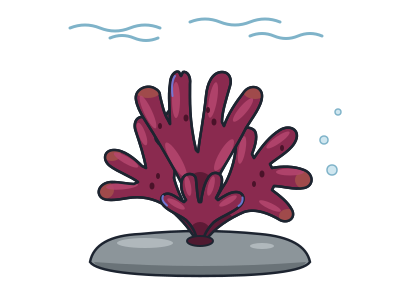
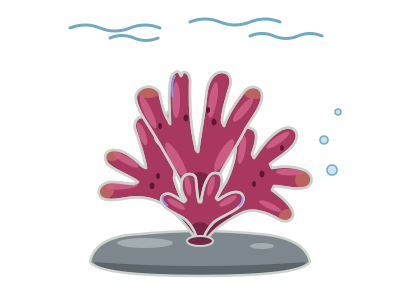
- DulseA chewy red seaweed that coastal people have snacked on for over a thousand years.
- Agar weedThe wiry seaweed whose jelly sets desserts and fills the dishes scientists grow microbes on.