A species
Irish moss
Chondrus crispus
The rock-pool seaweed whose jelly helped thicken ice cream and toothpaste
You and the irish moss meet in the Eukaryotes branch, shown at about 1.8 billion years ago (on 28 July, in a calendar from life's shared ancestor to today).
Irish moss is a small purple-red seaweed full of a natural jelly called carrageenan. About half of its dry weight is this jelly. Once it is taken out and dried into a white powder, it helps thicken ice cream and drinks, and keeps toothpaste, yoghurt and moisturiser smooth and well mixed. Irish moss was the original source, but today most carrageenan comes from farmed seaweeds in warm seas.
Despite its name, it is not a moss at all. It is a red alga, in the same branch of the tree as nori, the seaweed wrapped around sushi, and coral weed. Go further back and red algae share a bigger group with green algae and land plants. That makes this rubbery seaweed a distant relative of grass and oak trees.
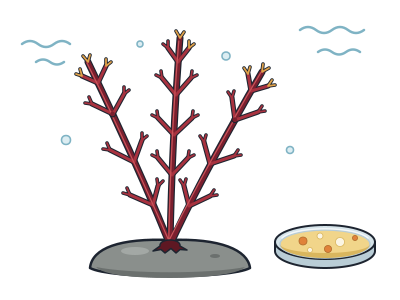
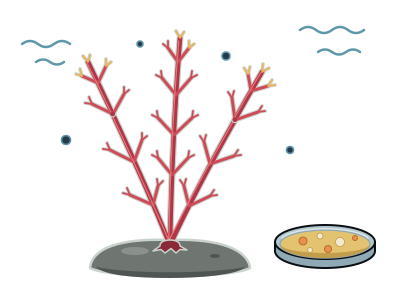
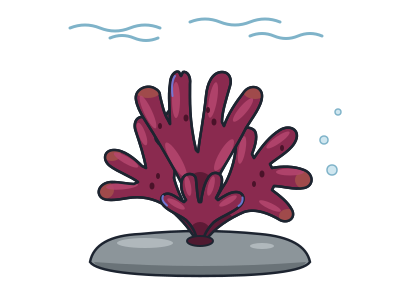
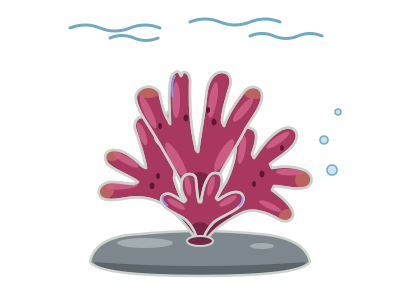
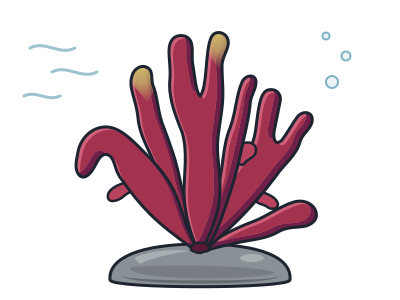
It grows in low, bushy tufts of tough, rubbery fronds. Each one forks again and again in twos, like a little fan. It is usually about 10 to 20 centimetres tall, and at most about 22 centimetres, a bit longer than a pencil. A small disc called a holdfast grips the rock. You can find it on rocky shores and in rock pools around Britain and Ireland, from Iceland and Norway down to Spain, and along the Atlantic coast of North America. In strong sunlight its colour can fade to green or yellowish.
A blue shimmer
Underwater, the young tips of female plants can shine an electric blue. The colour comes from many thin, see-through layers in their outer skin, not from a dye, and it disappears when the seaweed dries out.
A town built on seaweed
Around 1847 an Irish immigrant spotted Irish moss near Boston. By about 1870, close to 100 Irish families in Scituate, Massachusetts, were raking it from small boats at low tide and drying it on the beach.
Grows back from its base
Each frond usually lives about 2 to 3 years. The holdfast gripping the rock lives much longer and can sprout new fronds after storms or harvesting.
Next to it on the tree
- Nori seaweedThe red alga wrapped around sushi.
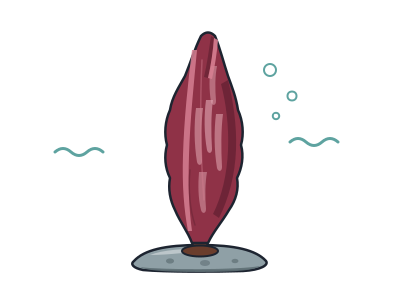
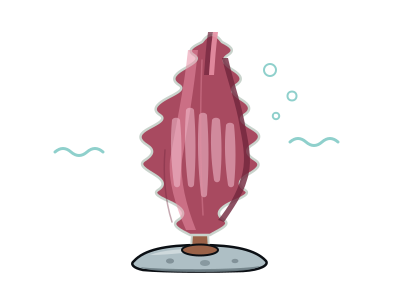
- BangiomorphaA billion-year-old red seaweed: the oldest known living thing to reproduce sexually.
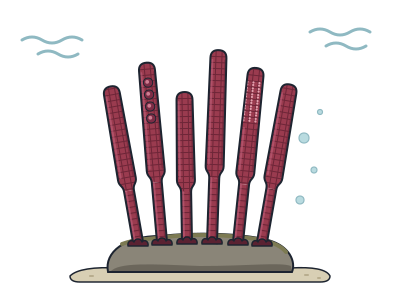
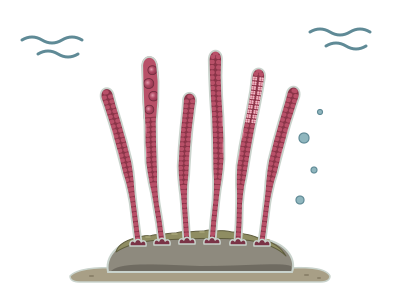
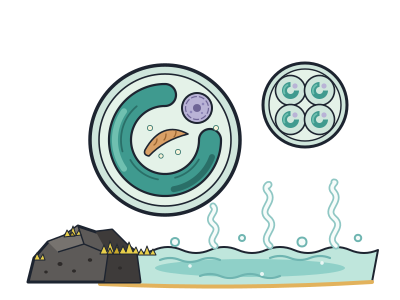
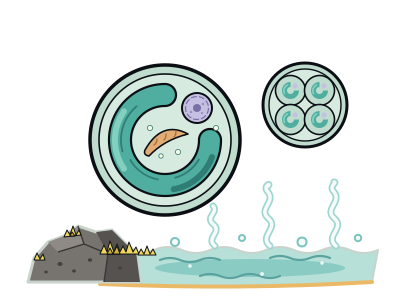
- Hot-spring red algaThrives in boiling acid springs and borrowed genes from bacteria to survive there.
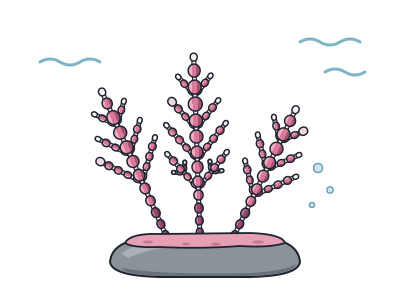
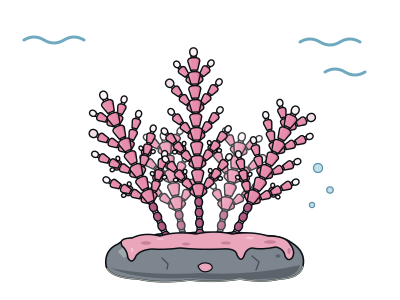
- Coral weedA seaweed that builds a skeleton of chalk, helping cement coral reefs together.
- DulseA chewy red seaweed that coastal people have snacked on for over a thousand years.
- Agar weedThe wiry seaweed whose jelly sets desserts and fills the dishes scientists grow microbes on.