A species
Coral weed
Corallina officinalis
A pink seaweed with a skeleton of chalk, from a group that helps glue coral reefs together.
You and the coral weed meet in the Eukaryotes branch, shown at about 1.8 billion years ago (on 28 July, in a calendar from life's shared ancestor to today).
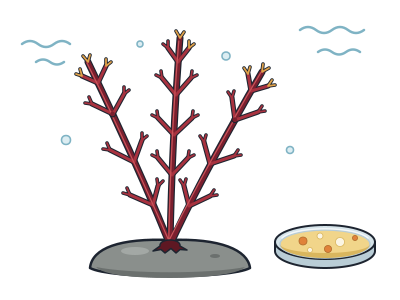
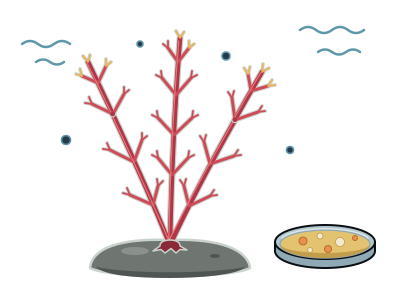
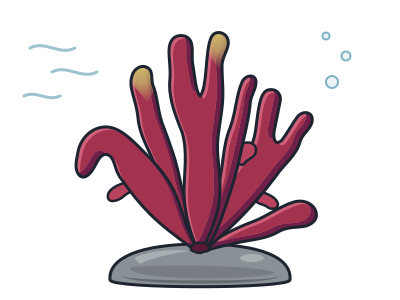
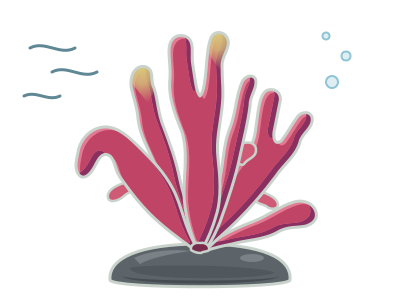
It looks like a tiny pink coral, but coral weed is not an animal at all. It is a red seaweed that builds a skeleton of chalk into the walls of its cells. About three-quarters of it is chalky mineral, so it feels hard and crunchy, not slimy.
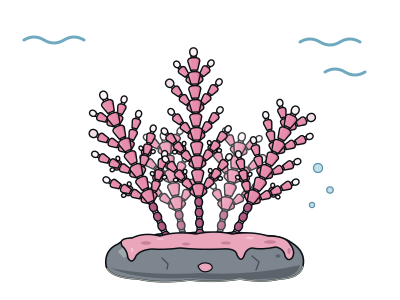
Coral weed belongs to a group of chalk-building seaweeds called corallines. Coral weed itself lives on cool rocky shores, not on tropical reefs. But some of its relatives grow as flat pink crusts, and those crusts help cement coral reefs together. Crusts like these have been linked with building coral reefs for about the last 150 million years, since dinosaurs still walked the Earth.
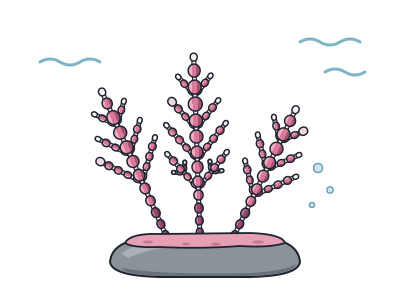
Each frond is a chain of tiny chalky segments, like a string of beads. Side branches grow in pairs, like a feather. The tufts are usually about as tall as your little finger, and they grow only about 2 millimetres a month.
Coral weed forms thick turfs in rock pools and in shallow water just below low tide. The chalk makes it unappetising to most grazers on the shore. Its dense tufts give shelter to many small animals, which feed on the microbes living there.
Named for medicine
The scientist Linnaeus named it in 1758. The second part of its scientific name means it was once used as a medicine.
From seaweed to bone
Dried coral weed can be turned into the same mineral found in bone and used as a material to help new bone grow. It is also used in cosmetic powders.
Sunburnt seaweed
Healthy plants are pink, red or purple, and sometimes yellowish. Too much sunlight stresses them, and fronds can bleach chalky white. That is why white bits on the beach are usually dead or stressed plants.
Next to it on the tree
- Nori seaweedThe red alga wrapped around sushi.
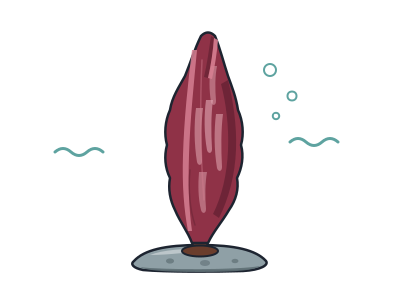
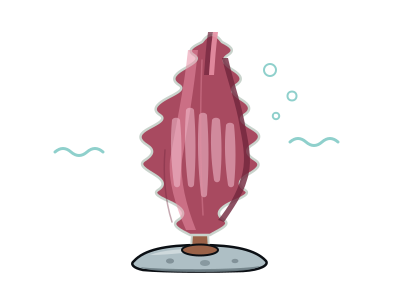
- BangiomorphaA billion-year-old red seaweed: the oldest known living thing to reproduce sexually.
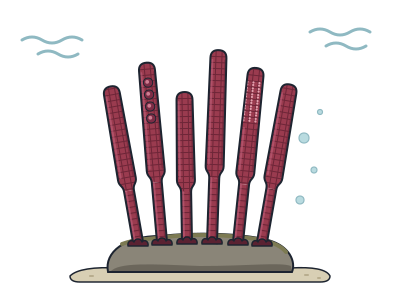
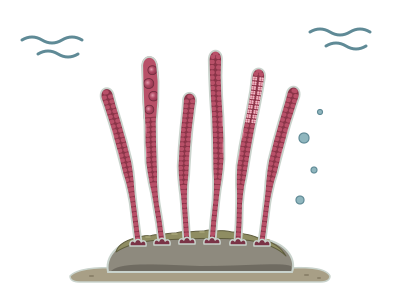
- Hot-spring red algaThrives in boiling acid springs and borrowed genes from bacteria to survive there.
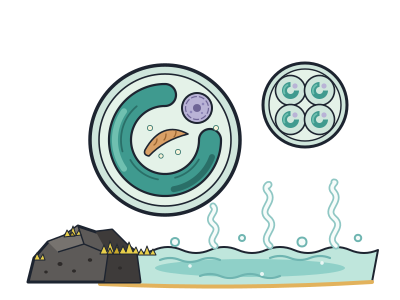
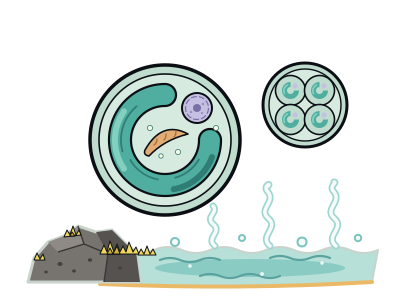
- Irish mossA purple-red seaweed whose jelly thickens ice cream and toothpaste.
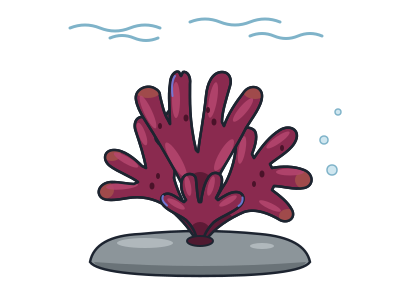
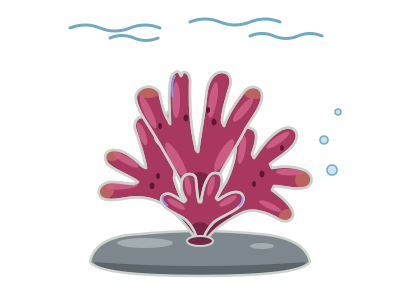
- DulseA chewy red seaweed that coastal people have snacked on for over a thousand years.
- Agar weedThe wiry seaweed whose jelly sets desserts and fills the dishes scientists grow microbes on.