A species
Yak
Bos grunniens
A grunting cattle relative built for cold mountain heights.
You and the yak meet in the Placental mammals branch, shown at about 95 million years ago (on 23 December, in a calendar from life's shared ancestor to today).
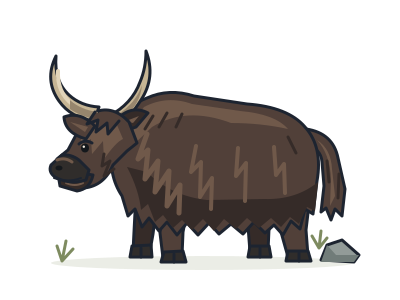
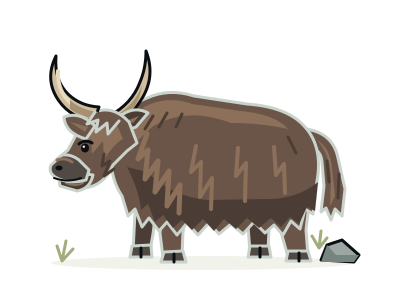
A yak grunts instead of mooing, and can live comfortably above 4,000 metres. This shaggy animal is a cattle relative, not simply a long-haired cow. Domestic yaks and cows can even have young together. This page follows the domestic yak, rather than its larger wild relative.
Many domestic yaks live on the cold, open grasslands of the Tibetan Plateau and nearby mountain regions. A large chest, lungs and heart help them cope with thin mountain air. Their coat combines long outer hairs with a thick inner layer, helping them withstand temperatures of about minus 40 degrees Celsius. But keeping heat in has a drawback: yaks are poorly suited to hot weather.
Yaks use their heads and hooves to break through snow and ice to reach grass underneath. For people in the Tibetan highlands, they also provide milk, wool and leather. As pack animals, they carry goods across mountain passes.
Not always dark
Domestic yaks can be black, brown, reddish, white or patchy.
A tail with a difference
Long hair covers the tail along its length, rather than forming just a tuft at the tip.
Herd life
Females and their young form herds. Mature males generally join them during the breeding season.
Next to it on the tree
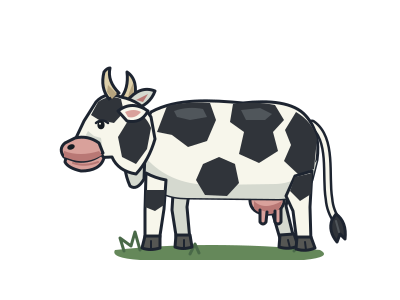
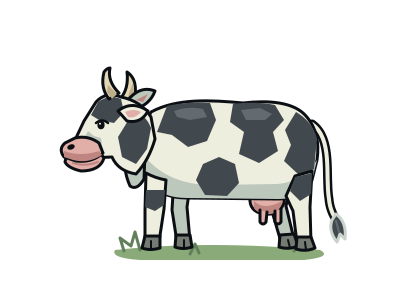
- CowHumpless domestic cattle descend from aurochs domesticated about 10,500 years ago.
- AurochsThe wild ancestor of cattle; large bulls stood taller than many people. The last known animal died in 1627.
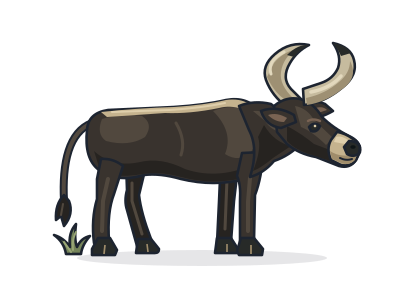
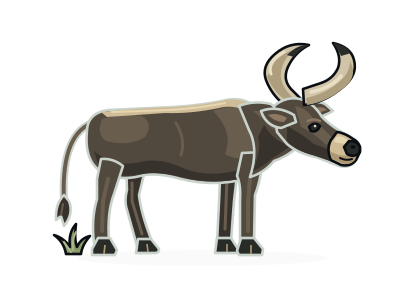
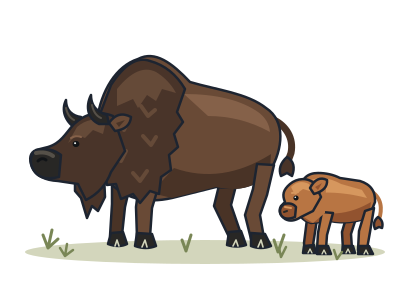
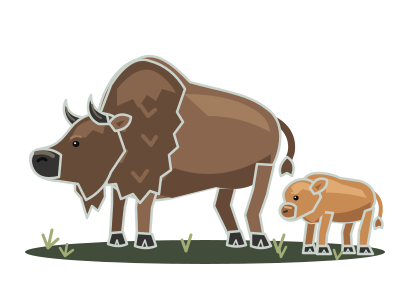
- American bisonOnce 30 million strong, it was saved from near extinction.
- African buffaloA wild cattle relative whose herd may turn to defend members from lions; defence is not guaranteed.
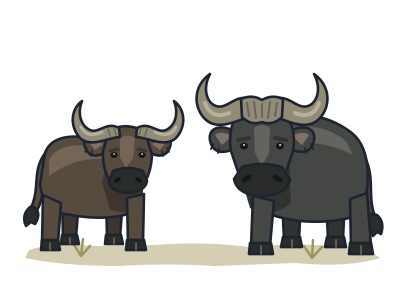
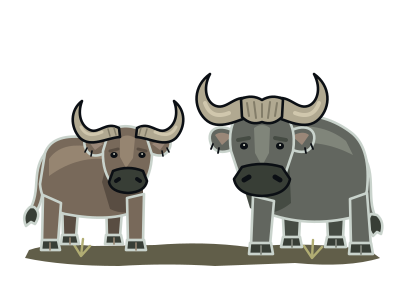
- Water buffaloA wallowing domestic buffalo that pulls ploughs in rice paddies and gives milk for mozzarella.
- Greater kuduMales carry long spiral horns with up to two and a half twists.
- Common elandOne of the world's largest antelopes; its knees make a clicking sound as it walks.