A species
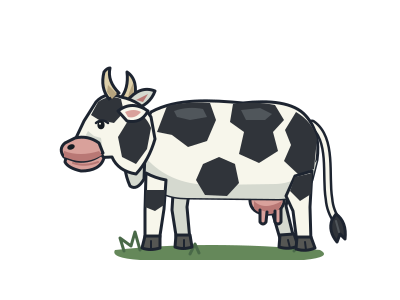
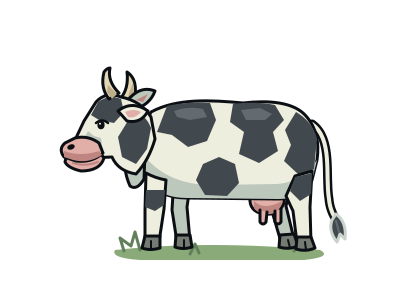
Cow
Bos taurus
A wild ancestor behind a familiar farm animal
You and the cow meet in the Placental mammals branch, shown at about 95 million years ago (on 23 December, in a calendar from life's shared ancestor to today).
Today's humpless domestic cattle descend from wild aurochs, which people began domesticating in the eastern Mediterranean about 10,500 years ago. The aurochs was their ancestor, not just a similar-looking relative. Over many generations, people bred cattle for useful traits, including calmer temperaments and the milk and meat they produced.
Cattle belong to the same wider family as sheep, goats, antelopes and gazelles. Like sheep and goats, they are social animals that live in groups called herds. People now keep cattle across much of the world. Their spread reflects where people farm, rather than a natural wild range.
The familiar black-and-white cow is only one version of this animal. Different breeds have different coat colours, and even Holsteins can be red and white. Although this page is called Cow, cattle include both males and females. Strictly speaking, a cow is a female that has had a calf.
Horns are no guide
Some breeds are naturally hornless. Having horns does not mean an animal is male.
Quick on their feet
Calves can normally stand and walk within about an hour of birth.
A wide view
Cattle can see almost all around themselves without turning their head, but judge distance best in a smaller area in front.
Next to it on the tree
- AurochsThe wild ancestor of cattle; large bulls stood taller than many people. The last known animal died in 1627.
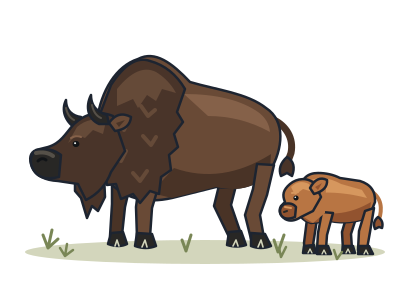
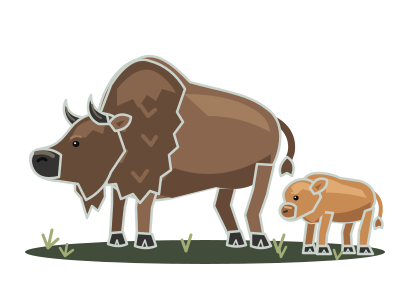
- American bisonOnce 30 million strong, it was saved from near extinction.
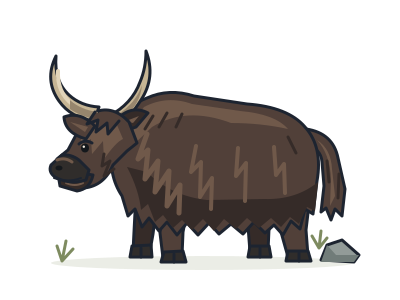
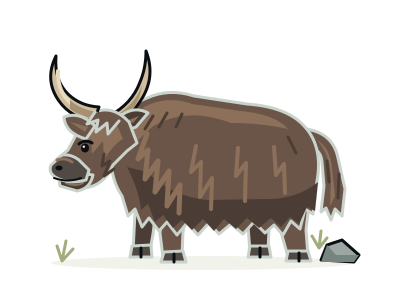
- YakA domestic cattle relative that grunts instead of mooing and thrives in cold high mountains.
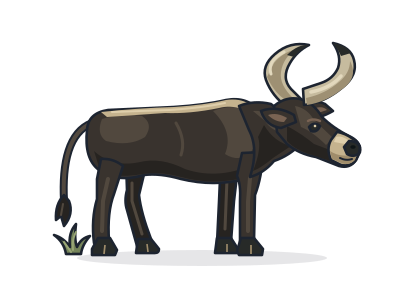
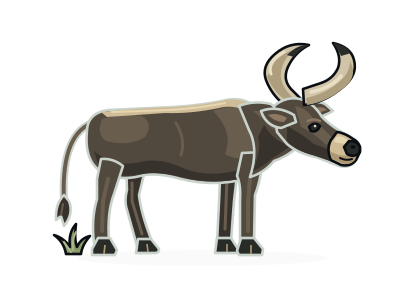
- African buffaloA wild cattle relative whose herd may turn to defend members from lions; defence is not guaranteed.
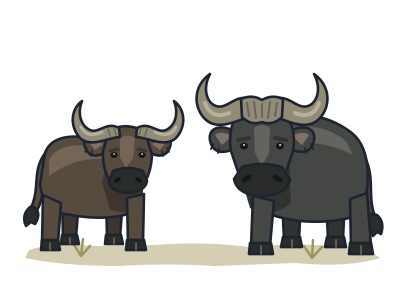
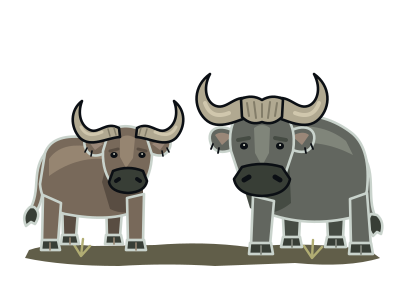
- Water buffaloA wallowing domestic buffalo that pulls ploughs in rice paddies and gives milk for mozzarella.
- Greater kuduMales carry long spiral horns with up to two and a half twists.
- Common elandOne of the world's largest antelopes; its knees make a clicking sound as it walks.