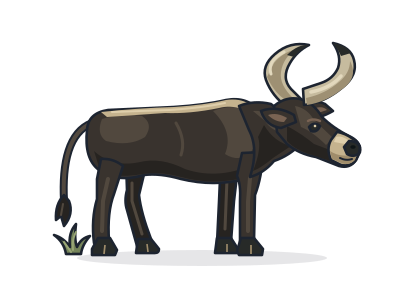
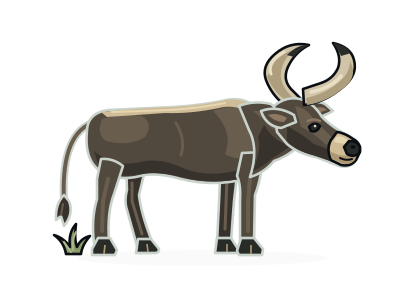
An extinct species
Aurochs †
Bos primigenius
The wild ancestor of farm cattle
Lived about 650,000–400 years ago.
You and the aurochs meet in the Placental mammals branch, shown at about 95 million years ago (on 23 December, in a calendar from life's shared ancestor to today).
Aurochs were the wild ancestors of domestic cattle, not just unusually big farm cows. Large bulls stood taller at the shoulder than many adult people, though females were smaller. These wild cattle survived surprisingly recently: the last known aurochs died in Poland’s Jaktorów Forest in 1627.
They lived through much of the past 650,000 years and survived until 1627. Across their wider range, they lived in Europe, Asia and North Africa. They moved in herds through landscapes containing both grassland and woodland. Grass was on the menu, but so were tree leaves and branches.
Their bones provided evidence of their size and build. The bull from Vig in Denmark was reconstructed as nearly 2 metres tall at the shoulder—about the height of a doorway. Those bones did not reveal its coat colour or everyday movements. Habitat loss and excessive hunting eventually drove aurochs to extinction.
Painted on cave walls
People painted aurochs at Lascaux in France about 15,000–20,000 years ago.
Footprints beside ours
Ancient tidal-flat deposits at Formby in Britain preserved human and aurochs footprints from about 9,000 years ago.
Wild ancestry topped up
After cattle were domesticated, domestic herds sometimes bred with wild aurochs, especially wild bulls.
Next to it on the tree
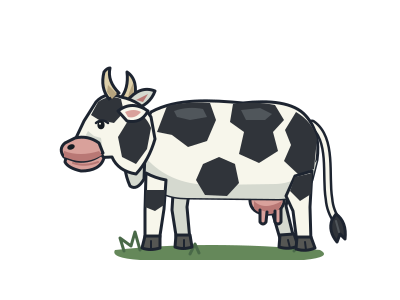
- CowHumpless domestic cattle descend from aurochs domesticated about 10,500 years ago.
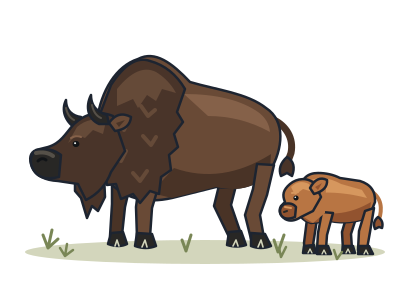
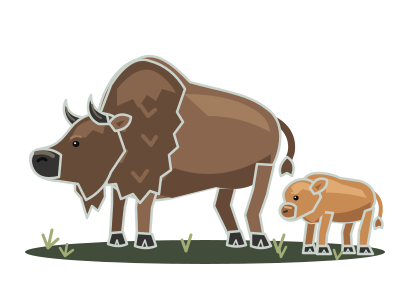
- American bisonOnce 30 million strong, it was saved from near extinction.
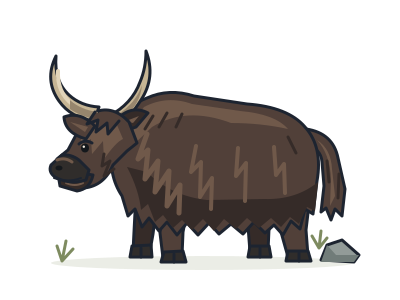
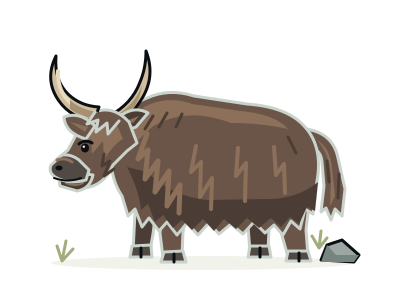
- YakA domestic cattle relative that grunts instead of mooing and thrives in cold high mountains.
- African buffaloA wild cattle relative whose herd may turn to defend members from lions; defence is not guaranteed.
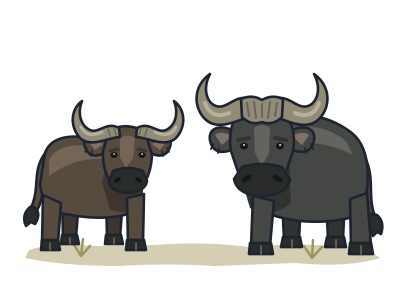
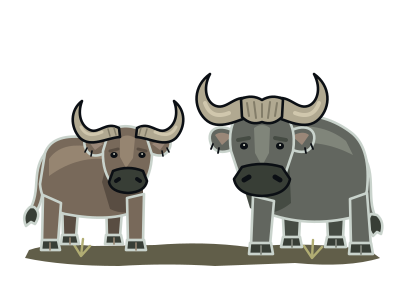
- Water buffaloA wallowing domestic buffalo that pulls ploughs in rice paddies and gives milk for mozzarella.
- Greater kuduMales carry long spiral horns with up to two and a half twists.
- Common elandOne of the world's largest antelopes; its knees make a clicking sound as it walks.