A species
Common whelk
Buccinum undatum
The sea snail behind the spongy "sea wash balls" found on winter beaches
You and the common whelk meet in the Two-sided animals branch, shown at about 580 million years ago (on 11 November, in a calendar from life's shared ancestor to today).
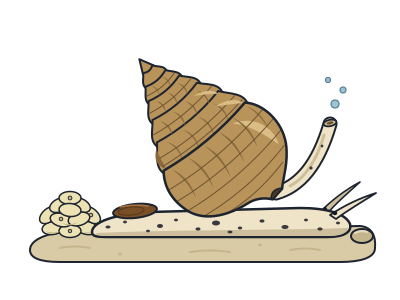
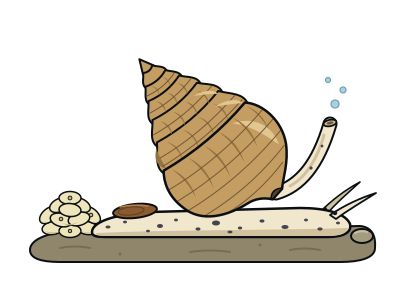
Walk along a North Atlantic beach in winter and you might find a light, papery ball that looks like a bath sponge or a lump of foam. It is a sea wash ball: a clump of empty egg cases left by the common whelk. Each bubble is not one egg but a case that once held many tiny eggs.
Only about 1 in 100 of those eggs grows into a baby snail. The rest are nurse eggs, which the growing young eat. Fed on this packed lunch, the babies crawl out as tiny, fully formed snails about 1 to 3 mm long. They do not start life as swimming larvae.
The whelk sits on the same branch of the tree as other sea snails, including the periwinkles of rocky shores, the glossy tiger cowrie, the big queen conch and the geography cone. It is one of the largest sea snails in British seas. Its spiral shell is usually 5 to 10 cm long. The biggest ones are about as long as an adult's hand is wide.
Whelks live on muddy, sandy and rocky seabeds, mostly below the low-tide line. They are found from Iceland and Norway down to the Bay of Biscay and across to North America. A whelk finds food by smell, using its siphon like a snorkel. It scavenges dead animals but also hunts worms and other shellfish, often prising their shells open with the edge of its own shell.
Second-hand homes
Large hermit crabs often move into empty whelk shells and use them as their homes.
A hidden coat
Empty whelk shells on the beach look cream, but a living whelk's shell is covered by a thin brownish skin.
Caught in pots
People catch whelks for food in baited traps called pots, and much of the UK catch is sent to East Asia.
Next to it on the tree
- Geography coneHarpoons fish with venom so potent it has killed people; cone snail venom inspired a painkiller.
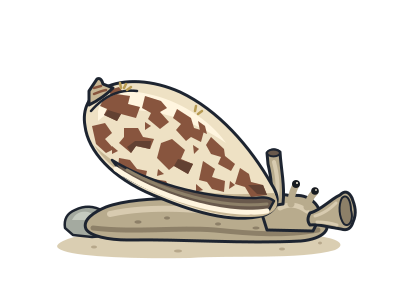
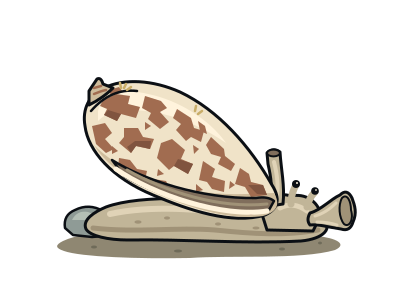
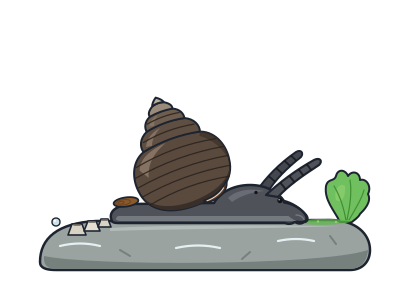
- Common periwinkleThe little dark snail of rocky shores that grazes on algae as the tide goes out.
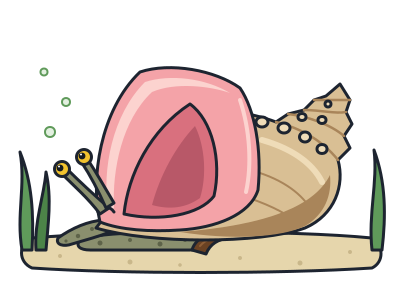
- Queen conchA big snail with a pink-lipped shell that can be blown like a trumpet.
- Tiger cowrieA glossy spotted shell that the snail polishes by wrapping its own body around it.
- Violet sea snailFloats upside down on a raft of bubbles it makes from mucus.